 pressug.com News 24 7

Related Articles



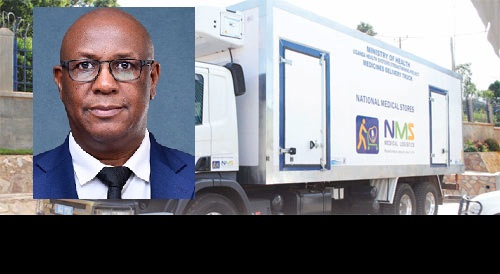
A thunderous alarm has been sounded over Uganda’s lifeline for public medicines after the latest report from the Auditor General ripped open the operations of the National Medical Stores, exposing a web of operational failures, delayed drug deliveries, expired medicines worth billions and deep-rooted management weaknesses that now threaten the country’s fragile health system.
At the centre of the storm stands long-serving General Manager Moses Kamabare, the man who has run the institution since 2008 and has survived wave after wave of controversies without being replaced. But with the Auditor General’s December 2025 report now laying bare a series of systemic failures, the pressure is mounting like never before.
Is it finally time for the whip to crack at NMS?
The report paints a picture of an institution struggling under the weight of unresolved financial gaps, planning failures and supply chain inefficiencies that directly affect the availability of life-saving medicines across the country.
One of the first red flags raised by the Auditor General concerns outstanding receivables amounting to UGX16.443 billion. This money, which should be circulating as working capital for the procurement and distribution of medicines, is instead stuck with other entities, some of which have held the funds for more than three years. In a system where every shilling is needed to purchase essential drugs, such delayed recoveries raise uncomfortable questions about financial discipline and oversight at the top.
Then comes the troubling issue of procurement irregularities.
The audit report found instances of non-compliance with regulations set by the Public Procurement and Disposal of Public Assets Authority. Notably, the entity failed to reserve procurements for special interest groups as required under the regulations. Even more troubling, eight procurements worth UGX2.056 billion were not implemented at all during the year. In an institution responsible for life-saving medical supplies, unimplemented procurements can translate into empty shelves at health facilities and desperate patients forced to buy drugs from private pharmacies.
But the biggest bombshell concerns the actual delivery of medicines across the country.
NMS had planned to dispatch Essential Medicines and Health Supplies valued at UGX782.90 billion to public health facilities across Uganda in six supply cycles. By the end of the financial year, however, only UGX586 billion worth of medicines had been delivered. That means medicines worth a staggering UGX196.9 billion were never dispatched.
The implications are chilling.
Health facilities that were expecting these medicines simply went without them, leading to stockouts and forcing patients—many of whom can barely afford basic healthcare—to dig into their own pockets to buy drugs from private pharmacies.
And the funding gap only deepens the crisis.
According to an analysis jointly conducted by NMS and the Ministry of Health, the country requires UGX1.573 trillion annually to meet the demand for essential medicines. During the year under review, however, only UGX1.392 trillion was committed. That leaves a funding shortfall of UGX181 billion, representing 12 percent of the required resources.
Even with the limited funds available, inefficiencies still emerged.
The audit found that NMS was sitting on non-viable stock worth UGX8.040 billion. This includes government-owned medicines worth UGX0.532 billion and drugs supplied by development partners valued at UGX7.507 billion. These medicines are now effectively useless and must be destroyed, meaning government will incur additional costs just to dispose of them.
The presence of expired medicines in such volumes raises serious questions about procurement planning and forecasting.
The Auditor General pointed out that these expiries were largely caused by misalignment between the country’s actual medicine needs and what was procured, as well as changes in treatment protocols by the World Health Organization after medicines had already been purchased.
Still, management insists progress has been made.
“National Medical Stores has continued to strengthen procurement systems and improve supply chain efficiency,” a senior official said when asked about the findings. “Some of the challenges raised are structural and require collaboration with other government agencies.”
Yet the numbers tell a troubling story.
Out of 31 planned strategic interventions, only 23 were fully achieved. Three were partially implemented while five were not even properly quantified. This translates to an overall performance level of 74 percent—hardly reassuring for an institution that handles billions of shillings in life-saving supplies.
Parliament appropriated UGX721.037 billion to NMS for the financial year and every single shilling was warranted and spent. On paper, that is a perfect absorption rate of 100 percent. But critics argue that spending all the money means little if medicines are still not reaching patients on time.
Even internally generated revenue slightly fell short of projections. NMS had budgeted to collect UGX43.30 billion but managed UGX41.376 billion, representing a performance of 95.6 percent.
Meanwhile assets worth UGX4.431 billion were found to be idle or underutilized, a finding that further deepens concerns about management efficiency.
But the problems extend far beyond accounting figures.
The audit revealed disturbing weaknesses in the distribution of essential medicines. Delays in delivering medicines ranged from 19 to 69 days, while responses to customer complaints sometimes took between 16 and a shocking 572 days.
Even worse, unresolved complaints increased by 208 percent over a three-year period.
The distribution of vaccines also showed worrying cracks.
A total of 159,902 doses worth UGX30.896 billion were procured and distributed, yet the cold chain infrastructure responsible for preserving vaccine potency is ageing rapidly. Nearly half of the equipment used to store vaccines was delivered more than seven years ago and has received inconsistent preventive maintenance.
“If this infrastructure is not replaced,” the Auditor General warned, “health facilities will not be able to keep vaccines at the required temperatures.”
That could compromise vaccine effectiveness and disrupt immunisation programmes across the country.
In another worrying finding, ten districts received 1.7 million doses of vaccines worth UGX17.51 billion without comprehensive needs assessments. Three districts experienced delivery delays of up to 14 days due to logistical challenges faced by NMS.
Twenty-seven districts also lacked adequate storage facilities for vaccines, exposing them to potential damage and financial loss.
Meanwhile patients at lower-level facilities continue to suffer.
Nineteen health facilities in eighteen local governments received budget ceilings for medicines that were lower than their assessed needs, resulting in shortages ranging from UGX11 million to UGX551 million. As a result, hundreds of essential medicines were simply not supplied.
The reality on the ground is grim.
Patients who arrive at government health centres expecting free treatment often leave empty-handed, forced to buy drugs from private pharmacies using their already strained personal resources.
The report also found that 102 health facilities received medicines late, with delays ranging from one day to as long as 148 days.
The consequences of such delays can be fatal.
Late deliveries lead directly to stockouts, interrupt treatment for patients and increase the risk of death for those who cannot afford private alternatives.
Even the management of expired medicines remains problematic. Inspectors found that forty-four health facilities were storing expired medicines worth UGX2.64 billion. In fifteen facilities, expired medicines were stored alongside usable drugs or placed in inappropriate spaces such as corridors and wards.
Worse still, these expired medicines had not been collected by NMS.
Improper management of expired drugs poses a serious public health risk because they can mistakenly be issued to patients.
Despite these troubling findings, the Auditor General acknowledged that NMS has made some improvements over the years, particularly in strengthening price market surveys and making the prices of anti-retroviral drugs more competitive.
But the report also revealed that some medicines are still procured in US dollars from local manufacturers, exposing the institution to significant exchange rate losses that reduce purchasing power.
Inside NMS headquarters, however, another drama is quietly unfolding.
Whispers suggest a silent succession war is raging over who will eventually replace Moses Kamabare. One name frequently mentioned in the corridors is Paul Okware, the Chief Stores and Operations Officer, who insiders describe as an aggressive contender for the top job.
Sources also claim Kamabare wants to influence who eventually succeeds him, possibly favouring someone outside the current management structure—a move that has reportedly caused resentment among some officials within the institution.
The internal tensions do not stop there.
We have also learnt that some officials are unhappy with Sheila Nduhukire, the Principal Public Relations Officer, accusing her of frustrating her understudies to the detriment of the institution’s top leadership. The full details of this internal battle will be revealed in our subsequent publication.
The billion-shilling question now hanging over NMS is simple yet explosive.
Moses Kamabare, like any leader who has served for a long time, cannot fail to register some successes. Indeed, under his watch the institution has undergone significant transformations aimed at improving efficiency, strengthening the supply chain and cutting operational costs.
But has he outlived his usefulness?
Is it time for him to step aside and allow fresh leadership to take the institution forward?
With billions of shillings in medicines delayed, expired or undelivered—and patients across Uganda still struggling to access essential drugs—the pressure is mounting for accountability.
And as the Auditor General’s report continues to send shockwaves through the health sector, many are now asking the same blunt question.
Should Moses Kamabare finally face the sack?
GOT A HOT STORY? EMAIL: redpeppertips@gmail.
SOURCE PROTECTION/CONFIDENTIALITY IS OUR NO.1 PRIORITY.
