 pressug.com News 24 7

Related Articles



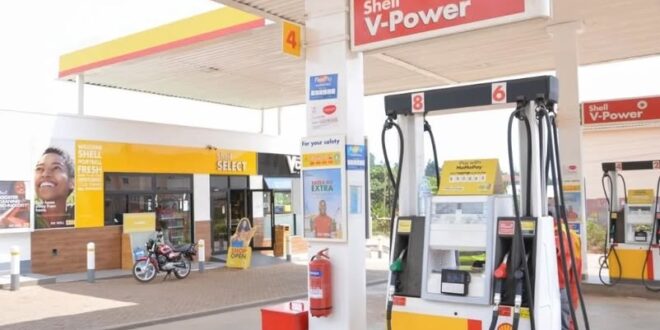
A quiet but significant ripple from the global oil industry is now being felt in Uganda after Vivo Energy Uganda announced plans to sell two of the most strategically located Shell-branded petrol stations in the heart of Kampala.
The move comes as the multinational energy giant Shell plc continues reshaping its global downstream fuel business — a strategy that includes the ongoing attempt to sell nearly 600 petrol stations in South Africa, potentially bringing to a close more than 124 years of Shell retail fuel operations in that country.
Against that global backdrop, Kampala has now entered the picture.
Vivo Energy Uganda has opened a sealed-bid sale for Shell Clock Tower and Shell South Street, two prominent service stations located in the capital’s central business district. The disposal has created a rare opportunity for investors to acquire prime urban land in some of the city’s busiest commercial corridors.
The Shell Clock Tower station sits on a 0.26-acre leasehold plot at the busy junction along Entebbe Road, one of Kampala’s most important transport arteries that funnels thousands of commuters into the city centre every day.
The second property, Shell South Street, occupies 0.247 acres of freehold land near the ever-crowded Old Taxi Park, one of the busiest transport and pedestrian zones in Uganda.
Both sites currently operate as fuel retail stations equipped with underground storage tanks, fuel pumps and vehicle service bays. However, Vivo Energy indicated that the properties could also attract investors looking to redevelop the land into broader commercial projects due to their highly strategic locations.
The bidding process has been structured with strict financial requirements.
Interested buyers must submit formal expressions of interest accompanied by a five percent commitment fee backed by a 30-day bank guarantee, and all purchase offers must be quoted exclusive of VAT.
The company has set Monday, March 30, 2026, as the final deadline for submissions, with all bids required to be delivered to Vivo Energy’s offices located in Kampala’s Industrial Area.
Company officials emphasized that the sale will follow a controlled process.
“Vivo Energy reserves the right to accept or reject any bid,” the notice states, adding that site visits will only be conducted strictly by appointment.
The Kampala disposal is unfolding at a time when Shell is conducting a sweeping review of its downstream fuel operations worldwide.
In 2024, Shell confirmed that it intended to sell its shareholding in Shell Downstream South Africa, a vast retail network of nearly 600 petrol stations.
If the deal eventually goes through, it would mark the end of a historic chapter for Shell in South Africa, where the company first began operations in 1902 supplying oil used for lighting and heating homes.
Shell said the divestment forms part of a broader strategic decision to reduce its downstream retail exposure while focusing more heavily on upstream operations such as exploration and extraction of crude oil, natural gas and natural gas liquids.
At the time, reports suggested that the South African assets were valued at around $1 billion, equivalent to roughly R16.4 billion.
Nearly two years later, the process remains ongoing.
Shell Downstream South Africa has confirmed that negotiations to sell the assets are still underway but declined to reveal further details.
“As a matter of policy and principle, we do not disclose information related to confidential commercial processes,” the company said.
Several international investors have reportedly shown interest in the massive fuel retail network.
Among those previously shortlisted are Abu Dhabi National Oil Company and Swiss commodities trading firm Gunvor Group.
Other companies once linked to the bidding process included Puma Energy, Sasol, and PetroSA, although sources familiar with the discussions say those firms are no longer in the running.
Globally, Shell remains one of the largest energy companies on the planet, operating roughly 40,000 fuel service stations worldwide, with nearly half located in the Americas.
South Africa alone hosts 591 Shell retail outlets, making it one of the major markets where the petroleum giant maintains a strong presence.
Yet Shell’s global restructuring has already seen the company divest downstream assets in several countries including Australia, Botswana, Burkina Faso, Côte d’Ivoire, Guinea, Kenya and Namibia, while reducing its activities in Malaysia, Uruguay, Paraguay and Colombia.
Industry analysts say the Kampala service station sale, though small compared to the massive restructuring underway elsewhere, could still signal subtle shifts in Uganda’s fuel retail market.
For property developers and investors, the opportunity is particularly attractive because high-traffic petrol station land in Kampala’s central business district rarely comes up for sale.
As the March 30 deadline draws closer, the fate of the iconic Clock Tower and South Street Shell stations now rests with whichever investors are prepared to submit the winning sealed bids.
And as Shell’s global shake-up stretches from South Africa’s 600 petrol stations to Kampala’s city centre, the landscape of the iconic brand’s African fuel network may soon begin to look very different.