 pressug.com News 24 7

Related Articles



Jinja City, Uganda — Known as the source of the River Nile and a rising hub for adventure tourism, Jinja is often presented as a symbol of Uganda’s natural wealth and development potential. It is also central to the country’s energy landscape, hosting major hydropower facilities that feed electricity into the national grid. Yet in Jinja North Division, a quieter contradiction persists: proximity to power does not guarantee safe or legal access to it.
Uganda has made measurable progress in expanding electricity access over the past decade. According to data from the Ministry of Energy and Mineral Development, national electricity access rose from about 14% in 2013 to approximately 57% by 2022 when both grid and off-grid solutions are considered. Urban access rates are significantly higher estimated at over 70% reflecting targeted infrastructure investments in cities such as Jinja. These gains align with broader development strategies aimed at industrialization, improved livelihoods, and regional competitiveness.
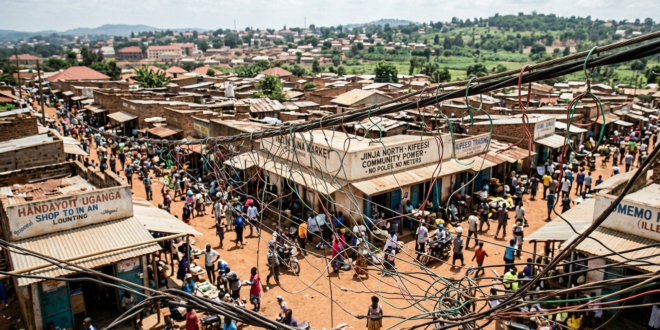
However, field observations in Jinja North Division suggest that infrastructure expansion alone has not resolved access challenges. During a recent visit, multiple households were found to be connected to the grid through informal or unauthorized means. In some cases, even homes with official connections had additional wiring extending power to neighboring structures or informal extensions. Such practices, commonly referred to as illegal connections, pose serious risks not only to individuals but also to the stability of the wider electricity network.
Data from the Electricity Regulatory Authority indicates that Uganda continues to face distribution losses partly attributed to illegal connections and energy theft. Nationally, electricity losses both technical and commercial have been estimated at between 17% and 20% of total generated power in recent years. While not all of this is due to unauthorized usage, illegal tapping of power lines remains a contributing factor, particularly in densely populated or peri-urban communities.
The human cost is equally concerning. Reports from local authorities and safety campaigns have linked illegal connections to cases of electrocution, fires, and property damage. Although comprehensive district-level statistics are limited, energy sector safety reports consistently highlight electrocution as a recurring cause of accidental deaths in communities with informal wiring practices. In Jinja, local leaders and utility operators have repeatedly warned that such connections expose residents especially children to avoidable hazards.
Government efforts to address the issue have been ongoing. Through agencies such as the Rural Electrification Agency (now part of the Uganda Energy Credit Capitalisation Company framework), authorities have extended grid infrastructure to previously underserved areas. Public sensitization campaigns have also been conducted to highlight the dangers of illegal connections and encourage formal registration. Yet, community perspectives reveal underlying tensions. Some residents claim that earlier infrastructure projects particularly those linked to energy development came with expectations of compensation, including free or subsidized electricity connections. While such claims remain difficult to independently verify, they point to a broader issue: the gap between public expectations and policy implementation. Where communication is unclear or promises are perceived as unmet, informal solutions often emerge.
Affordability is another factor shaping behavior, the cost of legal connection, wiring, and compliance can be prohibitive for low-income households, even when subsidized programs exist. As a result, illegal connections may be viewed not only as a shortcut but as a necessity despite the risks involved. This reflects a wider challenge across many developing economies, where infrastructure availability does not always translate into equitable access. For policymakers, Jinja’s situation underscores the importance of coupling infrastructure expansion with community engagement, affordability mechanisms, and consistent enforcement. Strengthening inspection systems, simplifying connection procedures, and expanding public awareness campaigns could help shift behavior over time. At the same time, transparent communication around government programs and commitments remains essential in building trust.
Jinja’s role as both a tourism gateway and an energy hub places it at the intersection of opportunity and responsibility. Reliable and safe electricity access is not only a matter of household welfare; it is also central to sustaining the city’s economic growth and reputation. As Uganda continues to invest in its energy future, the challenge is no longer simply generating power it is ensuring that access to that power is safe, lawful, and inclusive. In Jinja, bridging that gap may prove just as important as the electricity itself.
Post navigation
, https://dailythinkersug.com/jinjas-power-paradox-expanding-the-grid-while-illegal-connections-persists-in-jinja-city/