 pressug.com News 24 7

Related Articles


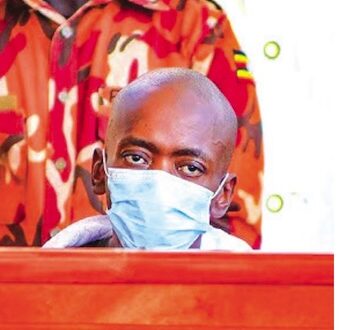
Christopher Okello Onyum
The murder trial of Christopher Okello Onyum entered one of its most consequential phases last week, as prosecutors laid out a grim account of the killings of four toddlers at a daycare centre in Ggaba and the accused man rose in court to insist he never intended their deaths.
Inside a packed High Court courtroom, presided over by Justice Alice Komuhangi Khaukha, the proceedings moved between forensic detail, police testimony, digital evidence and emotional claims of coercion.
By the week’s end, the judge ruled that the prosecution had established enough evidence for Okello to answer four counts of murder, shifting the case into the defence stage. The trial centres on the deaths of four young children killed earlier this month at the Ggaba Early Childhood Development Programme.
This case has horrified the country and drawn sustained public attention. State Attorneys Jonathan Muwaganya and Anna Kiiza led the prosecution case, calling a series of witnesses who sought to place Okello at the centre of a deliberate and premeditated attack.
Among the most significant witnesses was Detective Assistant Superintendent of Police Eserait James, the Division CID Officer at Kabalagala Police Station. He told the court that he spoke to Okello shortly after the suspect’s arrest.
“He told me he was arrested after killing four children at a day care centre in Ggaba,” Eserait testified.
The officer said he first sought to establish the suspect’s identity.
“I asked him who he was, and he identified himself as Christopher Okello Onyum,” he said.
Eserait told the court that when he asked why Okello had been brought to the station, the answer was blunt.
“He said he had killed four children at the day care.” The testimony grew more disturbing as the officer described what he said was the suspect’s explanation for motive. “He told me he killed these children because he was looking for riches.”
According to Eserait, the accused also spoke of planning the attack in advance.
“He said he took time surveilling the school and noted that there was no security guard and mostly women were present,” the officer said.
“He told me he bought several knives before the murder and used some of them in committing the crime.” The courtroom, silent for long stretches of the testimony, also heard that Okello allegedly expressed remorse after the killings.
“He said he was sorry; he apologised and knew that what he had done had consequences,” Eserait testified.
“He said he could be jailed or even killed.” The officer further described the physical state in which the accused was found.
“I observed bruises on his arms, mouth and forehead. He later told me he had been beaten by the mob.”
That reference pointed to the fury that followed the killings, when members of the public reportedly confronted the suspect before police intervention. Prosecutors then introduced physical evidence intended to reinforce the officer’s testimony.
“Six knives, five black and one grey, were recovered from the accused’s residence,” Eserait told the court.
“These are the knives he indicated he had procured in preparation for the crime.”
The state’s case then widened beyond direct testimony into technical evidence. Detective Inspector of Police Aggrey Mpamiizo presented telecommunications data that he said tracked the movements of a phone number linked to the accused in the hours surrounding the attack.
“I was looking at the movement pattern, and I was able to establish that number 0769582620 moved from Kyanja and moved to the next location, Eaton Clock Tower at 08:21 hours,” Mpamiizo testified.
He said the same number was later detected in Bunga before connecting to the MTN mast at Ggaba Beach between 11:07 a.m. and 11:38 a.m. According to prosecutors, that timeframe aligned with the killings at the daycare centre.
The court also heard that “at 11:25 a.m., the same phone number made an emergency call, lasting 39 seconds,” a detail the prosecution suggested came shortly after the attack.
Another witness, car rental operator Juma Hashim, testified that he had communicated with Okello before the incident and produced financial records linked to the accused.
“The majority of the funds came through cash deposits totalling Shs16 million, while about Shs4 million was deposited via mobile money,” Hashim said.
He added: “My lord, I also established that Okello provided information during the account opening that he was a farmer and a resident of Ggaba.”
That testimony, prosecutors suggested, connected the accused to the area where the children were killed. Digital forensic evidence followed. Assistant Superintendent of Police Kenneth Henry Angulo, a digital forensic analyst, told the court that investigators examined a Motorola phone allegedly linked to the accused and found internet searches conducted in the days leading up to the killings.
“While examining the exhibit, which is the Motorola phone, we observed that it was used over time to search for keywords revolving around kindergartens, preschools, play centres, and nursery schools,” Angulo testified.
He said the device first searched for “schools near me” through Google Maps before narrowing to specific institutions across Kampala and Wakiso. The phone, he added, also contained searches for “Bunga Police Station,” “how long it takes to get a Uganda firearm licence,” and “Trip Car Rental Uganda.”
The prosecution argued that the pattern suggested preparation rather than coincidence. After hearing evidence from 18 witnesses, Justice Komuhangi Khaukha ruled that the threshold had been met for the accused to respond.
“I have evaluated the evidence produced against you, and it makes a case against you, requiring you to give your defence on each of the four counts,” the judge said.
She then explained the options available to Okello: sworn testimony subject to cross-examination, an unsworn statement not tested by prosecutors, or silence. He was granted time to consult his lawyers, Richard Kumbuga and Sarah Awelo.
When the defence phase began, Okello denied intentional wrongdoing and challenged the prosecution’s central claims.
“I am not guilty of the offences because I did not intentionally cause the death of the four children,” he told the court. “I can explain how the children died, but I did not do it intentionally, and the charges should not stand, my lord.”
He argued that earlier statements attributed to him by police were not voluntary.
“My Lord, those statements were made under pressure. I was not allowed to question what was happening, and I had no choice but to say what pleased them, my lord.”
“I said those things because I was coerced.” He also disputed the prosecution’s claim that the state had proved malice aforethought, a key element in murder cases.
“They did not make a strong case to show that I acted deliberately. Taking all the evidence together, it does not support the claim that I intentionally killed the four children.”
Okello firmly rejected the allegation that the killings were motivated by ritual purposes or a search for wealth.
“The claim that I killed for riches is not true. I said those things because I was coerced.” He also dismissed inferences drawn from the digital evidence. “There were factors that were forcing me. I did not do those things willingly,” he said.
Seeking to humanise himself before the court, Okello described his character and future prospects.
“I am a person of generally good moral character, hardworking, focused and resourceful. I had a bright future, people to look after, and a business in the making. I could not do such a thing.”
He said witnesses from his family and business circles in Nwoya would support that portrayal. A major thread of his testimony focused on what he described as months of psychological pressure before the killings.
“In mid-January to late March, I entered a distressing period. Certain people began threatening me, demanding money and following me,” he said.
“They would park and watch me. I was always on the run or hiding somewhere because I feared for my life.” He told the court that he eventually left home and lived on the streets. “I stayed away from my house and lived on the streets because I did not feel safe.”
In his final remarks, he suggested those circumstances may have affected his mental state.
“It is possible there were mental challenges that went undetected and contributed to what happened.” The trial resumes this week, with a nation still searching for answers in a case defined by grief, horror and sharply contested truths.
Related
, https://observer.ug/news/okello-tells-court-i-didnt-kill-the-four-children-intentionally/