 pressug.com News 24 7

Related Articles


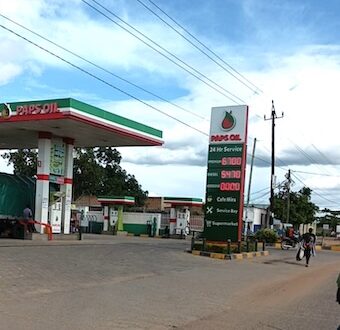
Fuel prices have risen sharply
SHAMMAH MUKUZA Moses Kimbugwe starts his day before dawn. A boda boda rider along Jinja Road, he used to fuel his bike for about Shs 10,000 — enough to run his motorcycle through a full day of fares.
These days, the same run costs him between Shs 10,000 and Shs 15,000, and he is not even sure the station will have fuel when he arrives.
“The few stations still operating have sharply increased prices,” he said last week, as a queue of riders snaked around the block outside Rubis outlet in Kamwokya.
“We cannot keep charging the same fares. But passengers refuse to pay more.”
Kimbugwe’s predicament is shared by thousands of Ugandans – from truck drivers to small traders watching transport surcharges eat into their margins. The cause is a war that began on February 28, 2026, when the United States and Israel launched strikes against Iran, triggering one of the most severe disruptions to global oil markets in history.
Now, Energy Minister Ruth Nankabirwa, in a statement this week, warned that the worst for Ugandan consumers may still be ahead. She warned that the full impact of higher global prices is expected to be felt at the pump from May 2026, as new – more expensive – fuel shipments begin entering the domestic market.
BATTLE FOR THE STRAIT OF HORMUZ
At the heart of the global crisis is the Strait of Hormuz, a narrow waterway between Iran and Oman, through which roughly 25 percent of the world’s seaborne oil trade and 20 per cent of global liquefied natural gas (LNG) normally flows.
Iran declared the strait closed on March 4, 2026, and has since attacked vessels attempting to pass through. Major shipping companies suspended operations almost immediately.
The International Energy Agency (IEA) called the resulting disruption “the largest supply disruption in the history of the global oil market.”
Brent crude, which was trading at around $65 per barrel at the start of February, surged to peaks of $120 a barrel in March. As of late April it was crisscrossing at approximately $105 a barrel — still well above pre-war levels, even after a temporary ceasefire on April 8 failed to fully reopen the strait.
Vitol, one of the world’s largest oil trading houses, and one that Uganda signed an agreement for oil shipments with last year, estimated that cumulative production losses had reached between 600 and 700 million barrels, with the final toll expected to exceed one billion barrels. Gulf producers — Saudi Arabia, Kuwait, Iraq and the UAE — collectively cut output by at least 10 million barrels a day by mid-March as their export routes were severed.
THE LONG ROAD TO KAMPALA
As a landlocked, Uganda is entirely dependent on imported refined petroleum products sourced internationally and routed through the port of Mombasa in Kenya, before travelling hundreds of kilometres by road and pipeline inland.
Uganda has so far been cushioned from the worst of the global fuel price increases because it has been consuming products procured at earlier, lower prices – contracts signed before the war sent crude soaring. That buffer is about to run out.
“Due to supply chain timelines, Uganda has been consuming fuel procured at earlier, lower prices,” the statement by Nankabirwa said.
“However, the impact of higher global prices is expected to be reflected from May 2026 as new shipments enter the market.”
The minister said international crude prices rose from approximately $65 per barrel in February 2026 to peaks of $120 per barrel in March, alongside significant increases in refining margins – costs that will now begin to pass through to Ugandan consumers.
WHAT GOVERNMENT SAYS
Officials have been at pains to separate the question of price from the question of supply. In her statement, Nankabirwa said that as of mid-April, an additional shipment of approximately 119 million litres of petrol had been received at Mombasa, boosting national supplies.
Between mid-April and mid-June, planned imports include approximately 163 million litres of petrol, over 200 million litres of diesel and approximately 22.4 million litres of Jet A-1 fuel.
Combined with existing stocks, the ministry said these volumes provide national cover of up to 67 days for petrol, 84 days for diesel and 89 days for jet fuel, against a national daily consumption of approximately 8 million litres.
“There is no fuel shortage in Uganda,” the statement declared. “Supply remains steady and sufficient.”
The government also highlighted structural measures intended to reduce Uganda’s vulnerability to Middle Eastern supply disruptions. The Uganda National Oil Company, the sole importer of petroleum products for the Ugandan market, has diversified its sourcing strategy to procure from alternative global refineries beyond the Middle East.
Strategic partnerships with international oil traders – including a Vitol financing facility approved by Cabinet in December 2025 – are also cited as buffers against volatility.
DRY PUMPS AND PRICE CHAOS
On the ground, however, the gap between official assurances and the lived reality of motorists has been stark. By the week of April 21, a fuel crisis that had been steadily building in rural towns swept into the capital.
Stations operated by Vivo Energy (Shell) and TotalEnergies in Kampala ran dry. Attendants stood idle or turned away motorists. Those outlets that still had fuel hiked prices sharply – petrol that had retailed at around Shs 5,100 per litre earlier in the year climbed toward Shs 6,000 in central Kampala, and as high as Shs 10,000 at some outlets in Kasese Municipality.
HOARDING, SMUGGLING AND BORDER PRESSURE
Nankabirwa acknowledged a range of disruptive practices that have compounded the supply chain pressures.
“Practices such as hoarding, speculative pricing, illicit cross-border trade, and storage of fuel outside regulated systems have placed pressure on planned national demand,” she said.
The cross-border dimension is particularly striking. In Arua, Adjumani, Kasese, Kisoro and Tororo, the minister said increased demand driven by cross-border trade and transit traffic has contributed to localised price variations.
Local dealers say Congolese buyers are crossing into Uganda in search of cheaper fuel, reversing a flow that traditionally ran in the other direction and straining border-area supplies.
In response, the government said it had deployed security and enforcement teams to border districts, strengthened monitoring of fuel movements and retail practices, and enhanced surveillance to curb illicit trade and hoarding.
ECONOMIC EFFECTS
The fuel squeeze is already pushing up the cost of nearly everything. Taxi operator John Kamya said drivers were reducing the number of trips they make daily.
Boda boda riders have raised town service fares from Shs 1,000 to Shs 2,000, though passenger resistance is stiff. Truck driver Mike Osaga said freight volumes on his routes had fallen as traders grew reluctant to move goods.
Some long-haul drivers have parked their vehicles altogether. With a further price increase signalled for May, businesses that have so far absorbed higher fuel costs rather than pass them on to customers will face growing pressure to hike prices.
Economists warn the effect will be broad: the prices of goods will increase further, with the heaviest burden falling on households that spend the largest share of their income on basic commodities.
LONG-TERM PLANS
The minister’s statement also pointed to longer-term investments intended to make Uganda less vulnerable to future supply shocks.
These include the expansion of the Jinja Storage Terminal to 40 million litres capacity from the current 30 million; the development of a new Kampala Storage Terminal in Namwabula, Mpigi District, with an initial capacity of 255 million litres expandable to 320 million litres; and continued progress towards the planned 60,000 barrels-per-day national oil refinery in Hoima.
“These strategic investments, supported by the Vitol financing facility approved by Cabinet in December 2025, will significantly enhance Uganda’s fuel storage capacity and resilience,” the statement said.
Longer-term, the government said it is also engaging with Mahathi Infra Uganda Limited, which plies the Entebbe – Kisumu route along Lake Victoria, to increase in-country storage and buffer stocks.
Critics, however, note that these projects remain years from completion and offer little comfort to the boda boda rider who must fill his tank tomorrow morning.
WHAT COMES NEXT
If the Strait of Hormuz stays restricted through June, analysts say global oil markets will evolve into an outright fight for available supply, driving prices further and benefiting buyers in wealthier economies with deeper foreign exchange reserves, at the expense of import-dependent countries such as Uganda. Nankabirwa is urging calm.
“We therefore urge the public to remain calm and avoid panic buying, as such actions are unnecessary and may disrupt normal distribution patterns,” she said.
For Kimbugwe, the boda boda rider on Jinja Road, that appeal offers no solution. “We are just waiting and hoping,” he said. “What else can we do?”
Related
, https://observer.ug/business/brace-yourselves-for-higher-fuel-prices-nankabirwa-warns/