 pressug.com News 24 7

Related Articles


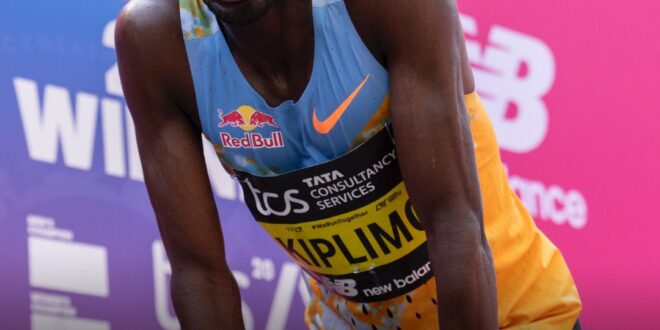
Kampala, Uganda — Uganda’s long-distance running legacy gained renewed global visibility as Jacob Kiplimo delivered a standout performance at the London Marathon, finishing third in one of the fastest races in the event’s history. Clocking a personal best of 2:00:28, Kiplimo not only improved significantly on his previous mark of 2:02:23 set during his victory at the Chicago Marathon but also reinforced Uganda’s growing stature within elite global athletics.
In a race defined by extraordinary pace and historic milestones, Kenya’s Sebastian Sawe stunned the athletics world by completing the marathon in 1:59:30, becoming the first athlete to break the two-hour barrier in a competitive race setting. Ethiopia’s Yomif Kejelcha secured second place, with all three podium finishers surpassing the previous course record of 2:00:35 set by the late Kelvin Kiptum in 2023. The result positions the 2026 edition among the most competitive and technically advanced marathons in recent memory.
Uganda’s representation extended beyond the podium, with Joshua Cheptegei finishing 12th in 2:06:39 an outcome that, while outside medal contention, reflects consistent high-level participation by Ugandan athletes on the global stage. Together, these performances illustrate a broader narrative: Uganda is no longer an emerging force in long-distance running; it is an established contender shaping the sport’s modern era. Yet beyond times and rankings, Kiplimo’s achievement carries significance that transcends athletics. In an increasingly interconnected world, sport has evolved into a subtle but influential instrument of diplomacy projecting national identity, fostering international goodwill, and expanding soft power. Uganda’s presence at premier global competitions such as the London Marathon contributes to this dynamic, positioning the country within a network of cultural and sporting exchange.
For policymakers and observers alike, such performances highlight the strategic value of investing in sports development. Elite athletes serve as de facto ambassadors, representing not only personal excellence but also the systems that nurture talent from grassroots training programs to national federations. In Kiplimo’s case, his discipline, endurance, and consistency reflect a broader ecosystem that continues to produce world-class competitors from Uganda’s high-altitude regions.
This visibility has tangible implications, international sporting success can enhance a country’s global image, attract tourism, and even influence investment perceptions. Major sporting events often serve as entry points through which global audiences engage with nations beyond traditional narratives. For Uganda, whose economic ambitions increasingly hinge on diversification and global integration, such exposure is both timely and valuable.
At the same time, the race underscores the intensifying competitiveness within East Africa’s athletics corridor. Kenya, Ethiopia, and Uganda remain dominant forces, yet the margins separating victory from third place are narrowing. This evolving landscape places renewed emphasis on innovation in training, sports science, and athlete welfare areas that will determine future success as performance thresholds continue to shift. Kiplimo’s personal progression also reflects the changing profile of elite runners. Transitioning from track and cross-country dominance into marathon excellence requires not only physical adaptation but also strategic race management. His ability to deliver a personal best in a high-pressure, record-breaking field signals maturity and positions him as a consistent podium contender in future majors.
For Uganda’s younger athletes, the impact is equally important. Performances at this level create aspirational benchmarks, demonstrating that global competitiveness is attainable. They also reinforce the role of sport as a pathway not only to personal achievement but to national contribution. In communities where opportunities may be limited, such examples carry profound social resonance. As global attention continues to follow the evolution of marathon running, Uganda’s presence within that conversation is becoming more pronounced. Kiplimo’s bronze medal is not merely a podium finish; it is part of a broader trajectory that sees the country consolidating its place among the world’s leading athletics nations.
In the final analysis, the significance of this moment lies in both performance and perception. While the stopwatch records speed, the broader impact is measured in visibility, influence, and connection. Through athletes like Kiplimo, Uganda is engaging the world in a language that transcends borders one defined by endurance, excellence, and shared human achievement. As the marathon calendar progresses, the question is no longer whether Uganda can compete at the highest level, but how far it can extend its influence within it. For now, Kiplimo’s run in London stands as a compelling reminder that in global sport, as in diplomacy, presence matters and Uganda’s presence is being felt with increasing clarity.
About The Author
Post navigation
, https://dailythinkersug.com/kiplimos-london-marathon-bronze-elevates-ugandas-global-sporting-presence/