 pressug.com News 24 7

Related Articles


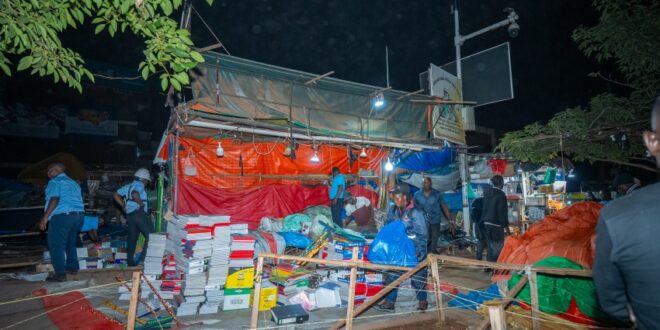
Kampala, Uganda — Uganda’s renewed push to enforce urban trade order has reignited a long-standing policy debate: how to balance the need for structured, competitive cities with the realities of informal livelihoods that sustain millions. Recent operations led by the Kampala Capital City Authority (KCCA), and replicated across municipalities nationwide, have cleared roadside vendors and informal operators from city streets often abruptly, and in some cases with reported loss of goods.
The directive, initially rolled out in Kampala and later extended to other districts, was briefly halted by the Ministry of Local Government over procedural concerns. Yet before tensions could fully subside, authorities announced a resumption of enforcement. The policy intent is clear: restore order, improve mobility, and align Uganda’s urban centres with the standards of competitive emerging economies. The question, however, is whether the country is sufficiently prepared for such a transition and whether the sequencing of enforcement matches the broader development context.
There is little dispute that organized cities are essential for economic growth. Congested streets, unregulated trade, and encroachment on road reserves and wetlands undermine infrastructure, deter investment, and strain public services. In that sense, the government’s direction reflects a legitimate ambition: to transform Uganda’s towns into efficient, investor-friendly spaces. Yet policy coherence remains a central concern. For years, informal trade has not only been visible but tacitly accommodated. In some instances, operators working in road reserves or drainage corridors held trading licenses issued by local authorities. This creates a contradiction: how does a system first permit, or at least tolerate, irregular activity, only to later enforce its removal without structured transition mechanisms?
The cost of this inconsistency is borne primarily by small-scale traders many of whom operate with limited capital and rely on daily income. Sudden evictions, particularly where alternative spaces are not ready or accessible, risk deepening urban vulnerability. While enforcement may restore order physically, it can also disrupt economic stability socially. Comparative experiences from other developing cities offer instructive lessons. In Kigali, often cited for its urban cleanliness and order, authorities combined strict enforcement with early investment in designated markets and continuous public engagement. Informal traders were gradually relocated into structured trading zones, supported by regulatory clarity and consistent messaging.
Similarly, Nairobi has pursued a mixed approach, where periodic crackdowns on street vending are paired though not always seamlessly with efforts to formalize small businesses through market infrastructure and licensing reforms. While challenges persist, the policy direction acknowledges that enforcement alone cannot resolve informality without parallel inclusion strategies. Further afield, Addis Ababa has invested in integrated urban development plans that incorporate informal trade into city design, recognizing its role in employment creation while gradually transitioning operators into formal systems. These examples underscore a common principle: successful urban order is rarely achieved through enforcement in isolation. It requires sequencing first establishing viable alternatives, then enforcing compliance. It also requires consistency in governance, ensuring that licensing, zoning, and infrastructure development align with enforcement actions.
In Uganda’s case, critics argue that this sequencing has been uneven. Questions persist over why construction in wetlands and road reserves has historically been allowed or inadequately regulated, only to later become the focus of enforcement. Addressing such structural gaps is essential, not only for fairness but for long-term credibility of urban policy. At the same time, it is important to recognize the government’s broader objective. Uganda is positioning itself within a competitive regional and global economic landscape. Well-planned cities, efficient transport systems, and regulated commercial environments are increasingly seen as prerequisites for attracting investment and supporting industrial growth. Without order, these ambitions risk being undermined.
The challenge, therefore, is not whether enforcement should happen but how it is implemented. A more balanced approach would integrate enforcement with support systems: expanding affordable market spaces, improving access to microfinance, offering business formalization pathways, and strengthening communication between authorities and traders. Equally critical is institutional coordination. Local governments, urban authorities, and central ministries must operate within a unified framework that minimizes policy reversals and builds public trust. Abrupt halts and resumptions of enforcement, as seen in recent weeks, risk sending mixed signals that can complicate compliance and planning.
Ultimately, Uganda’s urban transition reflects a broader development dilemma faced by many emerging economies: how to modernize without marginalizing. The aspiration for orderly cities is both legitimate and necessary. But its success will depend on whether reform is inclusive, predictable, and anchored in long-term planning rather than reactive measures. As enforcement resumes, the path forward may lie in bridging policy intent with practical readiness ensuring that the pursuit of order does not come at the expense of livelihoods, and that the evolution of Uganda’s cities reflects both structure and opportunity.
, https://dailythinkersug.com/ugandas-urban-trade-enforcement-order-timing-and-the-cost-of-transition/