 pressug.com News 24 7

Related Articles



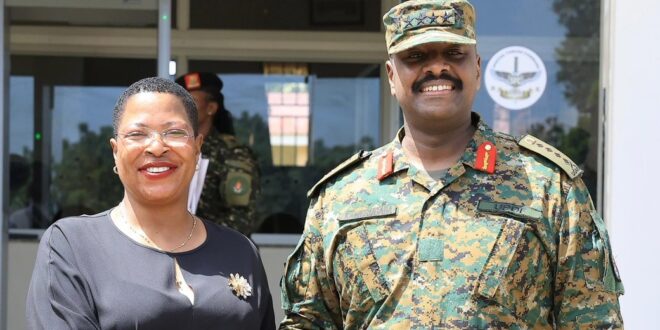
Kampala, Uganda — The Saturday security operation at the Nakasero residence of former Speaker of the Uganda Parliament Anita Annet Among marks more than a high-profile corruption investigation. It reflects a convergence of political tension, institutional pressure, anti-corruption rhetoric, and internal power recalibration within Uganda’s ruling establishment at a particularly sensitive moment in the country’s political transition.
The joint operation, reportedly led by the Criminal Investigations Directorate (CID) with support from the Uganda People’s Defence Forces (UPDF) and other state agencies, comes amid escalating scrutiny surrounding Among’s wealth, political influence, and role within the increasingly contested landscape of the ruling National Resistance Movement (NRM). Investigators are said to be examining allegations linked to illicit enrichment, money laundering, and undeclared assets claims the former Speaker has consistently denied. While authorities have not issued a comprehensive official statement by the time of this reporting, the symbolism surrounding the operation was unmistakable. Security deployments at the residence of one of Uganda’s most influential political figures immediately has intensified public debate over whether the developments represent a genuine anti-corruption push, a strategic political repositioning ahead of parliamentary speakership battles, or a combination of both.
The timing of the raid is particularly significant.
Uganda’s political environment is entering a delicate phase as internal alignments within the ruling party increasingly shape succession conversations, parliamentary leadership contests, and broader influence within state institutions. The ongoing speakership dynamics in the 12th Parliament is already exposing divisions among political actors competing for strategic control of Parliament an institution that remains central not only to legislation, but also to national budgeting, political patronage, and state influence.
The investigation into Among is unfolding alongside growing public statements by Chief of Defence Forces Gen. Muhoozi Kainerugaba, whose recent anti-corruption messaging has generated intense national discussion. His remarks condemning “thieves” within public office and calling for accountability have been interpreted by some analysts as signalling a harder institutional posture toward corruption allegations among senior officials. At the same time, the developments also expose a wider tension confronting many African political systems: the increasingly difficult balance between anti-corruption enforcement and perceptions of selective accountability. Across the continent, corruption investigations involving senior political figures often generate dual interpretations. On one hand, they are welcomed by citizens frustrated by widening inequality, rising public debt, and recurring reports of misuse of public resources. On the other hand, they frequently raise questions over institutional consistency, timing, and whether investigations are insulated from political competition.
In Uganda’s case, public frustration around governance and public expenditure has intensified in recent years amid broader economic pressures affecting households, youth employment, and service delivery. The visibility of luxury lifestyles among senior officials has increasingly become politically sensitive in a country where many citizens continue navigating high living costs and economic uncertainty. The scrutiny surrounding Among therefore extends beyond legal allegations alone. It intersects with deeper public concerns about wealth accumulation within political office, transparency in public leadership, and the broader question of accountability within state institutions.
The matter also carries international dimensions. Among has previously faced sanctions from Western governments over corruption-related allegations, particularly from the United Kingdom and the United States, although she has repeatedly rejected wrongdoing. Such external actions elevated her profile internationally and placed Uganda’s governance debates under greater global attention. Now, with domestic investigations intensifying, the situation risks evolving into a broader test of institutional credibility. If investigations proceed transparently and within established legal frameworks, authorities may seek to frame the process as evidence of strengthening accountability mechanisms regardless of political status. However, if the process is perceived as politically selective or procedurally inconsistent, it could deepen skepticism around the impartiality of state institutions.
The involvement of military-linked security agencies in the operation has also drawn attention. In many emerging democracies, the visible intersection between security structures and political disputes often fuels public debate about the boundaries between law enforcement, political management, and state power. Uganda has historically maintained a highly securitized political environment, particularly during periods of heightened political contestation. Equally notable is the growing connection between digital political mobilisation and elite political rivalries. The reported arrest of Masaka City Woman MP Justine Nameere Nsubuga following online exchanges linked to the controversy reflects how social media platforms are increasingly becoming extensions of political confrontation within Uganda’s evolving information ecosystem.
Yet beneath the immediate headlines lie a broader institutional question: whether Uganda’s governance systems are entering a phase of deeper internal reform or simply experiencing another cycle of elite political reconfiguration. For many citizens, the answer will depend less on public statements and more on consistency. Ugandans have witnessed corruption investigations before, but public confidence often hinges on whether accountability processes extend beyond political expediency and whether institutions demonstrate equal application of scrutiny across the political spectrum.
As investigations continue, the raid on Anita Among’s residence is likely to remain politically consequential not only because of the individual involved, but because of what it may reveal about the future direction of power, governance, and institutional accountability within Uganda’s evolving political order. In that sense, the developments in Nakasero are no longer simply about one politician. They have become part of a larger national conversation about authority, public trust, and the credibility of governance in an increasingly scrutinized political era.
Post navigation
, https://dailythinkersug.com/security-raid-on-anita-amongs-residence-signals-deepening-power-realignments-within-ugandas-political-establishment/