 pressug.com News 24 7

Related Articles


Viewers: 90,003
By Spy Uganda
Scientists at a leading biomedical research centre in Senegal played a critical role in identifying a deadly hantavirus outbreak aboard a cruise ship stranded off Cape Verde, helping global health officials respond rapidly to a potential international health emergency.
The alarm was raised in early May after passengers aboard the expedition cruise ship MV Hondius began showing symptoms linked to a dangerous strain of hantavirus, a disease known to kill about one in three infected patients.
The vessel, carrying around 150 passengers from 23 countries, had reportedly stopped at several remote Atlantic islands before the outbreak was detected. At least three people later died, including one passenger who had travelled through Johannesburg.
With fears growing over possible international transmission, the World Health Organization turned to the Institut Pasteur de Dakar for urgent support.
A WHO-chartered aircraft transported medical teams and virus samples from Cape Verde to Dakar in the early hours of May 5.
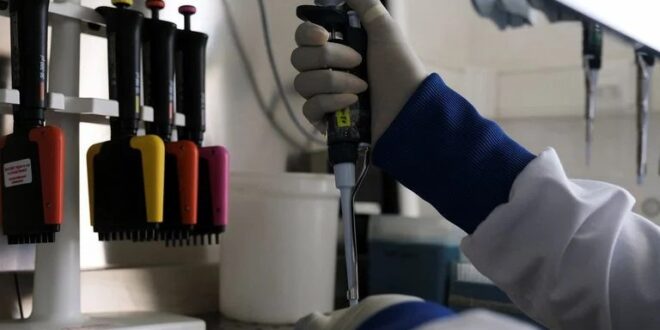
At the Institut Pasteur de Dakar, scientists immediately began overnight testing inside specialised high-security laboratories designed to safely handle infectious diseases.
Within 24 hours, researchers had produced a partial genome confirming the virus was the Andes strain of hantavirus — one of the few forms known to spread through close human-to-human contact.
Laboratories in South Africa and Switzerland independently reached the same conclusion on the same day, allowing the WHO to publicly confirm the findings during a press conference.
Dr. Moussa Moise Diagne, head of the sequencing platform at the Dakar institute, said rapid testing was crucial for patient management and contact tracing.
“It’s crucial to have, in different parts of the world, the capacity and capabilities to detect those different pathogens,” Diagne said.
He explained that understanding the virus’ genetic makeup helps scientists determine how quickly it can spread and whether dangerous mutations are emerging.
The samples from the cruise ship were transported under strict biosecurity procedures, including triple-sealed packaging and handling inside specialised biocontainment laboratories.
By May 8, scientists had successfully mapped the virus’ full genome, enabling laboratories around the world to compare sequences and monitor possible mutations.
Fortunately, experts found no significant mutations compared to previous Andes hantavirus outbreaks recorded in Argentina between 2018 and 2019.
Health officials remain concerned, however, because hantavirus can incubate for up to six weeks, raising fears that additional cases could emerge in different countries.
Researchers are now focusing on determining where the first infections occurred and identifying the exact exposure period in Latin America to prevent further spread beyond areas where the virus is commonly found.
The outbreak has also drawn attention to the importance of global laboratory networks in detecting and containing emerging diseases.
The Institut Pasteur de Dakar has previously supported responses to COVID-19, Ebola and Marburg outbreaks across Africa and is regarded as one of the continent’s leading infectious disease research centres.
However, experts warn that some international disease surveillance programs are facing funding cuts despite growing global health threats.
Among the affected initiatives is a U.S.-supported international research network focused on emerging infectious diseases, which recently lost funding, along with a pilot project studying hantavirus infections in humans.
Despite the cuts, the U.S. Department of Health and Human Services said it remains committed to supporting global efforts to combat infectious disease outbreaks and strengthen international health security.
, https://www.spyuganda.com/powerful-how-african-scientists-helped-stop-a-deadly-hantavirus-outbreak-at-sea/