 pressug.com News 24 7

Related Articles


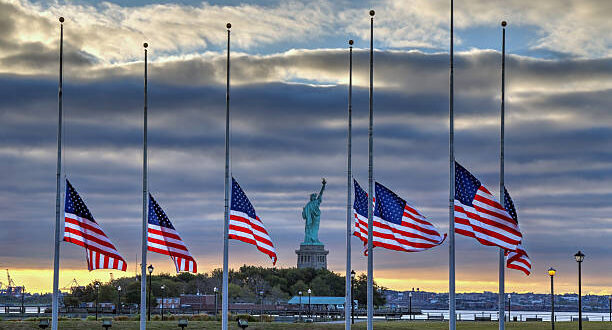
Washington, D.C. — Across the United States, flags are being flown at half-staff as the country marks Memorial Day, one of the few national observances that continues to unite Americans across political, regional, and cultural lines through a shared act of remembrance and national reflection. The nationwide tribute, observed annually on Memorial Day, honors members of the United States Armed Forces who lost their lives in military service. From federal institutions and military installations to schools, public buildings, and local communities, the lowering of flags remains among the most visible symbols of collective national mourning and respect. Unlike many modern commemorations shaped by political debate or ideological division, Memorial Day continues to hold a uniquely unifying place within American civic culture. The observance cuts across state boundaries and social differences, creating a moment where national identity is expressed through remembrance rather than partisanship.
This year’s ceremonies and tributes come at a time when many democracies globally are reflecting more deeply on questions of national cohesion, civic responsibility, and historical memory amid increasingly polarized political environments. In the United States, Memorial Day retains significance not only because of its military associations, but also because it reinforces a broader tradition of honoring sacrifice in service to national institutions. The practice of flying flags at half-staff carries deep historical and diplomatic symbolism internationally. Across many countries, lowering the national flag is reserved for periods of mourning, remembrance, or recognition of significant national loss. In the American context, Memorial Day observances traditionally require flags to remain at half-staff from sunrise until noon before being returned to full-staff later in the day a symbolic transition representing both mourning for the fallen and the continuation of national resilience.
Public commemorations across the country are expected to include military parades, wreath-laying ceremonies, cemetery tributes, moments of silence, and gatherings involving veterans’ organizations and families of fallen service members. Arlington National Cemetery remains among the focal points of national observance, alongside memorial events hosted by local communities throughout the country. Beyond ceremony, Memorial Day also reflects the enduring relationship between military service and national identity within American society. For many families, the day carries deeply personal significance linked to generations who served in conflicts ranging from World War II and Vietnam to Iraq and Afghanistan.
Analysts note that national remembrance traditions often play an important role in reinforcing civic continuity, particularly during periods of social fragmentation or political tension. Shared rituals whether tied to military remembrance, independence commemorations, or historical milestones help sustain a sense of collective memory within modern states. At the same time, Memorial Day increasingly unfolds within a rapidly changing global environment where the role of military institutions, veterans, and national security remains central to international political discourse. Ongoing geopolitical tensions in Europe, the Middle East, and Asia have renewed conversations globally around sacrifice, security alliances, and the human cost of conflict.
In the United States, however, Memorial Day continues to maintain a distinctly reflective tone compared to more celebratory patriotic holidays. The lowered flags serve as a visible reminder that national freedoms and institutions have historically carried human costs borne by military personnel and their families. The observance also highlights how symbolism remains powerful within state traditions. In an age dominated by fast-moving digital communication and fragmented public attention, physical national rituals such as flags flown at half-staff continue to carry emotional and political significance precisely because they are visible, collective, and widely understood.
For many observers, the continued nationwide observance of Memorial Day demonstrates the enduring relevance of civic traditions in sustaining national unity. Even within increasingly diverse and politically polarized societies, moments of shared remembrance still possess the ability to transcend everyday divisions. As tributes continue across all fifty states, the lowered flags stand not only as symbols of mourning, but also as reminders of how nations preserve continuity through collective memory, public honor, and recognition of sacrifice across generations.
Post navigation
, https://dailythinkersug.com/memorial-day-flag-tributes-reflect-americas-shared-national-tradition/