 pressug.com News 24 7

Related Articles


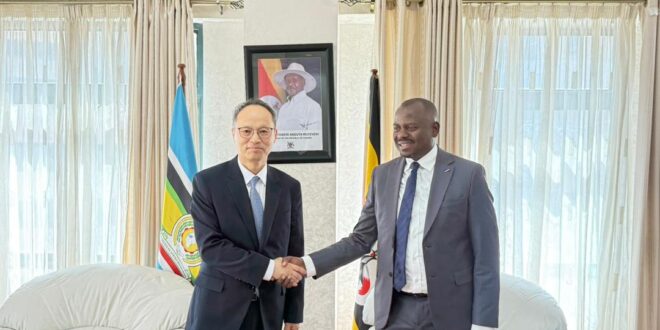
KAMPALA, Uganda— Uganda and the Republic of Korea have reaffirmed their commitment to expanding bilateral cooperation, with renewed focus on trade, technology, investment, education, and agricultural transformation, following the presentation of copies of the Letters of Credence by South Korea’s Ambassador-Designate, H.E. Lee Sang-ho.
The diplomatic engagement, held at Uganda’s Ministry of Foreign Affairs, saw the Ag. Minister of Foreign Affairs, Hon. Haruna Kasolo Kyeyune, formally receive the copies of letters of credentials that mark the beginning of Ambassador Lee’s official mission in Uganda, ahead of presenting full Letters of Credence to President Yoweri Kaguta Museveni.
While largely ceremonial in diplomatic protocol, the exchange of Letters of Credence often provides the first opportunity for both countries to articulate priorities that will define the ambassador’s tenure. In this case, discussions reflected a shared ambition to elevate Uganda–Korea relations beyond traditional development cooperation towards a broader strategic partnership anchored in innovation, trade, and inclusive economic growth.
Congratulating Ambassador Lee on his appointment, Hon. Kasolo reaffirmed Uganda’s commitment to strengthening the longstanding friendship between Kampala and Seoul. He emphasized Uganda’s desire to deepen diplomatic engagement with the Republic of Korea across political, economic, and socio-cultural spheres, reflecting the country’s broader foreign policy objective of leveraging diplomacy to advance national development.
Uganda’s approach aligns with its Economic and Commercial Diplomacy agenda, which seeks to transform diplomatic relations into platforms for trade promotion, investment attraction, technology transfer, tourism development, and skills exchange. For Korea, one of Asia’s leading innovation economies, Uganda presents growing opportunities within East Africa’s expanding markets, supported by a youthful population and abundant agricultural resources. One of the defining themes emerging from the meeting was digital transformation.
Hon. Kasolo highlighted the importance of expanding cooperation in digital innovation and emerging technologies, noting that such partnerships could play a critical role in unlocking opportunities for Uganda’s predominantly young population. With nearly four out of every five Ugandans below the age of 35, investment in digital infrastructure, skills development, artificial intelligence, entrepreneurship, and technological innovation has become central to the country’s long-term economic aspirations.
South Korea’s globally recognised expertise in digital governance, smart technologies, manufacturing, and research presents opportunities for deeper collaboration in these areas. Such partnerships increasingly extend beyond infrastructure to include knowledge exchange, technical capacity building, digital entrepreneurship, and innovation ecosystems.
Hon. Kasolo encouraged greater Korean investment in agro-processing and value addition, particularly in rural communities where agriculture remains the backbone of household incomes. Rather than exporting raw commodities, Uganda continues to pursue policies that promote local processing, manufacturing, and industrialisation to increase export earnings and create employment.
The Minister further underscored Uganda’s interest in expanding access for Ugandan products including coffee and fresh agricultural produce to the Korean market. For Uganda, diversification of export destinations remains a strategic priority as global demand evolves and international markets become increasingly competitive.
Ambassador Lee expressed appreciation for the warm welcome accorded to him and reaffirmed his commitment to strengthening the longstanding partnership between the Republic of Korea and Uganda. He identified agriculture, trade, investment, and education as priority areas during his diplomatic assignment, signalling continuity in Korea’s engagement with Uganda’s development agenda.
Education cooperation has long been one of the defining features of Uganda–Korea relations, supported through scholarships, technical training, capacity development, and institutional partnerships that have benefited Ugandan students and professionals. Investment cooperation likewise continues to expand as Korean enterprises explore opportunities across manufacturing, infrastructure, energy, information technology, and agribusiness.
The meeting reflects an evolving character of international diplomacy, where embassies increasingly serve as catalysts for economic cooperation, innovation partnerships, and people-to-people exchanges rather than solely managing political relations. For Uganda, strengthening partnerships with technologically advanced economies such as the Republic of Korea complements national ambitions to industrialise, enhance competitiveness, and equip young people with skills suited for the digital economy. For Korea, engagement with Uganda supports broader cooperation with Africa under a framework that increasingly values sustainable development, trade, innovation, and mutually beneficial partnerships.
As Ambassador Lee prepares to formally present his Letters of Credence to the President of Uganda, both governments appear committed to translating diplomatic goodwill into tangible outcomes. The discussions suggest that the next phase of Uganda–Korea relations is likely to focus not only on traditional development assistance but also on expanding commercial diplomacy, technological cooperation, agricultural value addition, education partnerships, and innovation-driven growth. In a rapidly changing international environment, such partnerships demonstrate how diplomacy continues to evolve from managing bilateral relations to shaping shared prosperity.
Post navigation
, https://dailythinkersug.com/uganda-and-south-korea-signal-deeper-strategic-partnership-as-new-ambassador-begins-diplomatic-mission/