 pressug.com News 24 7

Related Articles
By Ben Musanje
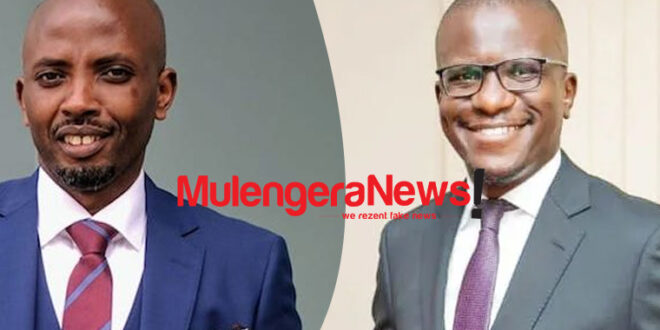
A fresh legal opinion by Senior Counsel Rashid Ssemambo has added a constitutional dimension to the growing public debate surrounding the appointment of Prof. Lawrence Muganga as Uganda’s State Minister for Internal Affairs, dismissing claims that his dual citizenship disqualifies him from holding ministerial office.
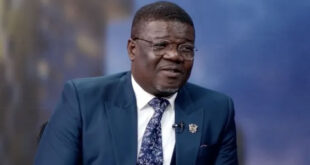
Prof. Muganga, the Vice Chancellor of Victoria University which is owned by Uganda’s Richest Mogul Dr Sudir Ruparelia, recently came under intense criticism on social media after President Yoweri Museveni appointed him to the ministerial role. Much of the criticism centered on the fact that Muganga reportedly holds both Ugandan and Canadian citizenship.
Critics online argued that Uganda’s Citizenship and Immigration Control (Amendment) Act, 2009 limits dual citizens from serving in certain sensitive public offices. Several TikTok commentators and self-styled constitutional analysts cited provisions in the law they claim bar dual citizens from ministerial appointments beyond positions specifically listed in the Fifth Schedule of the Act.
However, in a strongly worded legal analysis dated May 29, 2026, Ssemambo who serves as the President of the Uganda Muslim Lawyers Association (UMLAS) argues that the Constitution of Uganda supersedes any contradictory provisions in ordinary legislation and that dual citizens are fully entitled to serve as ministers.
“The Constitution allows all citizens to be appointed as Ministers. There is no qualification or limitation expressed thereby,” Ssemambo wrote.
The senior lawyer traces the legal foundation of dual citizenship to Article 15 of the Constitution, which was introduced through constitutional amendments permitting Ugandans to retain citizenship of another country after acquiring Ugandan nationality.
According to Ssemambo, dual citizenship does not create “half rights and half duties,” but instead grants a person the full obligations and protections of Ugandan citizenship unless the Constitution expressly limits those rights.
He cites the oath of allegiance sworn by all citizens acquiring Ugandan nationality, which requires them to “preserve, protect and defend the Constitution” of Uganda.
“Clearly, a dual citizen assumes all obligations and rights under the Constitution of the Republic of Uganda,” he states.
Ssemambo further argues that constitutional interpretation must follow the doctrine of “harmonious interpretation,” where legal provisions are read together rather than in isolation or conflict. In his view, interpreting the Citizenship Act in a way that excludes dual citizens from ministerial appointments would contradict the Constitution itself.
He points specifically to Article 80 of the Constitution, which states that a person qualifies to be a Member of Parliament if they are “a citizen of Uganda.” Since ministers are appointed from among Members of Parliament or persons qualified to become MPs under Article 113, Ssemambo contends that all Ugandan citizens — including dual citizens — are constitutionally eligible.
He contrasts this with the presidency, where Article 102 expressly limits eligibility to citizens by birth, arguing that the Constitution deliberately imposes restrictions where intended.
“Whereas the Constitution limits eligibility for President to citizens by birth, the same Constitution allows all citizens to be appointed as Ministers,” he explains.
The lawyer therefore concludes that any statutory provision seeking to impose additional restrictions on dual citizens serving as ministers is unconstitutional and void under Article 2 of the Constitution, which establishes constitutional supremacy.
He specifically attacks Section 19D and parts of the Fifth Schedule of the Uganda Citizenship and Immigration Control (Amendment) Act, arguing that they conflict with constitutional provisions and therefore “are of no legal effect.”
To support his argument, Ssemambo references the landmark 1961 case of MacFoy versus United Africa Co. Ltd, which held that an unconstitutional act is automatically null and void without requiring a court order.
“An Act of Parliament that contradicts the Constitution is automatically void to the extent of its inconsistency,” he wrote.
Beyond the legal argument, Ssemambo also criticized what he described as growing misinformation and intellectual decline fueled by social media platforms, particularly TikTok.
In a sharp commentary at the end of his opinion, he warned that unchecked social media discourse risks eroding public understanding of constitutional and legal issues.
“TikTok et al are our opium,” he wrote, comparing the spread of social media misinformation in Africa to the historical opium trade imposed on China during the colonial era.
The remarks have since sparked further debate online, with supporters of Prof. Muganga welcoming the legal interpretation as a strong constitutional defense of his appointment, while critics continue to question whether Uganda’s laws on dual citizenship require clarification by Parliament or the courts.
Government officials have not yet publicly responded to the controversy, and there is currently no indication of any legal challenge against Prof Muganga’s appointment. (For comments on this story, get back to us on 0705579994 [WhatsApp line], 0779411734 & 041 4674611 or email us at mulengeranews@gmail.com).
Post Views: 572
, https://mulengeranews.com/dual-citizenship-storm-senior-counsel-defends-prof-lawrence-muganga-appointment-blasts-tiktok-lawyers/
