 pressug.com News 24 7

Related Articles
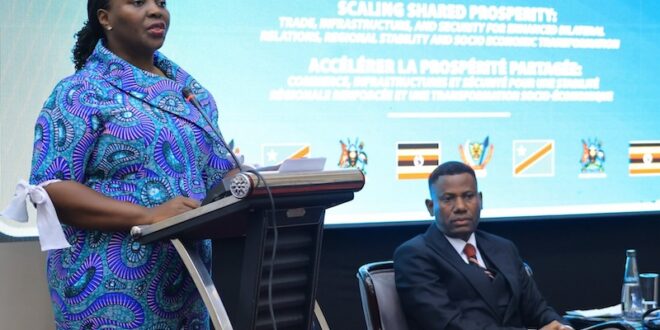
Irene Batebe, Uganda’s Permanent Secretary in the ministry of Energy and Mineral Development, has called on regional energy regulators in East Africa to expand their mandate to include mining, arguing that the sector is increasingly intertwined with energy development and regional industrialization ambitions.
Speaking during the annual general meeting of the Energy Regulators Association of East Africa (EREA) held at Serena hotel Kampala on May 26, 2026, Batebe said harmonizing mining regulations across the region would help unlock investment, support industrial growth, and strengthen the value chain for critical minerals.
“We need also to harmonize our mining regulatory frameworks so that the mining sector unlocks demand and provides critical raw materials,” Batebe said.
“At their next meeting, this association should consider adding mining.” EREA was established in 2008 as a platform for electricity regulatory bodies in East Africa.
In recent years, the association expanded its scope to include petroleum regulation, reflecting the growing integration of energy markets across the region. Batebe argued that adding mining would be a logical next step as East African countries position themselves to benefit from the global energy transition and rising demand for critical minerals used in clean energy technologies.
Her proposal, however, sparked debate among delegates attending the regional meeting. Adam Haji Ali, an official from Kenya’s Energy and Petroleum Regulatory Authority (EPRA) who chaired the 2026 AGM, cautioned that incorporating mining into EREA’s structure could present administrative and legal challenges in some member states.
He noted that in several countries, energy and mining fall under separate government ministries and regulatory agencies, which could create additional bureaucracy. “There could be a lot of red tape in bringing mining on board in countries where energy and minerals are under different ministries,” Ali observed.
However, Batebe is optimistic that closer coordination between the sectors is becoming increasingly necessary as the region pursues industrialization and energy security. She reaffirmed Uganda’s commitment to regional power integration and cross- border electricity trade, saying regional cooperation remains central to achieving universal energy access and sustainable economic growth.
“Uganda remains deeply committed to the establishment of regional power pool operations,” Batebe said.
She added that electricity trade between Uganda and neighbouring Kenya is already demonstrating the benefits of regional integration efforts coordinated through EREA. Batebe also highlighted the importance of regional solidarity amid growing geopolitical tensions affecting global energy markets.
Referring to rising fuel prices linked to the conflict involving Iran, the United States and major petroleum-producing countries in the Middle East, she urged regional regulators to strengthen collaboration in navigating global energy shocks.
“The Middle East conflict requires us as regional bodies to navigate the ongoing situation,” she said.
Batebe outlined several priority areas for EREA, including accelerating harmonized regulatory frameworks, enhancing access to electricity for both industrial users and rural communities, and supporting a sustainable energy transition across East Africa.
She said affordable and reliable energy remains essential for economic transformation and improving livelihoods. The AGM brought together regulators and energy officials from Uganda, Kenya, Rwanda, Tanzania, Burundi, Zanzibar, Ethiopia, and other countries in the region.
Uganda’s chief executive officer of the Electricity Regulatory Authority (ERA), Eng Ziria Tibalwa Waako, the host of the meeting, noted the importance of regional cooperation in building a unified East African energy market. In her remarks, Waako said EREA has evolved beyond technical regulation into a platform that is helping shape the future of regional energy integration.
“Through EREA, we are charting the way forward on regional energy integration,” Waako said. She noted that the association is also promoting institutional development among member regulators through staff exchanges and capacity-building initiatives focused on governance and human resource management.
“We are also moving soft skills among our staff in the region, including issues of governance and human resources management,” she said, adding that regional cooperation is no longer optional given the growing interconnectedness of energy infrastructure and markets in Eastern Africa.
According to Waako, one of the biggest achievements so far has been the progress toward establishing a regional power market under the Eastern Africa Power Pool framework. She said the initiative now enables 13 member countries to share surplus electricity, helping improve reliability and efficiency in electricity supply across borders.
“The difference is in areas of licensing standards. We are developing a regional power market,” she explained.
“We have made very good progress with the Eastern power pool through which 13 member countries can share surplus electricity.”
Waako added that Uganda continues to benefit significantly from regional cooperation initiatives, including infrastructure projects such as the East African Crude Oil Pipeline, which she described as a key example of cross- border energy collaboration.
Related
, https://observer.ug/business/batebe-wants-mining-added-to-energy-regulators-mandate/