 pressug.com News 24 7

Related Articles



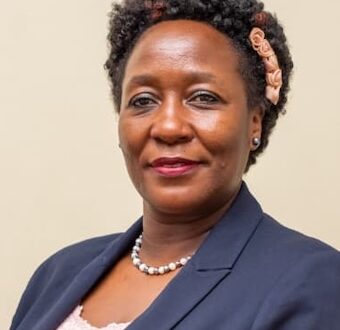
Virginia Semakula
Equity Bank Uganda is positioning itself at the center of Uganda’s growing clean energy transition, unveiling a financing strategy aimed at making solar technologies, clean cooking systems, and renewable energy solutions more affordable.
Speaking during an interview, Equity Bank’s Energy, Environment and Climate Change Pillar Head, Virginia Semakula, said: “Many Ugandans want solar systems, clean cookstoves, and renewable energy solutions, but the initial costs remain too high for households and small businesses.”
The bank noted that while government tax waivers on solar products have helped improve access, financing structures still need to evolve to support wider adoption.
“We need more flexible financing with lower interest rates and longer repayment periods, especially for solar technologies. A 24-month repayment structure works much better for many customers,” Semakula explained.
Equity Bank has since rolled out specialized green financing products, including Equi-Green Loans and Green Enterprise Financing, targeting households, SMEs, agribusinesses, schools, and companies investing in renewable energy solutions.
Under the model, the bank works directly with renewable energy suppliers who install the technologies while Equity provides financing support to end users.
The lender says the approach reduces barriers to access while helping customers transition from expensive and environmentally harmful energy sources such as charcoal, kerosene, and firewood.
A major pillar of Equity Bank’s green financing strategy is Results-Based Financing, a model increasingly gaining traction among development partners and financial institutions seeking measurable impact from clean energy investments.
Unlike conventional financing, RBF operates on a “payment for results” approach where incentives are only paid after projects are independently verified and proven to be working.
The bank has implemented several RBF programs in partnership with organizations such as GIZ-NDEF, supporting the rollout of solar technologies and improved cooking systems in underserved communities.
According to Equity, the impact has already been visible. In rural communities, households have shifted from charcoal and kerosene to cleaner cooking systems, reducing fuel costs and indoor pollution.
Businesses are increasingly using solar energy to extend operating hours and cut electricity expenses. Schools in off-grid districts such as Alebtong have also benefited from solar installations, enabling students to study at night and improving overall academic performance.
“In some schools, electricity access changed everything. Students could study longer, enrollment increased, and schools even recorded improved academic performance,” Semakula explains.
The bank says the growth of green financing is also stimulating Uganda’s renewable energy market by attracting more solar companies, increasing competition, creating jobs, and gradually lowering technology prices.
Despite the progress, many financial institutions still consider renewable energy financing risky due to concerns over loan repayment and technology performance.
However, Equity bank says data from its RBF programs has demonstrated strong repayment rates and increasing customer confidence, proving the market is commercially viable.
“There has always been fear that customers may not repay or that the technologies may fail, but the results are showing otherwise. Customers are paying, and adoption is growing,” she says.
To further support Uganda’s green transition, Equity Bank has announced a series of public awareness initiatives during Energy Month, including “Green Friday” campaigns where customers will interact directly with renewable energy technologies through demonstrations and exhibitions.
In addition, Equity says it is expanding financial literacy programs to educate Ugandans on how to select, finance, and effectively use clean energy technologies.
Looking ahead, the lender says its long-term vision is to make renewable energy financing as accessible and common as school fees or boda boda loans.
“Our vision is a Uganda where every household and business can access clean energy without taking on unmanageable debt,” the official said.
For many households and small businesses struggling with high energy costs, clean energy is no longer only an environmental conversation, but an economic one.
Related
, https://observer.ug/business/equity-bank-pushes-green-financing-for-clean-energy/


Hello. And Bye.