 pressug.com News 24 7

Related Articles



The Bank of Uganda (BoU) has announced fresh restrictions on over-the-counter cash withdrawals, introducing daily caps of Shs50 million for individuals and Shs500 million for businesses as part of efforts to promote a cashless economy.
In a directive circulated to commercial banks, credit institutions, and microfinance deposit-taking institutions, the central bank indicated that the new measures will come into force on January 1, 2027.
Under the revised framework, customers will be unable to withdraw cash beyond the set thresholds within a single day when transacting physically at banking halls. However, the limits will not apply to electronic transactions such as mobile money transfers, internet banking, Electronic Funds Transfers (EFTs), or Real-Time Gross Settlement (RTGS) systems.
BoU says the policy is aimed at reducing reliance on physical cash while encouraging wider use of digital financial services. Officials argue that increasing digital transactions will enhance efficiency, improve transparency, and strengthen oversight in the financial system.
The directive is likely to affect sectors that heavily depend on cash transactions, including wholesale trade, construction, agriculture, and transport. Many operators in these industries still rely on large sums of physical cash for daily operations.
BoU Director of Communications Kenneth Egesa confirmed that financial institutions have already received the circular to allow ample time for preparation before implementation.
While analysts view the move as consistent with global trends toward modern payment systems and tighter anti-money laundering controls, some business players have raised concerns. They warn that limited access to reliable digital infrastructure in certain areas could pose challenges to smooth adoption.
Uganda has seen steady growth in mobile money usage and electronic banking in recent years, with both government and private sector players advocating for reduced cash handling.
The new policy is expected to trigger wider discussions around financial inclusion, infrastructure readiness, and the practicality of transitioning to a less cash-dependent economy.
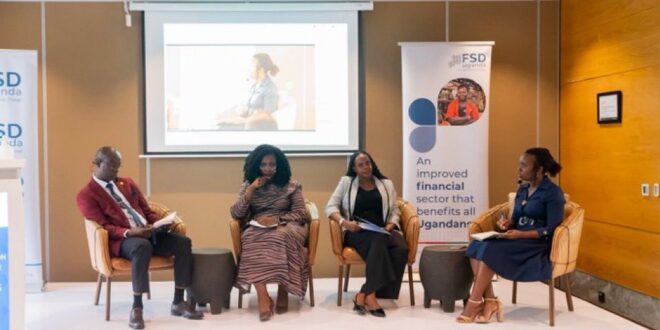
Only 5% of young women rely exclusively on informal financial services, while 14% remain completely unserved by both formal and structured informal financial systems.
“Data tells us what is happening, but not always why. By combining FinScope analysis with direct conversations with young women, we are uncovering the realities behind the numbers.” — Joseph Lutwama
“Designing effective financial products requires more than access, it demands insight. Understanding young women’s lived experiences enables us to build solutions that truly work for them.” — Joseph Lutwama
Post Views: 7
, https://thecapitaltimes.co.ug/bou-sets-new-daily-cash-withdrawal-limits-in-push-for-digital-payments/