 pressug.com News 24 7


Related Articles

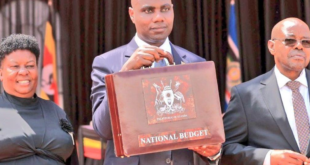
KAMPALA — Across East Africa, finance ministers have presented some of the most ambitious budgets in the region’s history. Collectively, Uganda, Kenya, Tanzania, and Rwanda are planning to spend well over US$90 billion in the 2026/27 financial year, while the wider region, including the Democratic Republic of Congo and Ethiopia, is mobilizing public expenditures exceeding US$125 billion. The numbers are impressive. Kenya plans to spend approximately US$37.2 billion, Uganda US$22.7 billion, Tanzania US$23.7 billion, and Rwanda about US$5.3 billion.
Yet behind the budget speeches lies a growing dilemma confronting governments across Africa: how to finance expanding development ambitions without placing an ever-heavier tax burden on citizens and businesses already grappling with high living costs. The question is becoming increasingly urgent, while governments require resources to build roads, railways, hospitals, schools, and energy systems, raising taxes on fuel, consumer goods, manufacturing inputs, and small businesses can slow economic activity and reduce purchasing power. The challenge therefore is not merely raising revenue it is expanding the economy itself.
A striking feature of the 2026/27 budgets is that despite differing national priorities, all four East African economies are pursuing remarkably similar objectives. Uganda is betting on oil production, agro-industrialisation, tourism, minerals, and manufacturing. Kenya continues to prioritize its Bottom-Up Economic Transformation Agenda through investments in infrastructure, health, education, and digital innovation. Tanzania is accelerating large-scale infrastructure through the Standard Gauge Railway, energy projects, and logistics corridors. Rwanda remains focused on structural transformation, aviation, technology, healthcare, and human capital development.
Despite these differences, all governments face the same reality: expenditure is growing faster than traditional revenue sources. Historically, many governments have responded by increasing excise duties, fuel levies, import taxes, and consumption-related charges. While such measures provide short-term fiscal relief, they rarely generate sustainable long-term prosperity. The experience of both developed and emerging economies suggests that economic expansion not tax increases is the most reliable path toward stronger public finances.
Kenya’s budget provides perhaps the clearest example of an emerging policy shift rather than introducing sweeping new taxes, the Treasury is emphasizing tax compliance and administrative efficiency. This approach recognizes a fundamental reality: governments often lose substantial revenue not because tax rates are too low, but because collection systems are weak, informal sectors remain outside the tax net, and leakages persist within public institutions. Improving compliance, digitizing tax administration, reducing evasion, and broadening participation can generate significant revenues without increasing the burden on already compliant taxpayers. For many African countries, this remains one of the largest untapped fiscal opportunities.
Tanzania’s strategy offers a different perspective, the country’s investments in railways, ports, roads, and energy infrastructure are designed not merely as public services but as future revenue-generating assets. The Standard Gauge Railway, port modernization, and power generation projects are intended to reduce logistics costs, attract investment, increase trade volumes, and stimulate industrial growth. The principle is simple: infrastructure should create economic activity that eventually expands the tax base. When businesses grow, employment rises. When employment rises, incomes increase. When incomes increase, government revenues naturally expand without requiring higher tax rates.
Rwanda continues to demonstrate the value of investing in human capital, Its emphasis on education, healthcare, technology adoption, and institutional efficiency reflects a long-term understanding that productivity drives prosperity. Countries with skilled populations generate more innovation, attract higher-value investments, and create stronger domestic enterprises. In this model, economic growth comes not from taxing more people, but from enabling people to become more productive contributors to the economy.
Uganda’s 2026/27 budget arrives at a pivotal moment, the country is preparing for commercial oil production while simultaneously scaling investments in agriculture, tourism, manufacturing, and mineral beneficiation. Yet some of the new revenue measures including increased fuel levies, higher excise duties on selected products, and additional charges on consumer goods have raised concerns about potential inflationary effects. The broader policy question is whether Uganda can gradually shift from a taxation-driven revenue strategy to a production-driven revenue strategy. The answer may lie in expanding value addition, For example, a country earns significantly more economic value from exporting processed coffee than raw coffee beans; more from refined minerals than unprocessed ore; and more from manufactured products than imported finished goods. The same logic applies to tourism, technology, pharmaceuticals, and industrial production. Economic transformation ultimately broadens the tax base naturally, reducing the need for repeated tax increases.
The Real Challenge Perhaps the most overlooked issue across East Africa is not revenue collection but expenditure efficiency. According to numerous regional studies, billions of dollars are lost annually through project delays, procurement inefficiencies, corruption, duplication of government functions, and underperforming state enterprises. Recovering even a fraction of these losses could generate resources equivalent to several new taxes. In other words, governments may have more to gain from improving how they spend than from increasing what they collect.
As East African economies pursue industrialisation and regional integration, the debate should gradually move beyond taxation. The future competitiveness of African economies will depend on their ability to stimulate production, formalize businesses, attract investment, strengthen institutions, and improve public sector efficiency. The countries that succeed will likely be those that view taxes as a consequence of growth rather than the primary engine of growth.
The 2026/27 budgets reveal a region determined to accelerate development despite global uncertainty. However, sustainable prosperity will not be achieved through tax increases alone. Kenya’s focus on compliance, Tanzania’s infrastructure-led growth model, Rwanda’s investment in human capital, and Uganda’s push toward production and value addition all point toward a common lesson: economic expansion is the most sustainable source of government revenue. For East Africa, the next phase of fiscal policy should therefore focus less on finding new things to tax and more on creating new wealth to tax. That distinction may determine which economies emerge as the region’s true growth champions over the coming decade.
Post Views: 0
Post navigation
, https://dailythinkersug.com/beyond-tax-hikes-what-east-african-governments-can-learn-from-each-others-budgets/