 pressug.com News 24 7

Related Articles

By: Lawrence Mubiru
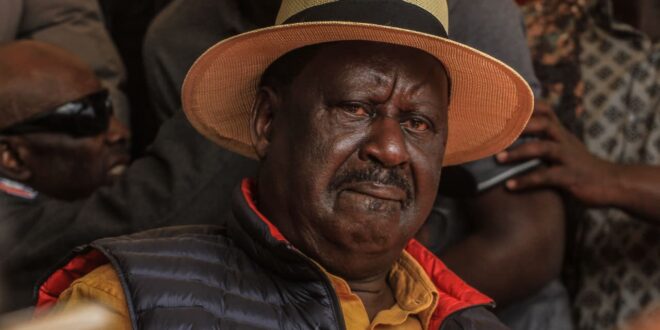
When the news broke on a calm Nairobi morning that Raila Amolo Odinga had died, the city fell into an eerie stillness. Traffic slowed. Radios went silent between bulletins. For a nation that had for decades measured its politics by his presence — his fiery speeches, his unyielding defiance, his reconciliatory handshakes — the thought of Kenya without “Baba” felt almost impossible to grasp.
To many, Odinga was not just a politician. He was an institution — a man whose life told the story of Kenya’s long, winding journey toward democracy.
The Son of Struggle
Born in 1945, the son of Kenya’s first vice president, Jaramogi Oginga Odinga, Raila inherited both the burden and blessing of politics. His early years were spent in the shadows of a system that both revered and feared his father’s dissent. By the late 1970s, as a young lecturer and engineer, Odinga had already begun to question the status quo.
Then came the years of silence — the detentions, the exile, the whispered conversations about democracy. Under President Daniel arap Moi’s authoritarian regime, Odinga was jailed several times, accused of plotting against the state. Yet, when he emerged, his resolve was sharper than before.
He became the face of Kenya’s “second liberation,” the man who helped dismantle the one-party state and ushered in plural politics in the early 1990s. His voice carried the rhythm of resistance, his words the language of reform.
A Symbol Larger Than Politics
In the eyes of his supporters, he was the people’s president — the man who won elections but lost power. To his critics, he was the perennial challenger who refused to concede defeat. But to the country at large, Raila Odinga was the heartbeat of Kenya’s political conscience.
He contested the presidency five times — 1997, 2007, 2013, 2017, and 2022 — each time turning defeat into a platform for reform. Even in loss, he reshaped the nation’s political narrative.
The 2007 post-election violence, one of Kenya’s darkest chapters, could have defined him. Instead, Odinga became a voice for peace, joining a coalition government that calmed the storm. Years later, in 2018, his historic “handshake” with former rival President Uhuru Kenyatta would once again pull the country back from the brink.
“Raila was the bridge between chaos and calm,” said Dr. Joseph Njoroge, a Nairobi-based political analyst. “He knew when to fight, but he also knew when the nation needed healing.”
A Continent Takes Notice
Beyond Kenya, Odinga’s influence stretched across East Africa. As an African Union envoy for infrastructure, he traveled widely, preaching integration, connectivity, and good governance. He built friendships with presidents and ordinary citizens alike.
Uganda’s President Yoweri Museveni called him “a courageous Pan-Africanist,” while Tanzania’s President Samia Suluhu Hassan described him as “a statesman whose vision transcended borders.”
Across the region, his voice carried weight — not because of titles, but because of trust. When political tensions simmered, Raila Odinga was often the quiet phone call behind the scenes, urging restraint, reminding leaders of the bigger picture.
A Nation in Mourning
In Kisumu, his lakeside hometown, the air is thick with sorrow. Crowds have gathered at Kondele, lighting candles and singing the liberation songs that once echoed through Kenya’s streets during his rallies.
“I can’t believe Baba is gone,” said Mary Achieng, a trader wiping her tears. “He was our voice. He showed us that courage can change a nation.”
In Nairobi, the city’s digital billboards flicker with his image — smiling, fists raised, eyes set on the horizon. On social media, the hashtags #FarewellBaba and #RailaLegacy trend across platforms.
Even those who once opposed him are now united in grief. “You didn’t have to agree with him to respect him,” said David Kamau, a university student. “He fought for democracy when it was dangerous to do so.”
The Unfinished Chapter
Odinga’s death leaves a gaping void in Kenya’s political arena. The opposition he built, the Orange Democratic Movement (ODM), now faces a question he alone could answer: who comes after Baba?
His passing also reopens old national debates — about power, tribe, unity, and the ever-elusive dream of electoral justice. Yet perhaps his greatest lesson lies not in politics, but in perseverance.
“Raila Odinga was not perfect,” said Dr. Njoroge. “But he embodied something rare — the belief that even in defeat, democracy must live on.”
The Man Who Refused to Give Up
For over forty years, Raila Odinga carried Kenya’s hopes on his shoulders — sometimes winning, often losing, but never giving up. He walked with kings yet never lost the touch of the common man.
Now, as the country lays him to rest, Kenya must learn to walk without him. But his voice — that gravelly, defiant, fatherly voice — will echo in its politics for generations to come.
“Even when he lost,” said Wanjiru Mugo, a social commentator, “he made us believe that the struggle wasn’t in vain.”
And so, in the silence that follows his passing, a nation reflects — on its triumphs, its wounds, and the man who spent a lifetime trying to heal them.
Raila Amolo Odinga (1945–2025)
A reformer. A fighter. A father of democracy.