 pressug.com News 24 7

Related Articles



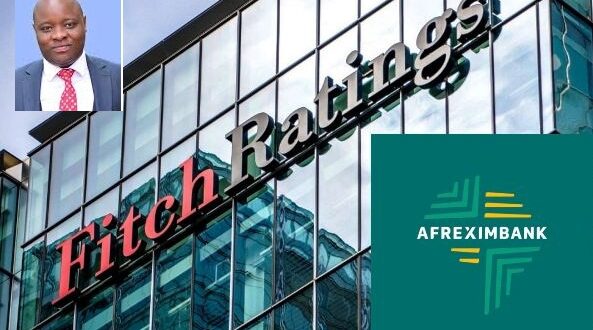
A storm is brewing in global finance after the African Export-Import Bank, popularly known as Afreximbank, terminated its credit rating relationship with Fitch Ratings in a move that has sent shockwaves through African financial markets.
In a sharply worded public statement, Afreximbank said the credit rating exercise “no longer reflects a good understanding of the Bank’s Establishment Agreement, its mission, or its mandate.” The bank insisted its business profile remains “robust, underpinned by strong shareholder relationships and the legal protections embedded in its Establishment Agreement,” which is a treaty signed and ratified by its member states.
Development finance expert Dr. Macharia Kihuro says the fallout exposes a deeper structural rift in global financial governance.
“This is not just about one downgrade,” Dr. Kihuro argues. “It is about whether rating agencies can continue applying a rigid, one-size-fits-all methodology to fundamentally different institutions. Should a commercial bank be assessed using the exact same framework as a multilateral development bank? Afreximbank believes that distinction was ignored.”
The rupture became official on January 28, 2026, when Fitch downgraded Afreximbank to ‘BB+’ from ‘BBB-’ and subsequently withdrew all ratings. The move pushed the bank’s long-term issuer default rating into non-investment grade, commonly referred to as “junk” territory.
Afreximbank responded by cutting ties, describing Fitch’s methodology as flawed and damaging to its mission, and suggesting the downgrade reflected a broader bias against African financial institutions.
Fitch’s framework, outlined in its “Bank Rating Criteria,” relies on a two-part structure. First is the Core Quantitative Model, which calculates a Viability Rating using metrics such as asset quality and capital adequacy. Second is the Support Rating framework, where external backing is assessed.
For multilateral development banks, this support is theoretically anchored in the collective and contractual commitment of member states under their founding agreements. In strong cases, Fitch applies what it calls a “credit substitution” approach, linking the MDB’s rating to the creditworthiness of its strongest shareholders.
But Dr. Kihuro believes the theoretical distinction may not have translated into practical fairness.
“The core question,” he says, “is whether the model adequately captures the legal protections embedded in Afreximbank’s Establishment Agreement and the strength of its shareholder commitments. If those are underweighted, the outcome can appear disconnected from institutional realities.”
The controversy also revives a long-running continental grievance. Across Africa, there has been a persistent sentiment that the so-called “Big Three” — Fitch Ratings, Moody’s, and S&P Global Ratings — apply methodologies that fail to account for regional nuances and development mandates.
“This is a classic dialogue of the deaf,” Dr. Kihuro notes. “African institutions argue the ratings are punitive and context-blind. The agencies respond that their models are globally consistent and data-driven.”
The dispute is not without precedent. Ghana has repeatedly contested downgrades and, in 2022, suspended formal engagement with the three major agencies after its ratings were pushed into junk status. Its government accused the agencies of pro-cyclical actions that deepened its debt crisis. Notably, Fitch’s rationale for Afreximbank’s downgrade was anchored in Ghana’s 2023 debt restructuring, applying a principle that links an MDB’s risk exposure to that of its member states.
Other countries — Kenya, Rwanda, Nigeria, and South Africa — have formally appealed ratings decisions in recent years.
Even the continent’s premier development finance institution has weighed in before. Former African Development Bank President Akinwumi Adesina spearheaded a high-profile campaign condemning international credit ratings for African nations as “arbitrary, biased, and subjective.”
Financial governance analysts say the Afreximbank-Fitch clash forces uncomfortable but necessary questions. Is there inherent bias in global rating methodologies? Or are African institutions misreading the frameworks and reacting defensively?
“The real issue is impact,” says one Nairobi-based sovereign risk consultant. “A downgrade to non-investment grade affects borrowing costs, investor perception, and market access. When a multilateral development bank is involved, the ripple effects go beyond one balance sheet.”
Dr. Kihuro insists the episode must become a catalyst for reform rather than a standoff.
“This rupture exposes a global architecture that has not fully incorporated emerging market perspectives,” he says. “We need structured dialogue leading to mutually accepted methodologies. Through platforms such as the African Union, there should be collective negotiation for tailored, publicly disclosed criteria for African MDBs and sovereigns with strong governance. Clarity is needed on how qualitative factors are scored.”
He argues that the dispute is not an isolated flare-up but part of a continent-wide challenge requiring coordinated action.
“What we are witnessing,” Dr. Kihuro concludes, “is a deeper rift between global rating orthodoxy and African development realities. The question now is whether this friction will entrench mistrust — or finally produce a fairer, more credible system for assessing risk in Africa.”