 pressug.com News 24 7


Related Articles

By Alexander Luyima
In a speech that was part history lesson, part battle cry, opposition leader Robert Kyagulanyi Ssentamu honored the fallen and issued a stark warning to the Museveni regime: “The alternative to our risk is 10 times worse.”
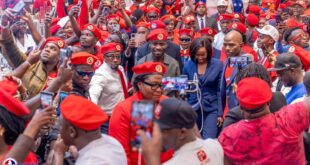
Kampala, Uganda – Robert Kyagulanyi Ssentamu, the musician-turned-politician known globally as Bobi Wine, did not merely accept a presidential nomination this week. He launched what he termed the “final phase” in Uganda’s long struggle for what he calls “true independence.” This time, not from a colonial power, but from a homegrown dynasty that has ruled for nearly four decades.
His speech was a direct and unflinching indictment of President Yoweri Museveni’s 40-year grip on power, framing the upcoming 2026 election as a historic tipping point between continued oppression and liberation.
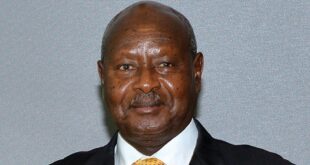
Kyagulanyi immediately set the tone by mocking Museveni’s recent verbal gaffe, where the 81-year-old president mistakenly referenced the 1920s. “Not 1926 to 1931 as said previously by the old tired man,” Kyagulanyi declared, drawing roaring applause. This was more than a joke; it was a strategic framing of Museveni as a relic of a bygone era, fundamentally disconnected from a nation where 77 percent of the population is under 30.
“This line is profoundly effective,” observed Dr. Evelyn Amony, a political historian specializing in East Africa. “It encapsulates the central generational conflict. It is not just about age; it is about relevance. Kyagulanyi paints the current government as a colonial-era artifact in a digital-age world, a powerful narrative for mobilizing youth.”
The core of Kyagulanyi’s argument was a brutal takedown of the National Resistance Movement’s founding myth that it brought liberation to Uganda in 1986. “Since our nation was born in 1962, every change of leadership has been written in blood,” he stated. He connected the dots from the political violence of the 1960s through the atrocities of Idi Amin and Milton Obote, right up to the present day, arguing that the NRM has not broken this cycle but perfected it.
“He is directly challenging the regime’s moral authority,” explained Deogratius Male, a Canada-based journalist and author. “The NRM has always justified its long hold on power by claiming to be the sole guarantor of stability against Uganda’s chaotic past. Kyagulanyi is saying, ‘You are not the solution; you are the latest version of the problem.’ This is a dangerous and powerful rhetorical move.”
Perhaps the most resonant argument for a population struggling with inflation and unemployment was Kyagulanyi’s reframing of Uganda’s economic plight. “Our country is not poor. Our country is rich. Our problem is not lack of wealth. Our problem is lack of leadership,” he asserted. He pointed to Uganda’s vast oil reserves, fertile lands, and incredibly young population, arguing that the nation’s wealth has been systematically looted by a small clique, reducing citizens to “beggars” and “slaves on their own land.”
Dr. Sylvia Tamale, a Ugandan feminist scholar and political analyst, noted, “The data supports the sentiment. Despite immense natural resources and consistent economic growth figures, wealth inequality is staggering. The perception that a select few benefit from national resources is widespread and fuels deep-seated anger. Kyagulanyi is tapping into a very real economic grievance.”
The speech’s most somber and powerful moment was its tribute to the human cost of the struggle. Kyagulanyi named the fallen: Ritah Nabukenya, 19, killed during the 2020 protests; Frank Senteza, a young boda-boda rider killed during campaign violence in December 2020; and Yasin Kawuma, his driver, assassinated in Arua in 2018. He spoke of the hundreds still languishing in prisons like Kitalya Maximum Security Prison on politically motivated charges. This was a stark reminder that the political battle is not abstract. It is paid for with blood.
“By naming the victims, he makes the struggle personal and inescapable,” said human rights lawyer Nicholas Opiyo, himself a survivor of arbitrary arrest. “It is a moral appeal. He is asking, ‘If we give up now, what was their sacrifice for?’ This creates a powerful sense of obligation among his supporters.”
Addressing the fear that paralyzes many, Kyagulanyi posed the question himself: “Why do we risk the tear gas, the bullets, the prisons, the torture chambers?” His answer is poised to become the slogan of his campaign: “We risk it all because the alternative is giving up and that is 10 times worse.” This statement transforms fear into resolve. It frames participation not as a choice, but as a moral imperative. Surrender is framed not as peace, but as betrayal of those who have already sacrificed everything.
Robert Kyagulanyi’s nomination speech was more than a political event. It was a masterclass in narrative-building for a digital age. He wove together history, economics, and raw human emotion into a compelling call to action. By honoring the past, diagnosing the present, and framing the future as a final, decisive battle, he has thrown down a gauntlet not just to the Museveni regime, but to the world watching. The message is clear: Uganda stands at a precipice. The final phase has begun, and the world is now a witness.