 pressug.com News 24 7

Related Articles



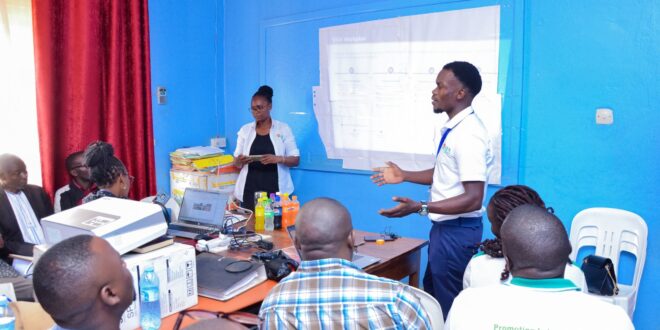
Mukono District Local Government, through its Production Department, convened a stakeholder engagement meeting to discuss the proposed oil palm farming project aimed at transforming rural livelihoods and creating new economic opportunities for farmers, particularly in Koome Sub-county.
The engagement brought together extension workers, production officers, natural resources officers, the technical committee from Gersch Consult Limited, representatives from the National Oil Palm Project, and other key stakeholders. The meeting provided a platform for sharing information about the project and collecting views from technical officers who will support its implementation at both district and sub-county levels.
During the meeting, Ssekaawa Douglas, Project Coordinator and Environmental Consultant from Gersch Consult Limited, presented the main objectives of the engagement. He explained that the meeting aimed to identify farmers in Mukono District who are willing and ready to participate in the oil palm farming initiative.
Mr. Ssekaawa noted that the identification of interested farmers will be conducted with the support of District Production Officers and Natural Resources Officers from various sub-counties. These technical officers will disseminate information about oil palm farming within communities so that farmers interested in the project can be identified and later engaged in further sensitization on how to establish and manage oil palm plantations.
He added that the project targets smallholder farmers with land ranging between one and five acres, giving many rural households an opportunity to participate and benefit from the initiative.
Mr. Ssekaawa further outlined the key phases involved in implementing the project. The first phase will involve conducting detailed studies and baseline surveys to understand the current environmental and social conditions of the project areas.
The Phase two will focus on impact analysis, including stakeholder consultations to gather views and concerns from various community members and technical stakeholders.
The third phase will involve preparing the Environmental and Social Management Plan (ESMP) to address any environmental and social challenges that may arise during the project implementation.
Phase four will focus on reporting and approval processes, followed by the final drafting phase where comprehensive reports will be submitted for official approval before full project implementation begins.
Mr. Ssekaawa also highlighted key objectives of the project, including identifying potential environmental impacts, establishing environmental baselines, promoting sustainability opportunities, and strengthening stakeholder engagement throughout the project cycle.
However, he also presented several concerns raised during previous consultations. These included the need for clear information about the project and land acquisition processes, requests for fair compensation for crops that may be affected, employment expectations from local communities, concerns over land tenure and boundaries, fears of possible land grabbing, agrochemical-related issues, and risks of gender-based violence.
Speaking during the engagement, Serunjogi Wilson, the Senior Assistant Chief Administrative Officer and Chief Agricultural Officer from Buvuma District, who also represents the National Oil Palm Project locally, emphasized that the primary goal of the initiative is rural transformation through oil palm farming.
He explained that successful oil palm cultivation requires key factors such as adequate water supply, proper fertilizer application, and sufficient sunlight.
Mr. Serunjogi further noted that in areas where oil palm farming has already been introduced, the project has delivered positive results including job creation, improved household incomes, reduction in crime rates, and improved infrastructure such as community access roads.
District Calls for Strong Technical Support
During his remarks, Obed Nsubuga, the Senior Agricultural Officer of Mukono District, encouraged extension workers and agricultural officers to play an active role in supporting the initiative.
He urged technical officers to organize community meetings in their respective areas and invite consultants to interact directly with farmers so that they can better understand the opportunities presented by oil palm farming.
Mr. Nsubuga emphasized that extension workers already know the potential farmers within their communities and are therefore best positioned to help identify individuals who may be interested in participating in the project.
He also encouraged officers to sensitize community members about the potential economic benefits of oil palm farming and assured the consultants and technical teams of the district’s full support during the project implementation process.
The stakeholder engagement provided an important platform for technical officers and development partners to better understand the proposed oil palm farming project and its potential to transform rural livelihoods in Mukono District.
By involving local leaders, technical officers, and community members from the early stages of planning, the district hopes to ensure that the project is implemented transparently while addressing community concerns.
If successfully implemented, the oil palm farming initiative is expected to create employment opportunities, boost household incomes, and contribute to the long-term socio-economic development of rural communities, particularly in Koome Sub-county and other parts of the district.