 pressug.com News 24 7

Related Articles
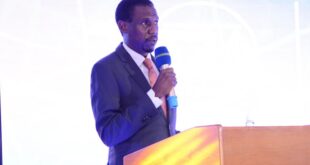
President Yoweri Kaguta Museveni has tasked NRM district chairpersons to take the lead in mobilising communities to embrace government wealth-creation programmes, declaring that the next decisive battle for Uganda is the elimination of household poverty.
Congratulating the chairpersons upon their election and successful mobilisation of voters, Museveni described the recently concluded campaigns as among the most cohesive in three decades, comparable only to the 1996 elections. He noted that the country exhibited a level of unity and confidence not seen in years.
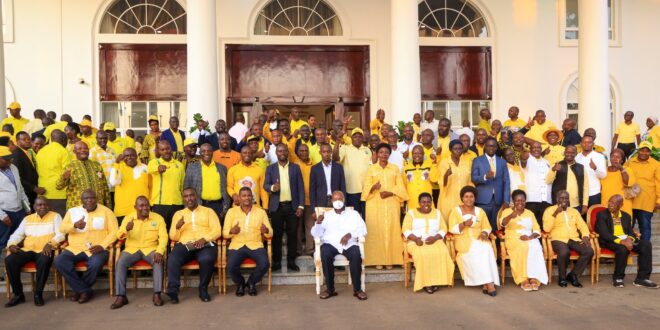
The President hosted district, municipality and city NRM chairpersons at State House Entebbe on Friday, February 13.
Referring to his post-election statement published on February 12, 2026, Museveni reflected on what he termed 30 years of political analysis and ideological clarity. He said the NRM’s historic mission has always been to identify and eliminate “mikyeno” — societal bottlenecks that hinder progress.
By 1996, he argued, the Movement had addressed key “mikyeno” including insecurity, sectarianism, electoral malpractice, economic shortages and broken infrastructure. That, he said, explained why Ugandans rallied behind the message of “No Change, No Cause.”
However, Museveni acknowledged that new challenges later emerged. While peace and stability had been secured, citizens began asking: “Tulya ddembe?” — “Do we eat peace?” Poverty, school fees, corruption and unemployment became the pressing concerns.
It is this unfinished agenda that the President now wants district chairpersons to confront directly.
“If we pursue the mikyeno and use government resources to solve them,” he said, cohesion will be sustained and economic growth accelerated.
He cautioned leaders, particularly Members of Parliament and local government officials, to listen more closely to wananchi instead of focusing on peripheral issues such as travel and allowances. Leadership, he emphasised, must be about solving people’s real problems.
Museveni recalled that in response to rising poverty, he introduced early interventions including Entandikwa (interest-free capital at sub-county level), Universal Primary Education (UPE), and land reforms enshrined in the Constitution and the Land Act.
Despite implementation challenges, he continued rolling out successive wealth-creation initiatives such as NAADS, Operation Wealth Creation (OWC), Emyooga, and the Youth and Women funds.
By 2019, he revealed, 61 percent of households had joined the money economy, leaving 39 percent still engaged in subsistence production.
Operation Wealth Creation, he said, significantly reduced subsistence levels, partly due to deploying the army to sub-county level to supervise the distribution of seedlings and agricultural inputs.
However, complaints that programmes were benefiting only connected individuals — “Begabila bokka” — prompted the introduction of the Parish Development Model (PDM).
Under PDM, funds are managed through parish-level SACCOs where communities elect their own committees and prioritise beneficiaries. “Where it has been implemented well, the people are very happy,” Museveni observed, citing testimonies from wananchi who described PDM as a “silver bullet” to many of their problems.
He indicated that more funding will continue to be channelled through PDM, stressing that poverty eradication is central to tackling unemployment.
The Three-Pronged Strategy
Addressing district leaders, Museveni outlined a three-pronged strategy to consolidate Uganda’s socio-economic transformation.
1. Empower the Masses
The first pillar focuses on lifting households from subsistence into the money economy. Through PDM, Emyooga and other pro-mass interventions, leaders must ensure that every parish benefits equitably.
“First buyer is our people,” he explained. With higher incomes, households will purchase more locally produced goods, stimulating domestic demand and economic growth.
Ending poverty among the 39 percent still outside the money economy will increase consumption of products such as milk, maize, coffee and manufactured goods, thereby strengthening domestic markets.
District chairpersons were urged to supervise these programmes closely, ensure transparency and direct government resources toward solving people’s real problems.
2. Economic Transformation
The second pillar is structural transformation — moving Uganda from a predominantly agrarian economy to one driven by value addition, manufacturing and services.
Museveni called for stronger support to manufacturers and the service sector through institutions such as the Uganda Development Bank. He emphasised the need to address bottlenecks in industrial parks, including electricity, roads and water, to boost productivity.
He noted that production has already expanded significantly — coffee output rising from three million to nine million bags, milk to 5.3 billion litres, maize to five million tonnes, alongside substantial growth in livestock and other commodities.
The next step, he stressed, is value addition and industrialisation.
3. Market Expansion
The third pillar focuses on expanding markets. Museveni emphasised that domestic demand must come first. As poverty declines and incomes rise, internal consumption will increase, providing a stable base for producers.
From there, Uganda can expand into regional and continental markets under Pan-African frameworks.
“Increasing demand for local products will then progress to regional markets,” he said, linking poverty eradication directly to sustainable economic growth.
A Political Mandate for Economic Action
Museveni said the positive campaign atmosphere he witnessed across 143 rallies in 153 districts reflected growing public appreciation of pro-mass programmes. However, he warned that complacency among leaders — what he termed “Najja-kulya” politics — could undermine progress.
He urged district chairpersons to remain grounded, work closely with communities and ensure government resources are used for public benefit rather than narrow interests.
The President framed the electoral victory as not merely political but as an economic mandate.
“The struggle now is against poverty,” he said. “If we solve the mikyeno of the masses, there will be cohesion, growth and prosperity.”
The meeting was also attended by NRM Central Executive Committee members and the leadership of the NRM Secretariat.
NRM Deputy Secretary General Rose Namayanja, who led the secretariat team, hailed the victory of the NRM presidential flagbearer, saying the margin of more than five million votes over the runner-up reflected national unity behind Museveni’s message.
Namayanja said the three-pronged campaign strategy was key to the party’s success. She explained that the strategy was devised by the party chairman, executed by zonal leaders from the secretariat and implemented at the grassroots by district chairpersons.
She dismissed claims of electoral rigging, arguing that the Opposition’s defeat at all levels rendered such allegations hollow.