 pressug.com News 24 7

Related Articles
Viewers: 90,001
By Spy Uganda
The Ministry of Foreign Affairs has warned Members of Parliament against engaging in diplomatic activities that conflict with Uganda’s official foreign policy, cautioning that unofficial relationships with unrecognised territories could damage the country’s international interests and strategic partnerships.
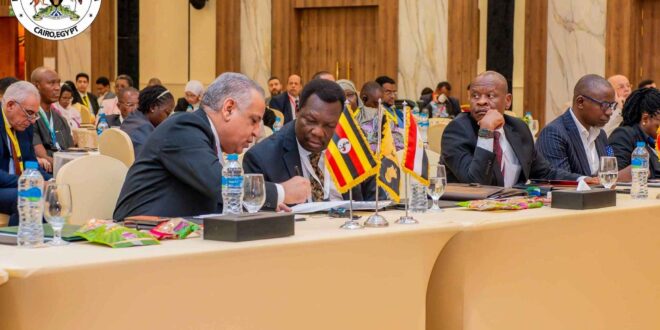
The warning was issued by Vincent Bagiire, the Permanent Secretary at the Ministry of Foreign Affairs, during an induction seminar for newly elected legislators of the 12th Parliament held at Commonwealth Speke Resort Munyonyo.
Bagiire told MPs that parliamentary diplomacy has become an increasingly important part of international relations, but stressed that legislators must ensure their engagements support rather than contradict government policy.
“Parliamentary diplomacy must complement, not contradict the foreign policy of the Republic of Uganda,” Bagiire told lawmakers.
He cautioned MPs against creating parliamentary friendship groups or official engagements with entities that Uganda does not recognise, saying such actions could have far-reaching diplomatic consequences.
The strongest caution was directed at possible attempts to establish parliamentary links with Taiwan.
Bagiire revealed that previous Parliaments had received approaches from Taiwanese representatives seeking to form a “Friends of Taiwan” parliamentary caucus but urged lawmakers to reject such initiatives.
“Uganda subscribes to the One-China Policy and does not recognise Taiwan as an independent country. Should you be approached to establish a Friends of Taiwan Parliamentary Group, kindly reconsider because such a move would injure Uganda’s relationship with the People’s Republic of China,” he said.
Uganda recognises the People’s Republic of China as the sole legitimate government representing China, a position that has guided Kampala-Beijing relations since diplomatic ties were established in 1962.
China has grown into one of Uganda’s key development partners, supporting major infrastructure projects in roads, energy, industrial development and trade through bilateral cooperation and initiatives such as the Belt and Road Initiative.
The Ministry extended similar guidance regarding Kosovo and Somaliland, reminding legislators that Uganda does not recognise either as independent states.
Kosovo declared independence from Serbia in 2008, but its sovereignty remains contested internationally. Somaliland, which broke away from Somalia in 1991, also lacks broad international recognition.
“We believe in the Federal Republic of Somalia and not the breakaway Somaliland,” Bagiire told MPs.
However, he clarified that Uganda recognises the Sahrawi Arab Democratic Republic (Western Sahara), noting that it is an African Union member and maintains diplomatic representation in Kampala.
“That one we can engage. Indeed, they have their embassy here in Kampala,” he said.
Bagiire also urged lawmakers to be careful when commenting on international conflicts, reminding them that Uganda’s foreign policy is anchored on non-alignment and peaceful resolution of disputes.
He said Uganda has maintained a neutral position on conflicts including those involving Gaza, Palestine, Israel, Iran, Russia and Ukraine.
“Uganda has consistently supported peaceful resolution of conflicts. We remain non-aligned without appearing to support one side against another,” he said.
Uganda is a founding member of the Non-Aligned Movement (NAM) and chaired the organisation after hosting the 19th NAM Summit in Kampala in January 2024.
The country’s foreign policy emphasises strategic neutrality, peaceful coexistence, regional stability and cooperation through multilateral institutions.
The Permanent Secretary further reminded MPs that Uganda is legally required to comply with sanctions imposed by the United Nations Security Council but is not bound by unilateral sanctions issued by individual countries.
He cited recent UN sanctions against individuals accused of supporting the conflict in Sudan, saying Uganda must enforce such measures as a member of the United Nations.
“We recently received communication regarding individuals whose assets have been frozen for supporting the conflict in Sudan. Where sanctions are imposed by the UN Security Council, Uganda has no option but to comply,” Bagiire said.
He explained that sanctions imposed through the UN Security Council carry international legal obligations, while restrictions imposed independently by individual governments do not automatically apply to Uganda.
The discussion also turned to the growing challenge of Ugandans being trafficked abroad through fraudulent employment schemes.
National Female Youth MP Mercy Kanyesigye challenged the Ministry to explain measures being taken to protect Ugandans lured overseas by fake recruitment agencies and later trapped in forced labour, online scam operations and sexual exploitation.
The concern follows increasing reports of Ugandans being trafficked into cybercrime networks operating in parts of Southeast Asia, particularly around the Myanmar-Thailand border.
Bagiire acknowledged that human trafficking remains one of the Ministry’s biggest consular challenges, but said limited resources have affected government’s ability to rescue and repatriate victims.
He disclosed that government, working with the International Organization for Migration (IOM), recently helped return more than 100 Ugandans rescued from criminal networks in Myanmar.
However, he warned that the problem persists because some victims continue falling prey to traffickers shortly after returning home.
“The unfortunate reality is that even as some Ugandans were returning from Myanmar, others were boarding flights after being promised jobs in Thailand. Once they arrive, they are trafficked across the border back into Myanmar,” he said.
Bagiire said traffickers exploit unemployment and economic hardships by using sophisticated recruitment networks that promise well-paying jobs abroad but instead expose victims to forced labour and criminal activities.
He added that some stranded Ugandans hesitate to return home because they fear economic difficulties after repatriation.
“In some instances, despite the dangers, some people believe the difficult conditions abroad are still better than the economic realities they expect back home,” he said.
The government has established legal frameworks including the Prevention of Trafficking in Persons Act and regulations governing recruitment of Ugandan migrant workers abroad. However, concerns remain over enforcement gaps, fraudulent recruitment agencies and limited resources to provide consular support to vulnerable migrants.
The Ministry’s warning comes as Parliament assumes a bigger role in international engagement, with government seeking to ensure that lawmakers’ growing diplomatic activities remain aligned with Uganda’s foreign policy priorities.
, https://www.spyuganda.com/not-recognized-uganda-draws-diplomatic-red-line-on-taiwan-kosovo-somaliland-links/
