UBOS Records Thousands of Parishes and Sub-Counties Without Government Schools

UBOS Records Thousands of Parishes and Sub-Counties Without Government Schools – mulengeranews.com

By Ben Musanje
The Uganda Bureau of Statistics (UBOS) has revealed significant gaps in access to government education institutions across the country, with thousands of parishes and sub-counties lacking government primary and secondary schools.
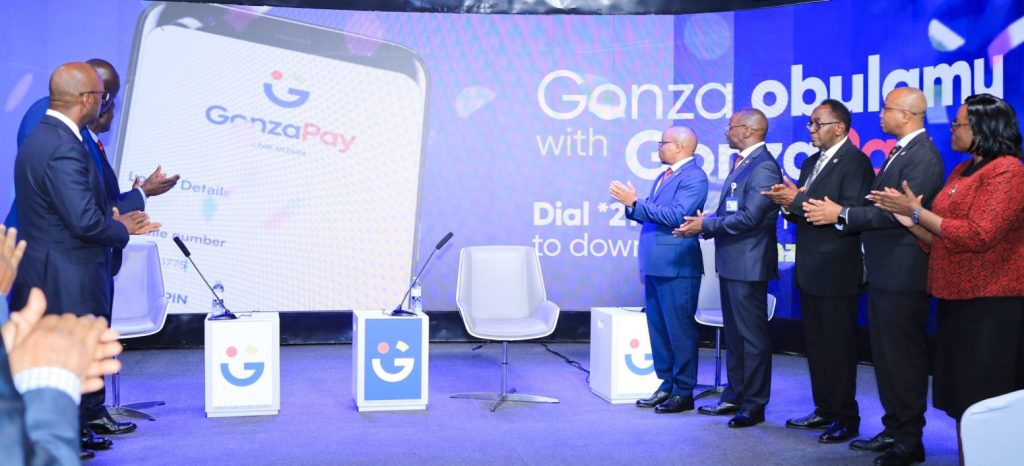
The findings were released on Thursday during the dissemination of the Baseline Education Census 2025 Report at Statistics House in Kampala by UBOS Executive Director Dr Chris Mukiza.
According to the report, 3,887 out of Uganda’s 10,860 parishes do not have a government primary school, representing nearly 28 percent of all parishes nationwide. UBOS Executive Director Dr Chris Mukiza said the findings expose major disparities in access to basic education despite existing government policies aimed at ensuring every parish has a public primary school.
“We found that government has a policy that every parish should have a government primary school, but 3,887 parishes still do not have one,” Dr Mukiza said.
However, the report noted that private schools are helping to bridge the gap in some areas. When both government and private institutions are considered, only 1,173 parishes — about 12.6 percent — have no primary school at all.
UBOS Executive Director Dr Chris Mukiza said the census also revealed uneven distribution of schools across the country, noting that some parishes have multiple government schools while others remain underserved.
“What is interesting is that there are some parishes that have more than one government primary school, which are over-served, while others are under-served,” Dr Mukiza said.
The census further revealed serious shortages in secondary education infrastructure. UBOS Executive Director Dr Chris Mukiza said 1,007 out of 2,209 sub-counties and town councils, representing 45.5 percent, do not have a government secondary school.
More alarmingly, 1,208 sub-counties and town councils — equivalent to 54.7 percent — do not have a single secondary school, whether public or private.
The report paints a broader picture of Uganda’s education system, showing heavy reliance on private institutions at all levels of learning.
At the pre-primary level, UBOS Executive Director Dr Chris Mukiza said the bureau recorded 38,347 schools with 2.37 million learners. The pupil-to-teacher ratio stood at 29 learners per teacher, while the pupil-to-classroom ratio was 20 learners per classroom.
In primary education, the census identified 43,567 schools, of which 31,000 are privately owned while only 12,557 are government schools. The sector has 9.1 million learners, with girls slightly outnumbering boys by about 50,000 pupils.
Nationally, the pupil-to-teacher ratio in primary schools stands at 34 pupils per teacher. However, the situation is more strained in government schools where one teacher handles 48 pupils, exceeding the UNESCO-recommended ratio of 40 pupils per teacher.
Private schools were found to have smaller class loads, with one teacher handling an average of 24 pupils.
At the secondary level, UBOS Executive Director Dr Chris Mukiza said the bureau recorded 5,498 schools, the majority of which are privately owned. The schools serve over 2 million learners, including slightly more female students than male students.
The national student-to-teacher ratio at secondary level stands at 40 students per teacher, significantly higher than the recommended standard of 25 to 30 students per teacher.
Government secondary schools recorded an average of 41 students per teacher, while private schools averaged 40 students per teacher.
UBOS Executive Director Dr Chris Mukiza said the bureau also observed congestion in classrooms and sanitation facilities, with an average of 45 students sharing one classroom and about 40 students using a single sanitation stance at secondary level.
Dr Mukiza called for improved education planning and better learner tracking systems. He recommended assigning every learner a unique identification name to monitor progression from primary to secondary school and beyond.
UBOS Executive Director Dr Chris Mukiza also recommended streamlining school registration by ensuring every school has a single National Identification Management System (NIMS) number, after discovering that some schools had multiple registration numbers while others had none.
The bureau further noted that some government primary schools are operating informal pre-primary classes that are not officially recognised, making planning and resource allocation difficult.
The Baseline Education Census 2025 Report is expected to guide government planning and resource allocation in the education sector as Uganda seeks to improve equitable access to education services across the country. (For comments on this story, get back to us on 0705579994 [WhatsApp line], 0779411734 & 041 4674611 or email us at mulengeranews@gmail.com). 
 

Post Views: 561

, https://mulengeranews.com/ubos-records-thousands-of-parishes-and-sub-counties-without-government-schools/

About News Coverage

Check Also

Protest sign (Photo courtesy of X)

Did Ghana Parliament lack a quorum when it passed anti-LGBTQ bill?

TIERs stated on X: “Ghana’s parliament just passed one of the most sweeping anti-queer bills. …

Leave a Reply

Your email address will not be published. Required fields are marked *