 pressug.com News 24 7

Related Articles


Uganda’s anti-LGBTQ+ law exposes systemic failures
The German publication Deutsche Welle reports:
A justice system strained by political pressure, public fear and inconsistent enforcement
By Michael Oti
[On Feb. 3], a court in Uganda dismissed the first case brought under the country’s Anti-Homosexuality Act.The accused, a man who was 20 when he was arrested in August 2023 — just three months after the law came into force — had spent nearly a year in detention before being released on bail as the case progressed over an extended period.
He was initially accused of “unlawful sexual intercourse” with a 41-year-old man and charged with “aggravated homosexuality,” an offense punishable by death.
On [Feb. 3], the court dropped the case, saying the accused was “mentally unstable and does not understand the trial process.”
The defense argued he had developed psychosis and schizophrenia as a result of his detention.
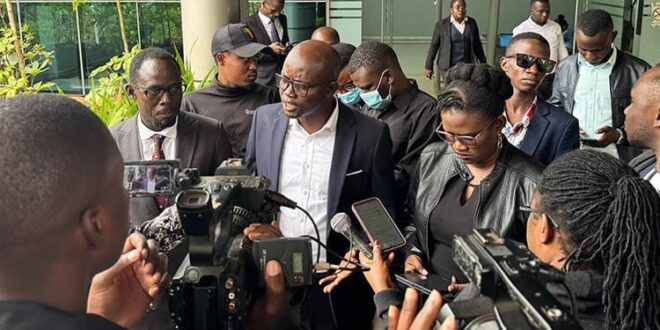
“This was one of the very first cases after the law was passed,” said Juliet Kanyange, the lawyer representing the accused.
“There was a lot of confusion, even among prosecutors,” she told DW. “The legal and political environment at the time made it very difficult.”
How Uganda’s anti-gay law sows confusion
Uganda’s Anti-Homosexuality Act was signed into law on May 30, 2023. Almost immediately, it drew intense domestic and international attention for introducing what was described as some of the harshest penalties in the world for same-sex sexual conduct.
“There was a backlash the Director of Public Prosecutions (DPP) was facing because of how harsh the law was,” said Kanyange. “A directive was issued that all prosecutions under the Act had to be reviewed and approved by the DPP.”
Prosecutors took what Kanyange views as an unusual step when they amended the charges in January 2024 to “unnatural offenses of having carnal knowledge against the order of nature,” which carries a sentence of life imprisonment.
“We have not really had other cases where charges are amended in the middle of proceedings,” she said, adding that the biggest obstacles to fair process frequently come from the attitudes of police officers, state attorneys and occasionally magistrates overseeing the cases.
Kanyange described instances where clients had been denied bail not for legal reasons, but because of public pressure.
“Someone is denied bail because the case has attracted attention, because people are watching,” she said.
Human rights advocates say there are similar cases in other parts of the country.
“The law has created fear and normalized abuse,” said Edward Mwebaza, the executive director of the Ugandan nonprofit Human Rights Awareness and Promotion Forum. “People are arrested first, investigated later, or not at all.”
Political pressure shapes prosecutions
According to Mwebaza, many cases do not begin with evidence of a crime, but with suspicion. Some arrests stem from family disputes, community complaints, or even entrapment on dating apps, he noted.
“These cases are driven by moral policing, not criminal conduct,” Mwebaza told DW. “You find people detained beyond 48 hours, sometimes for days or weeks, and then released without charge.” But by then, he added, the damage is already done.
LGBTQ+ Ugandans flee homeland over harsh anti-gay law
Kanyange said prosecutors also struggle to meet basic evidentiary standards.
“The biggest hurdle is securing cooperation from complainants,” she explained. “Many people make a complaint, but when it comes time to testify, they are afraid or they change their mind. And the burden of proof remains with the prosecution.”
In several cases involving alleged “promotion of homosexuality,” charges have failed because witnesses could not prove harm or influence. Outcomes often depend on individual judges.
“It really depends on the judicial officer,” said Kanyange. “Some are openly hostile. Others are professional and fair. That was the case even before this law.”
International scrutiny, she added, has not necessarily improved legal practice.
New law’s effects goes beyond the courts
Even when cases are dismissed, the effects can persist beyond the courtroom.
“Dismissals offer relief, yes,” Mwebaza said. “But the process itself is the punishment. You may not be able to return home. You may lose your job. You carry the psychological harm.”
He warned that the law’s impact goes far beyond arrests.
“The act has fundamentally changed daily life,” he said. “Ordinary things like seeking health care, renting a house or working now carry risk. People are being displaced. Some are thinking of leaving the country.”
Public health is also affected, especially HIV services. “When communities are pushed underground, public health outcomes suffer,” Mwebaza said.
Case ends, but arrests continue
The dismissal of the case did not end the legal processes associated with the act. Lawyers and advocates say the outcome highlights ongoing concerns.
“As long as arrests continue, even without convictions, people will keep suffering,” Mwebaza said. “That is what must stop.”
For activists, every legal victory underscores the importance of persistent engagement and solidarity in the face of laws that seek to suppress dissent.