 pressug.com News 24 7


Related Articles
By Alexander Luyima | The Hoima Post
For many years, Ugandans residing in the diaspora have held a distinctive position. Despite their physical distance, they maintain strong emotional and political ties to their homeland. They contribute through remittances, support their families, fund community initiatives, and increasingly voice their opinions on national matters.
However, this connection may now be accompanied by new risks.
The proposed Protection of Sovereignty Bill 2025 is not solely concerned with foreign interference. It introduces a change in how the state might define loyalty and belonging. For the first time in Uganda’s recent political history, citizens living abroad could potentially be regarded as external entities in the affairs of their own nation.
Redefining Citizenship
A contentious provision lies at the heart of this bill: a Ugandan living outside the country may be classified as a foreigner.
This is more than a mere technical definition; it carries significant implications.
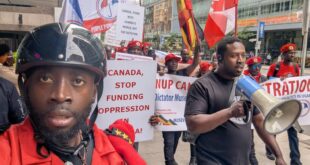
A Ugandan student in Canada, a healthcare professional in the United Kingdom, or an activist in the United States could all fall into a category that allows their actions to be interpreted as foreign influence.
The bill outlines severe penalties for broadly defined offenses, such as promoting foreign interests. These include lengthy prison sentences and substantial financial penalties.
The discussion is no longer about whether the diaspora has a role in national discourse, but rather whether that role will continue to be protected.
Why This Timing? The Kyagulanyi Context
The timing of this bill is crucial.
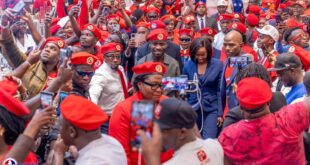
It is emerging shortly after the 2026 election period, which was widely disputed. During this time, Robert Kyagulanyi Ssentamu reported being targeted by security forces and subsequently left the country, eventually appearing in the United States.
His presence abroad alters the political landscape. Outside Uganda, he is able to speak more freely, engage with international audiences, and highlight concerns about governance and human rights without facing the same immediate risks he encountered at home.
This shift is significant.
When political influence extends beyond national borders, state responses often follow a similar pattern. The focus is no longer exclusively domestic; it becomes transnational.
A Law with Extended Reach
One of the most notable aspects of the bill is its potential scope.
By categorizing diaspora Ugandans as potential foreign actors, the law establishes a framework that could extend political scrutiny beyond Uganda’s borders. Statements made abroad, partnerships with international institutions, or participation in global discussions about Uganda could be subject to legal interpretation within the country.
This raises a fundamental question about citizenship: Can a citizen truly belong to a country if their voice is restricted when they are outside its borders?
Who Is Advocating for the Bill?
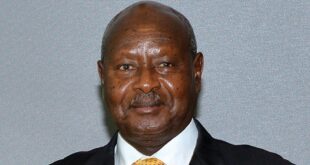
The bill is being advanced by the ruling establishment under Yoweri Museveni and is supported by the National Resistance Movement parliamentary majority.
The official justification is clear.
Government officials assert that this legislation is vital for safeguarding Uganda against external interference and preserving national sovereignty. However, a broader context offers additional perspectives.
Uganda has recently navigated a period of political tension, characterized by disputed elections, arrests, and heightened scrutiny from international observers. Concurrently, opposition figures and activists have gained prominence internationally, and diaspora engagement has become more vocal and organized. In such an environment, addressing internal dissent alone may no longer be sufficient, naturally drawing attention to external sources of influence.
Beyond Funding: The Question of Influence
Public discourse surrounding the bill often centers on the foreign funding of civil society organizations. However, the more profound concern appears to be influence. Ugandans in the diaspora are no longer solely financial contributors; they are actively shaping narratives, raising international awareness, and connecting Uganda with global institutions. Through digital platforms, their reach is immediate and extensive.
Today, influence does not necessitate a physical presence within national borders, a reality that challenges traditional forms of political control.
A Measured Warning
It is important to maintain a balanced perspective. Not every law leads to immediate or widespread enforcement. Nevertheless, historical patterns in governance suggest that broadly worded legislation can evolve in its application over time.
If enacted in its current form, several outcomes are possible. Selective enforcement might emerge, targeting outspoken individuals rather than the entire diaspora. A climate of caution could develop, leading to self-censorship among Ugandans abroad. Engagement might shift from public discourse to more discreet forms of support. Legal ambiguity could allow interpretations to change based on political priorities. These possibilities may not unfold simultaneously, but they remain realistic considerations.
The Larger Question
This discussion extends beyond mere legal language; it speaks to the very essence of citizenship. If expressing concern about one’s country from abroad carries legal risk, then the relationship between the state and its citizens begins to transform. Belonging becomes conditional. Once this shift occurs, it is rarely easily reversed.
Final Reflection
The Protection of Sovereignty Bill is presented as a measure to safeguard national independence. For many in the diaspora, however, it raises a different concern. It suggests a future where distance does not afford space for free expression, and where connections to home may come with new forms of scrutiny. For now, the bill remains under consideration. Its implications, however, are already being felt.