ULS Declares Constitutional Court Torture Ruling a Threat to Rule

ULS Declares Constitutional Court Torture Ruling a Threat to Rule of Law, Launches Appeal Campaign – mulengeranews.com

By Ben Musanje
The Uganda Law Society (ULS) has strongly condemned the Constitutional Court’s decision to strike down a key provision of Uganda’s human rights enforcement framework, describing the judgment as a grave setback for constitutionalism, judicial integrity and the protection of fundamental human rights.
In a statement issued on Tuesday signed by the ULS President Isaac K. Ssemakadde following the delivery of the judgment in Faruku Muhamed & Others v Attorney General, Constitutional Petition No. 17 of 2024 and Constitutional Reference No. 2 of 2024, the legal body accused the court of weakening safeguards against torture and undermining both domestic and international human rights obligations.
The judgment, delivered on June 2, declared unconstitutional Section 11(2) of the Human Rights (Enforcement) Act, 2019, a provision that required courts to automatically nullify proceedings and acquit accused persons where violations of non-derogable rights had been established.
The Uganda Law Society said the ruling comes at a particularly symbolic time as the international community prepares to mark the International Day in Support of Victims of Torture on June 26.
According to the society, the now-invalidated provision was far more than a procedural rule. It served as a critical safeguard designed to ensure that courts do not validate prosecutions tainted by torture, cruel treatment, unlawful detention or other violations of rights that the Constitution declares absolute and non-negotiable.
“The exclusionary rule in Section 11(2) is not a mere procedural technicality. It is a foundational epistemic safeguard,” the statement said.
Ssemakadde argued that evidence obtained through torture is inherently unreliable and that coerced confessions fundamentally compromise the truth-seeking function of criminal justice systems. The society noted that courts around the world have consistently recognized that torture-derived evidence contaminates legal proceedings and cannot be legitimized through subsequent judicial processes.
The lawyers’ body pointed to Section 14 of the Prohibition and Prevention of Torture Act, 2012, which expressly prohibits the use of statements obtained through torture as evidence.
“The Faruku judgment risks legitimizing Uganda’s well-documented record of torture instead of eradicating it,” the society warned.
The organization criticized the Constitutional Court for relying on the interests of crime victims and society’s interest in prosecution to justify striking down the provision.
According to ULS, that reasoning dangerously shifts the focus from protecting constitutional rights to ensuring the completion of criminal trials, even where serious human rights violations have occurred.
The society argued that allowing proceedings to continue despite proven violations of non-derogable rights creates what it termed a “moral hazard” for security agencies and investigators.
By removing the certainty that torture-tainted proceedings will automatically collapse, the court may have reduced the deterrent effect that previously discouraged abusive investigative practices, ULS said.
“Security agencies, aware that violations may not lead to automatic nullification, face reduced deterrence and are incentivized to resort to coercion,” the statement noted.
The society further argued that such an approach could produce wrongful convictions, encourage impunity, erode public trust in the justice system and perpetuate cycles of grievance and injustice.
“This fosters impunity, wrongful convictions, eroded public trust, and cycles of grievance — the very opposite of protecting victims or society,” the statement added.
ULS also accused the Constitutional Court of producing a judgment riddled with internal contradictions.
The legal body said that while the court purported to uphold Article 44 of the Constitution, which guarantees freedom from torture and other non-derogable rights, it simultaneously removed one of the strongest enforcement mechanisms available to victims of such violations.
According to the society, the decision effectively creates a legal regime in which violations of constitutional rights can be “cured” simply by allowing criminal proceedings to continue.
“This creates a regime where violations can be cured simply by proceeding with a tainted trial,” the statement argued.
The society maintained that such an interpretation is inconsistent with Article 2 of the Constitution, which establishes constitutional supremacy, and undermines the special status accorded to non-derogable rights under Uganda’s constitutional framework.
One of the strongest criticisms leveled by ULS concerned what it described as the court’s failure to engage with Uganda’s constitutional history.
The society noted that the judgment did not reference the findings of the Said Commission of 1971, the Oder Commission of 1986, or the Odoki Commission of 1993.
According to ULS, the reports of these commissions documented historical patterns of torture, arbitrary detention, unlawful imprisonment and abuse of power by state actors, experiences that directly informed the inclusion of robust human rights protections in the 1995 Constitution.
“The omission of these foundational historical references is a serious intellectual and judicial failure,” the society stated.
ULS further argued that the ruling disregards several constitutional provisions, including Articles 24, 28, 44, 45 and 50, all of which guarantee protections against torture, fair trial rights and access to remedies for rights violations.
Beyond Uganda’s Constitution, the society contended that the decision places the country at odds with its obligations under several regional and international legal instruments.
These include Articles 6(d) and 7(2) of the Treaty for the Establishment of the East African Community, Articles 7 and 14 of the International Covenant on Civil and Political Rights, Article 5 of the African Charter on Human and Peoples’ Rights, and Article 15 of the United Nations Convention Against Torture.
The statement also referenced jurisprudence from the UN Human Rights Committee, the African Commission on Human and Peoples’ Rights and reports by the UN Special Rapporteur on Torture, all of which emphasize the absolute prohibition of torture and the exclusion of evidence obtained through coercion.
In a particularly pointed section of the statement, ULS criticized the Constitutional Court bench, including newly appointed Deputy Chief Justice Moses Kazibwe Kawumi, accusing the judges of failing in their constitutional duty as guardians of the rule of law.
The society said the court had prioritized procedural completion of criminal trials over substantive protection of human rights and had ignored important constitutional history in the process.
“By prioritizing procedural completion over substantive rights protection, and ignoring critical historical commissions that shaped our Constitution, the Court has abdicated its role as guardian of constitutionalism,” the statement said.
The organization warned that the judgment could weaken judicial independence, embolden executive overreach and diminish public confidence in the courts.
In response to the ruling, the Radical New Bar Governing Council has resolved to pursue a range of legal, advocacy and international interventions.
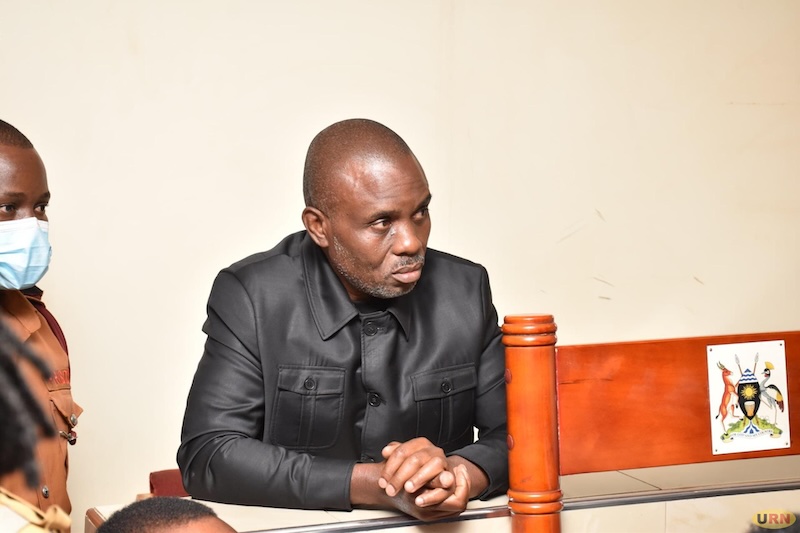
At the domestic level, ULS plans to establish a special committee to coordinate an appeal to the Supreme Court involving Hon. Paul Akamba and other affected parties. The society will also seek orders preserving the operation of Section 11(2) pending the outcome of the appeal.
Additionally, Ssemakadde announced plans for a nationwide lawyers’ strike on June 26, coinciding with the International Day in Support of Victims of Torture, to raise public awareness about the implications of the ruling.
The society also intends to intensify public interest litigation, strengthen training on exclusionary rules and systematically document torture-related violations.
At the regional level, ULS said it would approach the East African Court of Justice seeking interpretation and redress under the East African Community Treaty.
Internationally, the society plans to engage the African Commission on Human and Peoples’ Rights, the UN Human Rights Committee, the UN Special Rapporteur on Torture and other human rights mechanisms through urgent communications, shadow reports and individual complaints where domestic remedies have been exhausted.
The organization will also seek advisory opinions highlighting what it describes as Uganda’s non-compliance with international human rights obligations.
However, Ssemakadde reaffirmed the society’s commitment to defending constitutional governance, judicial accountability and the protection of fundamental rights.
“The Uganda Law Society reaffirms its unwavering commitment to the rule of law, judicial integrity, and the fundamental rights of all Ugandans. We stand ready to support affected parties and will not relent in our advocacy for a justice system worthy of our Constitution,” Ssemakadde said.
The Constitutional Court had not publicly responded to the criticism by press time. (For comments on this story, get back to us on 0705579994 [WhatsApp line], 0779411734 & 041 4674611 or email us at mulengeranews@gmail.com). 
 

Post Views: 783

, https://mulengeranews.com/uls-declares-constitutional-court-torture-ruling-a-threat-to-rule-of-law-launches-appeal-campaign/

About News Coverage

Check Also

Protest sign (Photo courtesy of X)

Did Ghana Parliament lack a quorum when it passed anti-LGBTQ bill?

TIERs stated on X: “Ghana’s parliament just passed one of the most sweeping anti-queer bills. …

Leave a Reply

Your email address will not be published. Required fields are marked *