 pressug.com News 24 7

Related Articles

Kampala — The curtain is slowly falling on the controversial Departed Asians Property Custodian Board, but as the lights dim, what is emerging is not a graceful exit — it is a catalogue of chaos, financial indiscipline, fraud allegations and staggering governance failure.
A fresh Auditor General’s report as of December 2025 has ripped open the books of the Board established under the Assets of Departed Asians Act of 1973 and the Expropriated Properties Act of 1982 to manage and dispose of properties left behind after the 1972 expulsion of Asians. What was meant to be a transitional custodian body has instead become a permanent scandal machine.
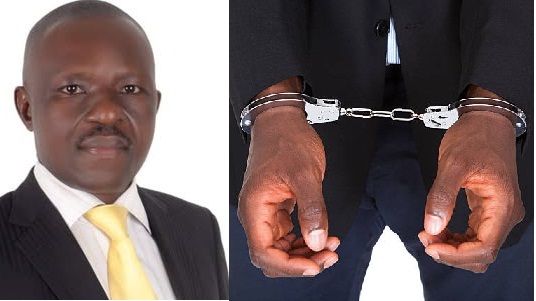
At the center of the storm stands the Executive Secretary, George William Bizibu — a man whose tenure has been dogged by arrest, fraud investigations and mounting public outrage.
The audit findings are explosive.
The Board accumulated payables amounting to UGX 3.894 billion from the previous financial year. Eligible payments worth UGX 578 million were effected without withholding the required UGX 35 million tax due to Uganda Revenue Authority. UGX 2.506 billion was garnished from the Board’s bank account pursuant to a court-issued garnishee order. PAYE totaling UGX 381 million was deducted from employees’ salaries but never remitted to URA.
Let that sink in. Taxes deducted from workers’ salaries were not sent to the taxman.
And this is an entity chaired by the Minister of Finance himself, Matia Kasaija, alongside heavyweight board members including the Attorney General Kiryowa Kiwanuka and other ministerial representatives.
Where were they?
Section 5(1) of the Assets of Departed Asians Act requires the Board to sit at least once every month. But the audit found that during the period ending 30th June 2024, the Board met only once — on 28th July 2023. One meeting in a whole year.
Failure to meet, observers say, has over the years facilitated massive fraud where hundreds of properties are alleged to have been stolen or irregularly allocated.
The Board is drowning in 137 court cases arising from property-related disputes. It continues to operate without a strategic plan. It has no comprehensive assets register — even as it stands on the brink of dissolution. How do you wind up an entity that does not even have a clear inventory of what it owns?
Revenue collection is equally disturbing. Out of UGX 4.337 billion approved budget, only UGX 2.23 billion was realized, a 51.4% performance. The Board planned to collect UGX 4.337 billion in Non-Tax Revenue for FY 2022/2023 but again achieved just 51.4% of the target. Long outstanding receivables of UGX 2.831 billion remain largely unrecovered, mainly unpaid rent by government ministries and agencies.
One of the most shocking revelations is the non-recognition of a liability after the Board approved the sale of a property at UGX 779,280,000 — fully paid by the applicant — but never transferred the property and never refunded the money.
Where is that money?
The Board has also delayed the valuation and sale of 115 properties compensated through the British High Commission and 87 properties compensated through UNHCR since 1999. None had been sold by the time of the audit. Twenty-five years of inaction.
Monitoring and evaluation systems are weak. Work plans lack measurable performance indicators. Governance structures are hollow. The financial statements were not even prepared on a going-concern basis because the Board is in final stages of disposing of unclaimed properties — a process expected to lead to its winding up.
Parliament in 2024 halted government’s plan to dissolve the Board, insisting unresolved cases be settled first. Lawmakers feared winding it up prematurely would bury accountability under a pile of unfinished litigation.
Yet with such glaring failures, many are asking whether dissolution alone is enough.
George William Bizibu’s record does not inspire confidence. In 2022, the State House Anti-Corruption Unit in liaison with Uganda Police arrested him and the Board Accountant over fraud. The Anti-Corruption Unit stated publicly that “the duo are fond of defrauding people by issuing false allocation letters and receipts after extorting huge sums of money.” They were accused of falsely obtaining money from various persons while purporting to allocate them properties.
This was not his first brush with the law. In April the previous year, CID confirmed investigations into a UGX 1.6 billion fraudulent deal where it was alleged that Bizibu took money from Margaret Ssekidde of Seroma Ltd and failed to deliver property. The complaint was escalated to President Yoweri Museveni, who ordered investigations into the affairs of the Board.
Despite all this, Bizibu remained at the helm, tasked with verifying over 200 claimant cases and producing a comprehensive inventory of assets.
Critics now ask: was he the right man for a Board handling one of the most sensitive property portfolios in Uganda’s history?
Should Bizibu merely lose his job when the Board is dissolved? Or should criminal accountability follow if investigations confirm systemic fraud under his watch? Does he deserve to be behind the coolers? Or should the blame be shared by a Board that barely met, failed to exercise oversight and allowed weak internal controls to fester?
Some argue he inherited a rotten system built on decades of unresolved property disputes dating back to the 1972 expulsion and subsequent repossession laws. Others say leadership is tested in crisis — and that the pattern of arrests, tax failures, unremitted PAYE, garnished accounts and uncollected billions points to gross mismanagement.
“The truth is brutal. The Custodian Board that was meant to restore order to expropriated properties now finds itself synonymous with disorder. The body created to manage assets responsibly is itself accused of losing track of them. The institution mandated to protect public interest stands accused of enabling fraud through negligence and poor governance,” says one of governance experts RedPepper talked to.
As dissolution looms, Ugandans are left wondering whether winding up the Board will quietly sweep decades of mismanagement under the carpet. Will unresolved claimants finally get justice? Will the billions tied up in receivables ever be recovered? Will those responsible — from the Executive Secretary to absentee Board members — be held accountable?
The Board is chaired by the Minister of Finance, Matia Kasaija, and comprises a representative at minister level from the Ministry of Trade, Ministry of Lands, Ministry of Local Government, the Attorney General Kiryowa Kiwanuka, and two additional members appointed by the President.
Or will this be another chapter closed without consequences?
For now, the spotlight remains firmly on George William Bizibu and the powerful Board above him. If this is how the final act looks, history may not be kind in its judgment.
GOT A HOT STORY? EMAIL: redpeppertips@gmail.
SOURCE PROTECTION/CONFIDENTIALITY IS OUR NO.1 PRIORITY.