 pressug.com News 24 7

Related Articles



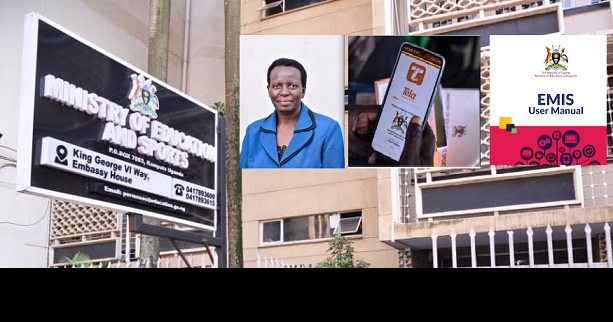
A bombshell audit has ripped through the Ministry of Education and Sports, exposing a staggering trail of weak leadership, poor planning, and a digital mess that insiders say has crippled Uganda’s ambitious education technology revolution. Systems that were sold as game-changers are now at the centre of a storm, with the Auditor General laying bare deep cracks in the Education Management Information System (EMIS) and the Teacher Effectiveness and Learner Achievement (TELA) platform.
The audit paints a picture of a Ministry asleep at the wheel, where critical systems meant to track learners, teachers, and performance across the country are instead riddled with inefficiencies, gaps, and outright failures. These platforms, described as “core Government of Uganda digital platforms,” were supposed to “support evidence-based planning, service delivery, and accountability in the education sector.” Instead, what has emerged is a tale of fragmentation, duplication, and alarming governance failures.
At the heart of the mess is the failure to integrate EMIS with key systems like UNEB, NIRA, TMIS, and even TELA itself—an omission that has left education data scattered and unreliable. The Auditor General did not mince words, warning that “the lack of functional interfaces has resulted in fragmented datasets, reliance on manual processes, and reduced reliability of education statistics.” In simple terms, the Ministry built a digital engine—but forgot to connect the parts.
Even more shocking is the revelation that the Ministry is running multiple overlapping systems with similar data, effectively duplicating work while draining public resources. EMIS, TELA, TMIS, TVET MIS, and e-Inspection are all operating in silos, a situation the audit describes as leading to “duplicated efforts, inefficient use of public resources, and inconsistent education sector data.” For a sector already struggling with funding gaps, this is nothing short of a scandal.
But the rot goes deeper. The audit exposes how the Ministry has effectively handed over control of EMIS to external vendors, with its own staff sidelined. “Critical system administration and configuration functions for EMIS remain largely under the control of the system vendor,” the report reveals, warning of dangerous “vendor lock-in risks” and a complete erosion of internal capacity. In effect, the Ministry cannot fully control the very system it paid for.
Accountability structures are also in tatters. The Auditor General found that changes to both EMIS and TELA were being made without any formal framework, stating that they were implemented “without a standardised, Ministry-wide change management policy aligned to recognised frameworks.” This lack of structure has weakened oversight, leaving the systems vulnerable to errors, manipulation, and confusion.
The governance vacuum is equally alarming. The Ministry lacked fully operational IT steering and strategy committees, clear policies, and defined roles, leading to what the audit calls “fragmented decision-making and misaligned IT investments.” In a sector where data should drive decisions, the absence of leadership has turned technology into a liability instead of an asset.
Inside the Ministry, chaos appears to reign, with parallel IT units operating independently of each other. The audit notes that “project-based IT units operating outside the mainstream IT department” have created “blurred accountability, inefficiencies, and inconsistent oversight.” In other words, too many cooks—and none clearly in charge.
Perhaps most embarrassing is the revelation that several key EMIS modules simply don’t work. Critical components like Licensing, Monitoring and Evaluation, Help Desk, Messaging, and school-level data modules were found to be non-operational. This means a system designed as the backbone of education data is running with missing organs. The Auditor General demanded that the Ministry “enforce the full implementation and activation of all contracted EMIS modules,” a clear sign that taxpayers may not be getting value for money.
The TELA system, once hyped as a revolutionary tool to fight teacher absenteeism, is also under fire. Shockingly, the Ministry rolled it out without even preparing a proper business case. The audit slams this, noting that there was “limited assessment of value for money, sustainability, and alignment with existing systems.” For a project costing billions, this is a glaring oversight.
Worse still, TELA was deployed despite known technical defects. The Auditor General confirmed that the system was rolled out “with known technical defects that affected system stability, user confidence, and effective utilisation.” In essence, a broken system was pushed into schools, raising questions about who approved it and why.
In a twist that raises serious integrity concerns, TELA has been used by unlicensed schools, undermining regulatory controls. The audit warns that this “undermines regulatory controls and the integrity of captured data,” meaning the very data meant to guide policy could be compromised.
And in what critics are calling a fatal blow to the system’s credibility, GPS and geofencing features—key tools meant to verify teacher presence—were switched off. The report states bluntly that “the deactivation of GPS and geofencing features weakened the system’s ability to independently verify teacher presence and increased the risk of manipulation of attendance records.” The very feature designed to catch absentee teachers was effectively neutralised.
Support systems are also broken. Schools using TELA have no functional way to report issues, with the help-request module found to be non-operational. This has left users stranded, with the audit noting it has “limited visibility over user challenges and system support effectiveness.”
This damning report casts a long shadow over both former Permanent Secretary Ketty Lamaro, under whose tenure the system was rolled out in 2023, and her successor Kedrace Tiryagyenda, who now faces the uphill task of cleaning up the mess.
Ironically, when TELA was launched, it was marketed as a silver bullet to end teacher absenteeism, a long-standing crisis in Uganda’s education system. Officials promised it would provide “real-time information and a clear picture of what is happening at schools,” using smartphones with GPS and biometric features to track attendance and lesson delivery.
Education officials like Frances Atima had hailed it as transformative, declaring, “Before we talk about the Inspectors of Schools, there should be a strong school-based inspection.” She insisted, “We have seen this system working in private schools. Why not public schools?”
The system was designed to replace the traditional attendance book, long accused of being manipulated. Teachers would clock in using facial recognition and fingerprints, while headteachers would upload real-time lesson data every 40 minutes. “The system is based on GPS. We can determine that someone is physically visiting classrooms,” Atima explained at the time.
But even before rollout, sceptics warned of trouble. Education consultant Patrick Kaboyo cautioned that technology alone would not fix systemic problems, arguing that communities must be empowered first. Teachers’ union leader Filbert Baguma was even more blunt, warning that without addressing root causes, such interventions could “end up as another failed project.”
Those warnings now appear prophetic.
The audit concludes with a chilling warning: unless urgent action is taken, the Ministry risks “under-realising the benefits of these systems, and compromising data integrity.” For a sector that relies on accurate data to plan budgets, deploy teachers, and track performance, the consequences could be devastating.
What was meant to be a digital revolution in education is now teetering on the edge of becoming one of the biggest administrative failures in recent years—raising one burning question: who will be held accountable for this costly technological mess?
GOT A HOT STORY? EMAIL: redpeppertips@gmail.
SOURCE PROTECTION/CONFIDENTIALITY IS OUR NO.1 PRIORITY.