 pressug.com News 24 7

Related Articles



For an institution created to sniff out dirty money and choke financial crime at its roots, the spotlight is now uncomfortably fixed on the watchdog itself.
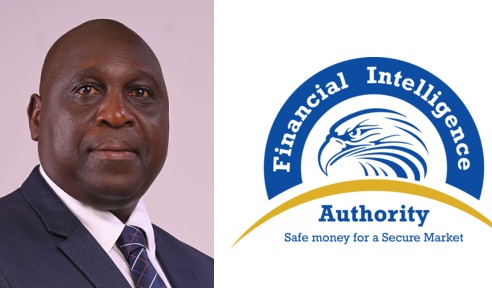
A damning Value for Money audit in the December 2025 report by the Auditor General has exposed glaring weaknesses at the Financial Intelligence Authority (FIA), raising tough questions about competence, focus and leadership under Executive Director Samuel Were Wandera.
Appointed by President Museveni in July 2023 to replace pioneer ED Sydney Asubo, Wandera came in with glittering credentials. He is an economist, a certified PRINCE2 member in Managing Successful Programs in a Controlled Environment, and a Certified Anti-Money Laundering Specialist. He previously served at the Ministry of Finance and was involved in setting up Uganda’s AML/CFT framework. He has been Director of Compliance and Training at FIA and is described as passionate about AML compliance, public awareness and stakeholder engagement.
Three years later, however, the institution he heads is battling a cocktail of audit queries, underperformance and internal storms.
The audit on “Performance of the Financial Intelligence Authority in the Anti-Money Laundering Chain” paints a troubling picture.
Money laundering, the report reminds us, is “the process of turning illegitimately obtained property into seemingly legitimate property” and it undermines economies, erodes the integrity of financial institutions and distorts economic data.
Yet the very authority meant to stand guard over Uganda’s financial system is struggling to do the basics.
The Auditor General found “low submission of Suspicious transactions and activity reports by institutions in the Financial Services Sector other than banking institutions and foreign exchange bureaus and non-submission of any suspicious transaction reports by licensing authorities and designated non-financial businesses and professions.”
In simple terms, large segments of accountable persons are not reporting suspicious transactions at all.
The audit attributes this to “non-registration of all licensed accountable persons; inadequate inspection and oversight of accountable persons for AMLA compliance; inadequate AML training and guidance to accountable persons and failure to impose administrative sanctions and fines to accountable persons for non-compliance.”
How can a regulator demand compliance if it does not even register and inspect all those it regulates?
Even where reports were submitted, FIA stumbled.
The audit found that FIA “failed to analyse 1,086 reports out of 9,061 Suspicious and activity reports received by the end of the review period.” Out of the 7,975 analysed, only 241 resulted into generation of intelligence reports. A massive 7,734 were to be closed while gathering more information and intelligence.
The pending analysis and storage of reports was attributed to delays or failure to obtain additional information from stakeholders.
In the war against financial crime, time is everything. Delays mean suspects move money, erase trails and restructure networks.
Worse still, once intelligence was disseminated to Law Enforcement Agencies, the system choked again.
The audit reports that there were delays in finalizing 79% of initiated money laundering investigations by selected LEAs during the review period. The reasons are a litany of dysfunction: “delayed feedback on information requests, limited coordination among stakeholders, parallel investigations, difficulty in tracing money launders provided in the FIA intelligence reports, the need to re-profile suspects and generate intelligence by LEAs in instances where the FIA intelligence led to wrong suspects and the absence of standard timelines for investigating cases.”
Wrong suspects? Re-profiling? No standard timelines?
Financial crime expert David Mugumya says this is dangerous territory. “If intelligence is inaccurate or poorly analysed, you waste investigative time and risk letting real criminals walk free. That damages credibility at both domestic and international level.”
Uganda has already felt the sting of international scrutiny, having been grey listed during the tenure of pioneer ED Sydney Asubo. When Asubo exited after nine years, many hoped the technocratic Wandera would turbo-charge compliance and restore confidence.
Instead, the audit reveals structural weaknesses that refuse to die.
The Strategic Plan suffered an underfunding variance of 37.5%, meaning insufficient resources to implement planned activities. Out of seven strategic objectives, only two were fully achieved. Yet the entity absorbed 100% of the UGX 33.703 billion warrants received. Out of seven planned outputs, five were fully implemented and two partially implemented.
On Non-Tax Revenue, FIA budgeted to collect UGX 0.2 billion but managed only UGX 0.028 billion, representing a mere 13% performance.
Procurement planning was also flagged, with the published procurement plan not indicating procurements reserved for registered associations as required by guidelines. A review of bidders’ participation revealed low bidder turnout for two procurements worth UGX 0.284 billion.
The Auditor General acknowledged improvements, including a 34% increase in suspicious transactions reported due to AML trainings and inspections and establishment of feedback mechanisms. But the report is clear that to maximize its potential, FIA must address “limited coverage and registration of accountable persons in the DNFBP sector, inadequate enforcement of compliance through sanctions, insufficient planning and budgeting for AML trainings and inspections, incomplete analysis of filed reports, and weak feedback mechanisms.”
RECRUITMENT STORM
Meanwhile, storm clouds gather internally, RedPepper has learnt.
A controversial recruitment drive that started in July last year has seen many new faces enter FIA, filling positions ranging from Compliance and Inspection Officers, Data Scientists, Strategic Analysts, IT Officers in Cyber Security, Monitoring and Intelligence Officers, Senior Risk Officers and Communications officers to receptionists and secretaries.
While some hail it as capacity building, others whisper about undue influence, unqualified recruits and alleged fronting of State House names. Red Pepper is in possession of names of some recruits now facing a looming legal showdown. They include a young graduate who was once at National Medical Stores (NMS) but now she is a senior at FIA. At NMS she got many issues with Sheilla Nduhukire and decided to throw in the towel. Allegations abound that some officials at FIA used the exercise to sideline staff perceived as loyal to the Asubo era and to redesign job requirements, raising qualification thresholds in ways that reportedly edged out experienced officers in favour of newcomers.
There are claims that positions previously requiring bachelor’s degrees were redesigned to demand master’s degrees, effectively locking out long-serving staff of five to ten years.
A senior governance analyst, who requested anonymity, says, “When recruitment becomes politicised or perceived as targeted, it damages morale and institutional memory. In a technical area like AML, you cannot afford to lose experienced analysts.”
Board Chairperson Alinaffe Kalule now finds herself under scrutiny too. Where is the board in all this? The board is expected to provide strategic oversight, ensure governance and guard against mission drift. If succession wars and intense lobbying are indeed ongoing as sources allege, is the institution focused on fighting money laundering or fighting internal battles?
Sources claim Wandera’s first term ends next year and that fierce succession wars are already simmering within FIA and the Ministry of Finance. Has attention shifted from mandate to maneuvering?
For a country battling corruption, illicit financial flows and complex digital financial crimes, the stakes are enormous.
The Auditor General concludes that addressing the weaknesses will “enhance the FIA’s efficiency” and “secure the country’s financial systems from ML activities and improve its capacity to respond to evolving Money Laundering threats.”
Ugandans are left asking: is FIA overwhelmed, under-resourced or under-led? Is this sloppiness, negligence or systemic strain in a young institution facing sophisticated criminals? And as the grey list ghost still lingers in memory, can the current leadership steady the ship before confidence erodes further?
In the high-stakes game of chasing dirty money, even the slightest weakness can cost a nation billions, concludes a financial expert.
Watch this space!
GOT A HOT STORY? EMAIL: redpeppertips@gmail.
SOURCE PROTECTION/CONFIDENTIALITY IS OUR NO.1 PRIORITY.