 pressug.com News 24 7

Related Articles



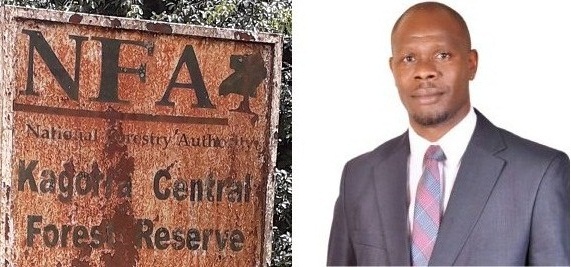
Uganda’s forests are meant to be protected by law, technology and tough oversight. Instead, the latest December 2025 Auditor General’s report has exposed what insiders are calling a “digital disaster” and deep management cracks at the National Forestry Authority.
At the heart of the storm is the much-hyped Electronic Licensing System — a flagship digital reform meant to modernise licensing, seal revenue leakages and boost transparency in the management of Central Forest Reserves. The system was supposed to automate applications for tree planting, harvesting, ecotourism and research, integrate with national e-Government platforms, and eliminate the inefficiencies of manual processing.
Instead, auditors found a system that was not fully implemented, not fully commissioned and not delivering on its core objectives.
Approvals were being conducted outside the system because key management approvers, including the Executive Director and Director of Natural Forestry, were not configured into the workflow. Licensing applications and payment validations were processed manually, outside the very system meant to enforce accountability. Most planned modules were undeveloped or non-operational. The system was not integrated with key platforms such as URA, NIRA, URSB or IFMS, forcing manual verification.
“This defeats the whole purpose of digital transformation,” a governance expert told RedPepper. “If approvals and payments are happening outside the system, then the controls are cosmetic.”
The audit further revealed that NFA lacks formally documented and approved ICT policies to guide planning, management and security of ICT resources. The ICT unit itself is understaffed, with only two officers performing overlapping roles — a clear segregation of duties risk in a high-stakes licensing environment.
More troubling were findings that licenses issued to private tree planters lacked mandatory operational plans and approvals, contrary to NFA guidelines. Land allocations to private tree farmers were not supported by evaluation reports or formal Board approvals. The system also lacked a comprehensive database of land available for licensing, increasing risks of encroachment, disputes and irregular allocations.
Who is in charge of this digital mess?
The Accounting Officer at NFA is Stuart Maniraguha, the Acting Executive Director. And that “acting” title has raised as many eyebrows as the audit findings themselves.
Maniraguha has been in acting capacity since July 2024, initially expected to serve for six months before either being confirmed substantively or replaced. Six months elapsed. Another six were extended. As of now, he remains in acting limbo.
“An acting Executive Director for over a year?” one senior official asked rhetorically. “How do you enforce discipline when you don’t know whether you will still be in office next quarter?”
Sources inside NFA whisper that prolonged acting appointments create uncertainty, weaken authority and slow down decisive action. Some critics argue that Maniraguha may not fully grasp the technical complexities of ICT governance and digital systems, contributing to weak oversight of the e-Licensing rollout.
His appointment followed the expiry of the six-year term of Tom Obong Okello. Since then, insiders say intense behind-the-scenes battles have erupted over who should permanently take the helm.
Names being floated include Mwodi Martin Kegere, Director of Plantations Development, who oversees plantation establishment and management across six plantation areas — Bugamba, Mafuga, Mwenge, Katuugo, Lendu and South Busoga. But critics question his management record in plantations and doubt whether he can steer the entire Authority.
Another contender reportedly positioning himself is Rukundo Tom, Director of Natural Forests Management.
Meanwhile, sources say some commissioners and their assistants at the parent Ministry of Water and Environment are also eyeing the top job, and that internal lobbying is intense. There is even a broader institutional tug-of-war over whether NFA should remain autonomous or be fully integrated into the Ministry in the ongoing government RAPEX.
The Board of NFA, chaired by Dr. Eng. Christopher Ebal, alongside members Hussein Abdullahi Shire, Tina Achilla and Charity Chebet, is mandated to provide strategic guidance and oversight. But the audit’s findings raise uncomfortable questions about whether that oversight is robust enough.
“If land allocations are happening without evaluation reports and Board approvals, where is the Board?” an environmental activist demanded. “Oversight cannot be ceremonial.”
Attention is also turning to Muhumuza Moses, Director Legal and Corporate Affairs, whose directorate includes Planning, Legal Affairs, Monitoring and Evaluation, GIS and Mapping, and Business Development. Given that the Electronic Licensing System touches directly on legal compliance, monitoring, mapping and business processes, some observers are asking whether his office should shoulder greater responsibility.
“Legal and corporate governance must be the backbone of licensing,” a policy analyst noted. “If approvals are outside the system and operational plans are missing, then governance controls are clearly weak.”
The rot does not end with the digital system.
Under the Investing in Forests and Protected Areas for Climate-Smart Development Project implemented by NFA, auditors noted accumulation of payables amounting to UGX 896 million. Unimplemented procurements worth USD 236,500 were flagged. There were delays in procurements valued at UGX 18.7 billion. Out of 114 sampled activities worth USD 11.58 million, only 50 activities worth USD 2.70 million had fully achieved targets, while the rest worth USD 8.88 million were yet to be achieved.
The project had an approved budget of USD 13.7 million for 2024/2025, but only USD 3.43 million was available for spending, representing just 25 percent performance. Of that available amount, only USD 2.36 million was spent, leaving an unspent balance of over USD 1 million and an absorption level of 68.7 percent.
At institutional level, NFA recorded nugatory expenditure of UGX 148.8 million in court awards for wrongful dismissal of staff. The Authority had unfunded priorities for 25 million seedlings against an NDP III target of 40 million. Only 250km of the 1,000km boundary marking target was funded. Of 5,650 tree farmers allocated land, only 4,530 had been issued licenses. Only 58 percent of allocated hectares had been planted.
Revenue performance was equally worrying. NFA collected only UGX 14.92 billion, representing 65 percent of its budgeted non-tax revenue. Strategic Plan funding was underfunded by 36 percent. And the Authority lacks land titles for 37 pieces of land outside Central Forest Reserves.
Above NFA sits the Ministry of Water and Environment, headed by Permanent Secretary Dr. Alfred Okot Okidi. He has reportedly defended delays in confirming substantive appointments, citing broader government restructuring and Cabinet decisions on scrapping director positions. But governance experts argue that administrative transitions should not justify prolonged non-compliance with public service regulations.
“Extended acting appointments undermine accountability,” one governance commentator said. “When leaders are temporary for too long, institutions become unstable.”
So who is to blame? Is it the Acting Executive Director struggling to assert authority? Is it a Board that failed to tighten oversight? Is it directorates that did not enforce controls? Or is it a parent ministry that left the agency in prolonged uncertainty?
One thing is clear: Uganda’s forests are too critical — economically, environmentally and climatically — to be managed through half-commissioned systems, acting appointments and procedural shortcuts.
The Auditor General has spoken. The findings are on record. The question now is whether the Ministry and the NFA Board will crack the whip, confirm or replace leadership decisively, and restore confidence — or whether this forest fire of governance lapses will continue to smoulder unchecked.
GOT A HOT STORY? EMAIL: redpeppertips@gmail.
SOURCE PROTECTION/CONFIDENTIALITY IS OUR NO.1 PRIORITY.