 pressug.com News 24 7

Related Articles


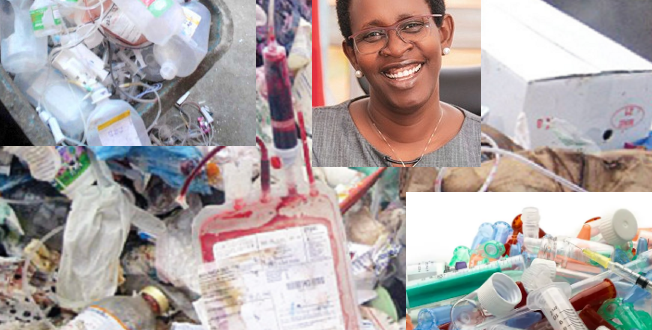
Kampala — A scorching report by the Office of the Auditor General of Uganda has thrown the country’s health sector into fresh controversy after exposing glaring failures in the way hazardous medical waste is handled across public health facilities.
The explosive Value for Money (VFM) Audit released in the 2025 Auditor General’s report paints a disturbing picture of a system riddled with poor planning, weak supervision, inadequate funding and shocking practices that could be silently endangering the lives of health workers, patients and communities living near hospitals.
And now, fingers are beginning to point at the top leadership of the Ministry of Health Uganda — including Permanent Secretary Dr. Diana Atwine Kanzira, the technocrat tasked with overseeing the country’s health resources.
The big question now echoing through corridors of power is simple: Who dropped the ball?
The Auditor General’s investigation into the effectiveness of healthcare waste management found that despite government having policies, guidelines and regulations in place, the system meant to control dangerous hospital waste is riddled with glaring gaps.
Health Care Waste — which includes infectious materials like used syringes, blood-stained bandages, contaminated gloves and other hazardous hospital by-products — is supposed to be strictly handled to prevent disease spread and environmental contamination.
But the audit reveals that in many facilities across the country, the system is barely functioning.
According to the report, the Ministry failed for years to establish key standards to guide how medical waste should be measured, treated and disposed of.
“There was no requirement for facilities to measure or report Health Care Waste volumes, no clear indicators for treatment efficiency and emissions control, and no standards for the design of common waste pits,” the report states.
The result has been what auditors describe as “adhoc and ineffective planning” for healthcare waste management nationwide.
Even more troubling is the revelation that for three consecutive financial years — between FY2022/23 and FY2024/25 — the Health Ministry operated without an operational national strategic plan to guide how the country should handle medical waste.
This vacuum meant activities at national level, district authorities and individual health facilities were fragmented, inconsistent and poorly coordinated.
Although a new Health Care Waste Management Strategy covering 2025/26–2029/30 has been drafted, the audit notes that it has not yet been disseminated or implemented.
Insiders say this alone raises questions about leadership within the ministry.
“How do you run a national health waste system for years without a functional strategy?” one senior health policy expert privately wondered.
But the rot goes deeper.
The Auditor General discovered that healthcare waste management was never given a clear budget line in ministry and health facility workplans.
In simple terms — the country’s hospitals were expected to manage dangerous waste without proper funding.
Because of this, major infrastructure such as incinerators meant to destroy hazardous medical waste ended up depending heavily on funding from development partners.
However, once those partners pulled out, the projects stalled.
The Ministry has since proposed allocating UGX 5 billion to plug the funding gap, but the audit suggests the situation on the ground remains dire.
Health facilities are now expected to allocate 10 percent of their Primary Health Care funds to waste management — but auditors say the amounts involved are laughably small.
On average, the annual funding available for waste management is estimated at: UGX 60,000 for Health Centre II facilities, 120,000 for Health Centre III facilities, 600,000 for Health Centre IV facilities and 7.5 million for hospitals.
Experts say such figures can barely cover basic waste handling equipment, let alone ensure safe treatment and disposal of hazardous materials.
“It is unrealistic to expect meaningful waste management with such tiny allocations,” the report warns.
Meanwhile, the system meant to monitor compliance appears equally broken.
Although the ministry carries out periodic WASH assessments to evaluate sanitation standards in health facilities, auditors discovered that little or no follow-up was done to ensure facilities actually implemented recommended corrective actions.
This allowed dangerous practices to continue unchecked.
The report found that waste segregation remains poor in many health facilities, with infectious and non-infectious waste often dumped together in the same bins.
Auditors also discovered unmatched bin liners, unlabelled waste bags and the absence of proper temporary storage areas.
In some facilities, the situation was so bad that medical waste was openly burned, a dangerous practice that releases toxic fumes into surrounding communities.
Even incinerators that exist were found lacking basic equipment such as temperature monitoring systems and emission meters.
Without these controls, experts say the incinerators themselves could be producing harmful pollutants.
The Auditor General also uncovered major failures in coordination between the Health Ministry and other regulatory bodies like local governments and district health offices.
Despite the existence of national and regional steering committees meant to coordinate healthcare waste management, auditors found no coordination meetings were held between FY2022/23 and FY2024/25.
This lack of engagement severely limited harmonization of interventions across the sector.
Even the country’s digital health data system appears ill-equipped for the task.
The audit revealed that the widely used District Health Information System 2 (DHIS2) does not currently have a module for capturing healthcare waste data.
Without accurate data on the amount of waste generated in hospitals, planning becomes guesswork.
The report concludes that the current system is characterized by weak enforcement of regulations, chronic underfunding, poor waste segregation practices, limited monitoring and lack of reliable waste data.
As a result, unsafe handling and disposal of healthcare waste continues to expose health workers, patients and surrounding communities to infection risks and environmental contamination.
The findings have sparked renewed debate about accountability at the top of the health sector.
As Permanent Secretary of the Health Ministry, Dr. Diana Atwine Kanzira is responsible for providing technical leadership and stewardship over the country’s health resources.
With such glaring gaps identified by the Auditor General, critics are now asking whether the ministry leadership has done enough to address a problem that directly affects public safety.
“Medical waste is not just garbage — it can spread infections and poison communities if mishandled,” a public health analyst noted.
“When the system fails at this level, it raises serious questions about oversight.”
The Auditor General has now urged the ministry to urgently fast-track the dissemination and implementation of the new healthcare waste management strategy and develop a sustainable financing model, including applying the polluter-pays principle.
The report also recommends strengthening supervision of health facilities, enforcing national waste management guidelines and accelerating completion of stalled incinerator projects.
But beyond recommendations, many observers believe stronger action may be necessary.
With hospitals generating thousands of tonnes of hazardous waste every year, failure to fix the system could turn Uganda’s health facilities into silent environmental hazards.
For now, the Auditor General’s report has opened a fresh chapter of scrutiny for the Health Ministry leadership.
Whether it leads to reforms — or simply gathers dust like many reports before it — remains to be seen.
GOT A HOT STORY? EMAIL: redpeppertips@gmail.
SOURCE PROTECTION/CONFIDENTIALITY IS OUR NO.1 PRIORITY.