 pressug.com News 24 7

Related Articles


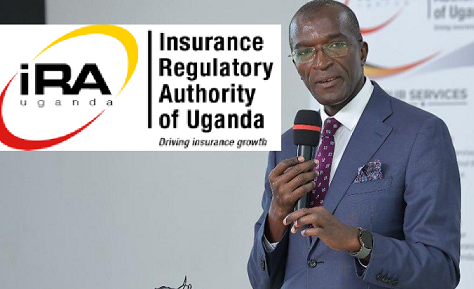
Kampala — Uganda’s insurance watchdog is under intense scrutiny after a blistering audit report exposed financial irregularities, governance gaps and failure to implement key consumer protection mechanisms, raising tough questions about leadership at the regulator.
The explosive findings contained in the latest report by the Office of the Auditor General of Uganda have placed the Insurance Regulatory Authority of Uganda (IRA) squarely in the spotlight, with critics now asking whether the institution charged with safeguarding Uganda’s insurance sector is itself slipping on oversight and accountability.
At the centre is Alhaj Dr. Kaddunabbi Ibrahim Lubega, the long-serving Chief Executive Officer who has steered the Authority since 2010. After more than a decade at the helm, Lubega is widely credited with expanding and stabilising Uganda’s insurance industry. But the Auditor General’s findings now threaten to reopen the debate about whether the veteran regulator has overstayed his welcome.
The Authority currently operates under the leadership of Board Chairperson Isaac Nkote Nabeta, deputised by Grace Bakunda, with Lubega serving as the chief executive responsible for day-to-day operations.
While the Auditor General issued an unqualified opinion on the Authority’s financial statements — meaning they were generally presented fairly — the detailed findings reveal a number of worrying issues that have left observers questioning internal controls within the institution.
One of the most striking revelations concerns UGX 6.27 billion spent by the Authority during the 2024/2025 financial year.
According to the Auditor General, these funds were neither appropriated under the approved budget nor approved by the Board or the responsible Minister.
Even more troubling, auditors say there was no evidence of supplementary approval or amendments to the budget to legitimise the expenditure.
In simple terms, billions of shillings appear to have been spent outside the established approval framework.
Financial governance experts say such spending raises serious accountability questions.
“Public institutions cannot spend money outside approved budgets without proper authorisation,” one financial analyst explained to RedPepper.
“That undermines financial discipline and opens the door to potential misuse of resources.”
Another critical issue raised by auditors concerns procurement planning.
The report revealed that three procurements worth UGX 13.285 billion were initiated in previous financial periods and completed in the current year without the preparation of multi-year procurement plans, as required by law.
Multi-year procurement planning is designed to ensure that large purchases are properly budgeted, scheduled and monitored over several years.
Failure to prepare such plans can disrupt financial planning and weaken oversight of major procurements.
But perhaps the most alarming finding relates to the protection of ordinary Ugandans who buy insurance policies.
The audit reveals that the Policy Holders’ Compensation Fund, which is required under the Insurance Act to protect customers if an insurance company collapses, has never been established.
This failure comes eight years after the Insurance Act mandated its creation.
Without this fund, policyholders could be left exposed if an insurance company becomes insolvent and fails to pay claims.
Experts say the absence of the fund represents a serious gap in consumer protection.
“The compensation fund is supposed to be the last safety net for policyholders,” a sector insider explained.
“If it doesn’t exist, customers may have nowhere to turn if their insurer collapses.”
The Auditor General also raised concerns about the Authority’s oversight of security deposits held by insurance companies.
According to the report, the regulator lacks clear policies for monitoring these deposits, which insurers hold as financial guarantees.
Even more worrying, auditors found no evidence that the Authority actually controls or verifies these deposits, meaning it may not know whether the funds truly exist or how they are being used.
Such gaps could potentially weaken financial safeguards meant to protect the stability of the insurance sector.
Governance questions also emerged within the Authority’s board structure.
During the 2024/2025 financial year, the board comprised nine members instead of the required ten.
The missing position belongs to the Chief Executive Officer of the Uganda Retirement Benefits Regulatory Authority, who by law sits on the IRA board but had not been appointed at the time.
Although the vacancy may appear minor, governance experts warn that incomplete boards can affect decision-making and oversight.
As these revelations surface, they have revived long-standing debates about leadership at the Authority.
Hajji Alhaj Dr. Kaddunabbi Ibrahim Lubega has served as CEO since 2010 — a remarkably long tenure in Uganda’s regulatory landscape.
During that period, he has overseen significant transformations within the insurance industry, including expansion of the sector and stronger regulatory frameworks.
Yet his tenure has not been without controversy.
Despite the debates and periodic criticism over the years, Lubega has remained firmly in charge of the Authority.
But insiders now say the winds of change may be blowing quietly inside the regulator.
Whispers from within the sector suggest a silent succession war is already underway over who could eventually take over the powerful CEO position.
Sources point to Sande Protazio, the Director for Strategy and Market Development, as one of the key insiders believed to have strong interest in the top job.
Another name frequently mentioned in succession talk is Benerd Obel, the Director of Supervision, who also reportedly commands influence within the institution.
While none of the potential contenders have publicly declared their intentions, insiders say internal jockeying is quietly shaping the future leadership dynamics of the Authority.
“The race has not officially started, but everyone inside knows it is coming,” a senior industry observer said.
“The question is whether the board will prefer continuity or fresh leadership.”
And that brings the debate back to Lubega himself.
Supporters argue that the veteran regulator deserves credit for steering the insurance industry through years of growth and reform.
Indeed, even critics acknowledge that any leader serving such a long time inevitably registers significant achievements.
But others believe the time may have come for new leadership to take the Authority to its next phase.
“The real question is not whether Lubega has delivered results,” one policy analyst said.
“The question is whether he has outlived his usefulness.”
The Auditor General’s findings have now added fuel to that debate.
While the report does not directly assign blame to specific individuals, the issues it raises — from unapproved spending to delayed implementation of statutory protections — point to systemic weaknesses that ultimately fall under the Authority’s leadership.
As the dust settles from the latest audit revelations, pressure is likely to mount on both the Board and the mother Ministry overseeing the sector to ensure that the gaps identified are addressed.
Whether that leads to reforms, stronger oversight or leadership changes remains to be seen.
“For an institution tasked with regulating billions of shillings in insurance premiums and protecting policyholders across the country, the stakes are too high for mistakes,” says an Insurance industry watcher.
And as the succession whispers grow louder within the Insurance Regulatory Authority, the billion-shilling question remains hanging in the air: Is it time for Hajji Lubega to leave the stage — or will the veteran regulator weather yet another audit storm?
GOT A HOT STORY? EMAIL: redpeppertips@gmail.
SOURCE PROTECTION/CONFIDENTIALITY IS OUR NO.1 PRIORITY.