 pressug.com News 24 7

Related Articles



By Evans Najuna
Uganda has made notable progress in the fight against malaria through the distribution and use of insecticide-treated mosquito nets (ITNs). However, recent findings show that gaps in household coverage remain, highlighting the need for expanded distribution efforts to protect more families. This is contained in the 2024-25 malaria survey report released on Thursday at the Uganda Bureau of Statistics house in Kampala.
According to the report, surveys conducted in 2016 included mosquito nets treated with insecticides within the previous 12 months. However, the retreatment questions were removed starting with the 2016 Uganda Demographic and Health Survey and the 2018-19 Uganda Malaria Indicator Survey, after the country shifted to long-lasting nets that do not require annual retreatment.
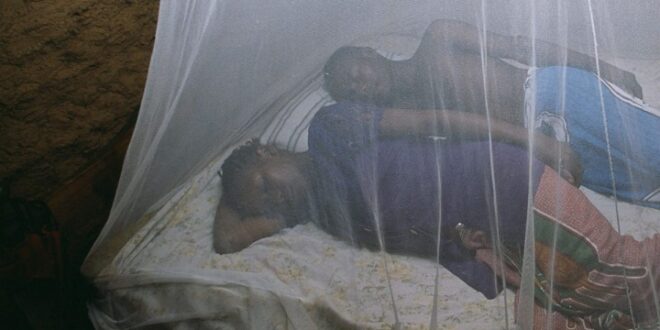
The use of ITNs remains central to Uganda’s malaria prevention strategy. When widely distributed and properly used, the nets protect individuals from mosquito bites and reduce the overall mosquito population, lowering the risk of malaria transmission across communities.
According to the 2024-25 Uganda Malaria Indicator Survey (UMIS), 84% of households own at least one insecticide-treated net, while 87% own at least one mosquito net of any kind. These figures show a slight change from the 2018-19 UMIS, when 83% of households reported owning at least one mosquito net.
Despite high ownership levels, many households lack enough nets to protect all members. The survey found that only 56% of households had at least one mosquito net for every two people who stayed in the household the night before the survey.
The findings reveal that 16% of households own no insecticide-treated nets, while 28% have at least one net but lack enough for all members. Chris Mukiza, Executive Director of the Uganda Bureau of Statistics, said it’s time for the Ministry of Health and stakeholders to use this data and find solutions.
The Uganda Malaria Elimination Strategic Plan aims to ensure every household has at least one insecticide-treated net for every two people by 2030. The strategy includes distributing next-generation nets, targeted indoor residual spraying, and climate-responsive vector control.
Uganda’s recent nationwide mosquito net distribution campaign (May-December 2023) contributed to high household ownership levels. However, ownership varies across regions and populations. The Teso sub-region reported 95% ownership, while Kampala reported 69%.
The report recommends expanding distribution to reach the 16% of households without nets and increasing the number of nets for households with insufficient coverage to meet the 2030 goal.