 pressug.com News 24 7

Related Articles



The National Housing Construction Company Limited (NHCCL), a key pillar in Uganda’s push for modern housing and sustainable urbanisation, is now staring at a deepening crisis after the Auditor General’s December 2025 report laid bare a trail of financial missteps, stalled projects, and internal intrigue that threatens to derail its mandate.
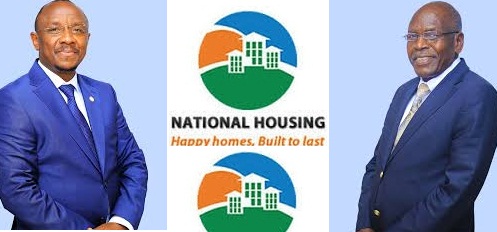
At the centre of the storm is Chief Executive Officer Eng. Kenneth Kaijuka, who has been at the helm since 2019. While his tenure has delivered notable projects and kept the company visible in Uganda’s competitive real estate space, the latest audit paints a troubling picture that raises one unavoidable question: has he outlived his usefulness?
“Six years is a long time in a system like this,” a senior insider confided in Red Pepper. “You either evolve and fix problems, or the problems consume you. Right now, it looks like the latter.”
The numbers emerging from the audit are nothing short of explosive.
In just one financial year, NHCCL’s receivables ballooned by a staggering UGX 31.38 billion, jumping from UGX 20.29 billion in FY 2023/24 to UGX 51.67 billion in 2024/2025 — a shocking 155 percent increase. This mountain of unpaid money is now choking the company’s ability to invest and operate effectively.
“This is money that should be working for the company,” an analyst observed. “Instead, it’s stuck out there, and nobody seems to have a clear recovery strategy.”
Even more alarming, the company has no policy on provisioning for bad debts, despite sitting on receivables worth UGX 51.67 billion, some of which have been outstanding for years. Insiders say this is a ticking time bomb that could explode into massive write-offs.
“It’s financial blindness,” a source snapped. “You don’t just accumulate billions and pretend it will sort itself out.”
The Auditor General also uncovered shocking irregularities in asset management. The company’s computer assets are being reported at zero value, despite still being in active use, with no revaluation undertaken. At the same time, plant and machinery registers reveal worn-out and non-functional equipment still listed in financial statements without being tested for impairment.
“This is accounting chaos,” an insider said. “It distorts the true value of the company and raises serious integrity questions.”
But perhaps the most visible sign of trouble lies in NHCCL’s flagship housing projects.
A UGX 29.83 billion Design, Finance and Build framework signed to deliver 127 condominium apartments is now crawling at just 24 percent completion and is already one year behind schedule. For a country grappling with a massive housing deficit, such delays are more than just numbers — they represent broken promises.
“These are not just buildings,” a housing sector watcher noted. “They are supposed to be solutions to a national crisis. Every delay pushes more Ugandans into slums and informal settlements.”
The stalled progress casts a shadow over ongoing projects such as Naalya Pride Apartments, which include 1, 2, 3 and 4-bedroom units and penthouses, as well as Jasmine Apartments, targeting the high-end segment with 3 and 4-bedroom units. Questions are now swirling about whether NHCCL can deliver on time and at the expected standards.
At the governance level, Board Chairman Hon. Sylvester Wanjuzi Wasieba now faces mounting pressure over oversight failures, with critics arguing that the board has not done enough to rein in operational inefficiencies and enforce accountability.
Behind the polished corporate image, however, sources describe an organisation at war with itself.
“There is a serious internal power struggle,” a source revealed to Red Pepper. “People are positioning for the top job, and it is affecting decision-making.”
At the heart of this internal storm is Eng. Ambrose Musinguzi, who is reportedly among those quietly but actively hoping for Eng. Kaijuka’s contract to wind down. Insiders say factions have emerged within the company, each pushing its own interests as the CEO’s tenure approaches its evenings.
“It’s no longer just about housing,” the source added. “It’s about control.”
NHCCL’s unique ownership structure adds another layer of complexity. The Ugandan government holds a 51 percent stake, while the Libyan government controls 49 percent, a share acquired through a debt-swap agreement that saw Libya cancel 88 million dollars in interest and penalties from Uganda’s total debt of 184 million dollars. This delicate balance means that any instability at the top could have far-reaching implications beyond Uganda’s borders.
All this is unfolding at a time when Uganda’s housing crisis is reaching boiling point.
With a population estimated at 47 million and growing at 3.4 percent annually, the country faces a housing deficit of 2.4 million units, a gap that expands by 210,000 units every year. Urban centres like Kampala are bursting at the seams, with nearly half of the population living in informal settlements marked by poor sanitation and unsafe structures.
“This is an emergency,” a policy expert warned. “And NHCCL is supposed to be part of the solution, not part of the problem.”
Recent government reforms, including new laws signed in February 2026 to tighten construction standards, expand mortgage financing, and professionalise property valuation, were meant to stabilise the sector. But without strong institutions to implement them, critics say these laws risk remaining on paper.
“The laws are there, but who is executing?” the expert asked pointedly.
As pressure builds, the question hanging over NHCCL is becoming louder and harder to ignore: is it time for new leadership?
Supporters of Eng. Kaijuka point to his experience and the projects delivered under his watch, arguing that continuity is key in a complex sector like housing. But critics counter that the mounting audit queries, financial risks, and internal divisions signal a leadership fatigue that can no longer be ignored.
“Sometimes fresh energy is what an institution needs,” an insider concluded. “Because right now, the cracks are showing — and they are getting wider.”
For now, NHCCL stands at a crossroads — caught between its promise to transform Uganda’s housing landscape and the harsh realities exposed by the Auditor General. Whether it can recover or sinks deeper into crisis may well depend on what happens next at the very top.