 pressug.com News 24 7

Related Articles



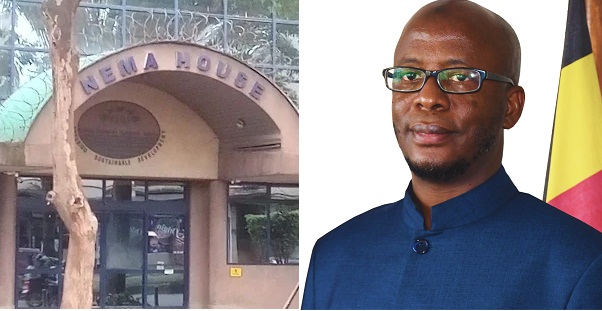
Uganda’s cities are drowning in deafening chaos — and the finger of blame is now pointing squarely at the top leadership of the National Environment Management Authority (NEMA). A damning Value for Money audit by the Auditor General as of December 2025 has blown the lid off what insiders describe as “a regulator asleep on duty,” exposing glaring failures in monitoring and enforcing noise pollution standards, RedPepper can report.
At the centre of the storm is NEMA’s Executive Director, Dr. Akankwasa Barirega, the man mandated to provide overall technical leadership and stewardship. With his five-year term — which took effect on September 1, 2021 — ending this year September, the timing of the audit could not be worse. He is reportedly fighting tooth and nail for renewal, just as succession wars erupt within the authority, RedPepper has learnt.
The Auditor General’s findings reviewed by RedPepper are explosive. In 28 out of 29 facilities visited, noise levels were above permissible standards. Let that sink in. Almost everywhere inspectors went, the law was being broken. Ninety-one percent of complaints registered with NEMA were due to excessive noise from entertainment joints and places of worship. Bars booming through the night. Churches and mosques blasting amplifiers at dawn. Residents tormented. Schools disrupted. Hospitals rattled.
Yet NEMA and selected cities largely reacted only when citizens complained. There were no formal risk-based assessments to identify hotspots. No systematic prioritisation of schools, hospitals, or residential areas. “We are firefighting instead of preventing,” a source within the audit team reportedly remarked. “There is no structured targeting of high-risk zones.”
Even worse, complaints were not properly documented. Walk-ins and phone calls were simply not recorded. Of written complaints received, only 10.8% were investigated and resolved by NEMA. The cities fared only slightly better at 46%. This means thousands of Ugandans who cried out for help were met with silence.
Where was the stewardship?
Staffing is scandalously thin, the report points out. NEMA has only 23 technical staff. The eight selected cities combined have just 17 officers to execute this enormous mandate. Noise is just one of many responsibilities they juggle. The result? Irregular inspections. Delays. Weak follow-ups. A system gasping for breath.
Equipment is equally inadequate. There are only 17 operational sound level meters — nine at NEMA and eight across the cities. Of the 29 facilities inspected, only one had installed mandatory sound-level measuring equipment. Why? Because city councils did not make installation a condition for occupation approval. Even the available equipment is not regularly calibrated, raising questions about the credibility of enforcement evidence.
“This is a regulatory embarrassment,” a senior environmental officer privately fumed. “How do you enforce standards when you cannot even prove the decibel levels conclusively?”
Training has also been neglected. Only one city officer — from Masaka — attended NEMA’s Environmental Inspector training during the review period, and that training did not cover practical noise measurement or corrective action. Officers were found contradicting each other in enforcement approaches. Some issued verbal warnings. Others impounded equipment. Yet 15 out of 16 previously penalised facilities in Kampala, Jinja, Soroti, Lira, and Hoima were still violating standards.
Chronic offenders are operating with impunity.
Enforcement, the audit concluded, is inconsistent, not evidence-based, and lacks structured escalation. There is no proper tracking system to flag repeat offenders. It is as though the law exists only on paper.
Public sensitisation is almost nonexistent. Only NEMA and KCCA publicised dedicated helplines. The rest of the cities? Silent. Throughout the review period, only NEMA, KCCA and Lira conducted a single compliance-assistance engagement each. Otherwise, engagement was punitive and sporadic.
Coordination among stakeholders is weak. Roles are mixed up. Revenue collection priorities sometimes override environmental compliance. It is a classic case of institutional confusion.
And now, the big question: Who carries the can?
Under Section 22 of the National Environment Act, the Executive Director serves for five years and is eligible for only one more term. Dr. Akankwasa Barirega is seeking renewal, just like his predecessor Dr. Tom Okurut who served for ten years. But with this audit hanging over his head, insiders say the renewal fight will be bruising.
Corridor whispers suggest that Francis Sabino Ogwal, Head of Environment Planning and Coordination, is also positioning himself for the same job. As Senior Manager responsible for coordinating environment planning, research, innovation, information management and public participation, should he not have ensured structured systems were in place? Should he face the sack if the Executive Director survives?
Questions also swirl around Victor Nahabwe, Senior Manager for Enforcement and Field Operations, and whether enforcement failures fall squarely under his watch. Is the enforcement arm toothless by design or by neglect?
It is not clear whether David William Elweru, reportedly heading Human Resources, Finance and Administration, has done enough to address glaring staffing gaps. With only 23 technical officers at NEMA and 17 in the selected cities, was recruitment aggressively pursued? Were budgetary reallocations explored? Or did bureaucratic lethargy win?
Sources say succession lobbying is intense. Some commissioners and managers at the parent Ministry of Water and Environment are reportedly eyeing the top job. Others from NWSC and NFA are said to be equally interested. “The knives are out,” an insider revealed. “If Akankwasa does not intensify his lobbying, someone from the ministry will replace him. They have always bad-mouthed him.”
The audit does acknowledge some commendable efforts — joint inspections with city authorities and the Environmental Protection Force, acquisition of sound level meters, and ongoing revision of noise regulations. But these are small patches on a leaking roof.
The overall conclusion is blunt: efforts remain reactive, under-resourced, and poorly coordinated. Systems are not sufficient to achieve sustained reductions in repeat violations. Community complaints are not adequately addressed. Uganda’s urban noise crisis is largely unregulated despite statutory mandates.
For residents who cannot sleep, students who cannot concentrate, and patients who cannot recover in peace, this is not just a bureaucratic lapse. It is a quality-of-life emergency.
Is it time to crack the whip at NEMA?
One senior government source did not mince words: “Leadership is about systems. If the systems are broken, the buck stops at the top.”
As September approaches and succession wars intensify, the fate of Dr. Akankwasa Barirega hangs in the balance. Renewal or exit? Reform or reckoning?
For now, one thing is certain: the noise is no longer just from nightclubs and pulpits. It is coming from the Auditor General’s report — and it is deafening.
MUSEVENI FURIOUS
When President Yoweri Museveni summoned officials from the Ministry of Water and Environment and the National Environmental Management Authority (NEMA) to his Kisozi farm in Gomba recently, the mood was anything but routine. According to sources familiar with the meeting, the President was deeply dissatisfied with what he described as a failed war against wetland encroachment, despite years of policies, task forces, and public declarations.
What angered the President most, insiders say, is that the failures are now backed by hard numbers from the Auditor General’s report on Climate Change, Natural Resources, Environment and Water Management — a report that paints a bleak picture of weak enforcement, missed targets, and institutions struggling to control the very resources they were created to protect.
Uganda’s total wetland cover stands at 33,762.6 square kilometres, yet the Auditor General estimates that degraded wetlands now account for 6.3 percent of the country’s total land area. This degradation has not happened quietly or accidentally. The report documents extensive encroachment on at least 14 major water bodies, involving activities that are explicitly illegal under existing laws—but officials at NEMA and Water Ministry are in slumberland.
These include the construction of apartments and hotels, sand mining, sugarcane plantations, rice and palm cultivation, brick-making, quarrying, livestock grazing, informal markets, washing bays, wastewater discharge, charcoal production, illegal logging, wetland drainage and unregulated water abstraction. Many of these activities are commercial, permanent, and highly visible — raising uncomfortable questions about enforcement failure rather than ignorance.
The law itself is clear. The National Environment Act and the Wetlands, Riverbanks and Lakeshores Management Regulations require protected buffer zones of 100 metres from rivers and 200 metres from lakes, as well as mandatory updates of the national wetland inventory every five years. Yet the Auditor General found that these legal safeguards are routinely ignored, while inventories remain outdated.
Perhaps most damaging to institutional credibility is the failure of restoration efforts. Over a three-year period, the Ministry of Water and Environment planned to demarcate 4,150 square kilometres of wetlands using clear physical markers. Instead, it managed only 739.34 square kilometres, representing just 18 percent of the target. The result is vast stretches of wetlands that remain unmapped, unmarked and vulnerable to encroachers.
NEMA’s enforcement record offers little comfort. During the 2024/25 financial year, the authority issued 319 wetland restoration orders. However, only 146 of those orders — about 46 percent — were complied with. The remaining 173 orders, accounting for 54 percent, were not acted upon at all. The Auditor General notes that the lack of formal appeals regulations and irregular sittings of the appeals committee further weakened enforcement, effectively allowing violators to continue operating with minimal resistance.
Even more alarming is the scale of enforcement capacity. Uganda has 8,614 gazetted wetlands covering approximately 37,346 square kilometres across 146 districts and 11 cities. Yet there are only 45 environmental police officers assigned to protect them. The dilemma now is that those concerned at the Ministry of Water and Environment are still sleeping instead of advising the government to assign them more officers. More so, because the bosses there are not providing efficient advice and leadership, they don’t even exercise command and control over these officers, leaving enforcement fragmented and poorly coordinated.
Despite the ministry receiving over Sh600m for this task, officials have cited funding constraints—but sources say the President’s frustration goes beyond that. At Kisozi, he reportedly questioned why leadership failed to prioritise coordination, enforcement discipline, and accountability even within the limited resources available.
The consequences of these failures are already visible. The report links wetland encroachment to increased flooding, sedimentation, algal blooms, rising water levels, declining water quality, and higher water treatment costs. Aquatic biodiversity is under threat, ecosystem services are compromised, and public health risks are rising — particularly in urban and low-lying communities.
It is this combination of legal non-compliance, weak enforcement, missed targets, and visible national impact that has placed Water Ministry and NEMA leadership under intense scrutiny. Insiders say, in the eyes of the president, these institutions are now viewed as liabilities rather than performers, especially in an administration that has publicly committed to climate resilience and environmental protection.
As one source close to the discussions put it, “The President is no longer asking what the problem is. He is asking who failed to fix it.”
Whether that frustration translates into dismissals remains to be seen. But after Kisozi — and with the Auditor General’s numbers now in the public domain — the message is clear: the era of excuses at Water and NEMA may be coming to an end and some bosses will likely pay the price—read job loss.
GOT A HOT STORY? EMAIL: redpeppertips@gmail.
SOURCE PROTECTION/CONFIDENTIALITY IS OUR NO.1 PRIORITY.