 pressug.com News 24 7

Related Articles



The National Planning Authority (NPA), the very brain meant to guide Uganda’s development, is now under intense scrutiny after the Auditor General’s December 2025 report exposed a troubling picture of weak coordination, delayed plans, underfunding and a planning system struggling to keep pace with a rapidly changing country.
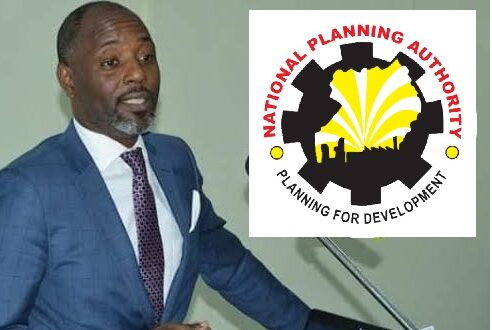
At the centre of this unfolding storm is Executive Director Dr. Joseph Muvawala, a long-serving technocrat who has spent over ten years at the helm of the Authority. While his tenure has seen the formulation of national development frameworks and policy direction, the latest audit findings have ignited a fierce debate: has he outlived his usefulness?
“You cannot be the chief planner of a country for over a decade and still have these kinds of gaps,” a policy insider told Red Pepper for this article. “At some point, continuity becomes stagnation.”
The Auditor General’s findings read like a damning indictment of a system meant to drive Uganda’s transformation across agro-industrialisation, human capital development, natural resources, private sector growth and regional balance.
One of the most alarming revelations is the country’s weak integration of climate change considerations into planning frameworks. A review by NPA itself showed that only 38 percent of Public Investment Plans had integrated climate risks and mitigation measures, while just 35 percent of Programme Implementation Action Plans aligned with Uganda’s Nationally Determined Contributions.
“This is planning in denial,” an environmental expert said. “Climate change is not optional — it is central to development.”
Even more shocking, only 15 Ministries, Departments and Agencies have integrated environment and climate priorities into their plans for the 2024/2025 financial year.
“That means the majority of government is planning as if climate change does not exist,” the expert added.
At the local government level, the situation is equally dire.
Out of 176 Local Government Development Plans submitted to NPA for alignment with the Fourth National Development Plan, only 8 — a mere 4.5 percent — were fully approved. The rest remain stuck in a bureaucratic limbo of reviews, deferrals and resubmissions.
“This is a planning bottleneck of national proportions,” an insider revealed. “If plans are not approved, how do you implement development?”
The delays extend to Ministries and Agencies as well, with only 79 out of 176 MDA strategic plans approved, raising serious concerns about whether national budgets are even aligned to the country’s development priorities.
“Budgets are being passed before plans are approved,” a source noted. “That is putting the cart before the horse.”
The chaos is perhaps most visible in physical planning — a mandate recently expanded under the Physical Planning Amendment Act, 2024, giving NPA sweeping authority over how Uganda’s cities and districts grow.
But instead of order, the audit reveals confusion.
The much-anticipated Greater Kampala Metropolitan Plan — critical for managing the explosive growth of the capital — has not been finalised. Roles between NPA, the Ministry of Lands, Housing and Urban Development, local governments and planners remain unclear, creating conflicting directives and uncertainty.
“It’s a free-for-all,” an urban planner lamented. “Everyone is in charge, which means no one is in charge.”
Across the country, physical planning structures are either weak or nonexistent. Only 18 out of 135 districts have physical development plans. Just 3 out of 11 cities, 17 out of 31 municipalities, 58 out of 580 town councils and 342 out of 2,148 sub-counties have functioning Physical Planning Committees.
Implementation of these plans is below 25 percent.
“This is how slums are born,” an analyst warned. “You cannot talk about organised urbanisation when planning structures don’t exist.”
The consequences are already visible — unplanned settlements, congestion, poor service delivery and environmental degradation.
Even dispute resolution is failing. Out of 42 physical planning appeals, only half have been resolved, with some cases dragging on since 2023.
“That is justice delayed and development stalled,” a legal expert observed.
Financially, the Authority is also struggling.
Its strategic plan was underfunded by a staggering 43 percent, with only UGX 248.26 billion realised out of the planned UGX 435.47 billion. As a result, key interventions were only partially implemented.
Yet despite these constraints, Parliament still appropriated UGX 83.96 billion for the Authority in the 2024/2025 financial year, all of which was warranted and largely utilised.
Out of 13 outputs assessed, 12 were fully implemented, but one major output worth UGX 11.84 billion was only partially delivered — raising questions about prioritisation and execution.
More worrying, performance reporting itself is unreliable. The Auditor General found that NPA’s assessments relied on incomplete, inconsistent or missing data, undermining the credibility of national development reporting.
“How do you measure progress with bad data?” a statistician asked. “You end up planning in the dark.”
Internally, the Authority is struggling to absorb its expanded mandate. After inheriting functions from the National Physical Planning Board, NPA created new positions but has only filled 32 out of 52, leaving critical gaps.
Guidelines for physical planning have been developed but not yet gazetted, while the National Spatial Data Infrastructure policy — essential for coordinated planning — remains unapproved.
“It’s like building a house without a foundation,” an insider said.
At the top, Executive Board Chairperson Prof. Pamela K. Mbabazi and Deputy Chairperson Eng. Ivan Lule now face growing pressure over oversight, as critics question whether the leadership has done enough to steer the Authority through its expanded responsibilities.
But insiders say the real focus remains on Muvawala.
“There is quiet frustration,” a source disclosed. “People feel the institution has plateaued.”
While supporters credit him for stabilising the Authority and guiding national development frameworks over the years, critics argue that the persistent gaps, delays and coordination failures signal the need for fresh leadership.
“Yes, he has experience,” a senior government official acknowledged. “But experience must translate into results. Right now, the system is struggling.”
As Uganda pushes forward with ambitious development goals under NDP IV, the effectiveness of its chief planning body is more critical than ever.
“You cannot transform a country with a weak planning engine,” an analyst concluded. “If the planners are not aligned, the nation cannot be aligned.”
The question now hangs heavily over NPA: stick with a seasoned hand who knows the system inside out, or bring in new energy to reboot a struggling institution?
For a country racing against time to organise its growth, the answer may determine whether Uganda’s development remains a plan on paper — or becomes a reality on the ground.
GOT A HOT STORY? EMAIL: redpeppertips@gmail.
SOURCE PROTECTION/CONFIDENTIALITY IS OUR NO.1 PRIORITY.