 pressug.com News 24 7

Related Articles



Kampala — The latest Auditor General’s report on the National Agricultural Research Organisation (NARO) reads like a catalogue of missed opportunities, stalled projects and internal power struggles at Uganda’s top agricultural research body.
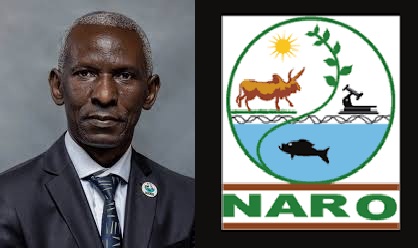
At the centre of the storm is the Director General, Dr. Yona Baguma, whose four-year contract runs out next year April. Appointed in April 2023 by the Minister of Agriculture to replace the ailing Dr. Ambrose Agona, Baguma now finds himself presiding over an institution drowning in arrears, crippled by vacancies and dogged by questions over the long-delayed anti-tick vaccine that President Yoweri Museveni has passionately championed.
Yet officially, the audit opinion is “Unqualified.” On paper, the books may be clean. But beneath that technical verdict lies a troubling reality.
At the start of FY 2024/2025, NARO had accumulated arrears amounting to UGX 4.12 billion. Shockingly, only UGX 100 million was settled. The rest hangs like a dark cloud over the institution. At the same time, out of an approved 1,242 staff positions, only 769 were filled, leaving a gaping 38% vacancy rate. Laboratories without scientists. Research stations without technicians. An agricultural research giant running on half a tank.
One senior insider confided in RedPepper that, “You cannot talk about innovation when nearly 40 percent of your structure is empty. Who is supposed to deliver the miracles?”
Five procurements worth UGX 5.61 billion exceeded their original contract and implementation timelines. Two projects worth UGX 7.30 billion were delayed by an average of three months. Quarterly performance reports were submitted 58 days late on average, crippling timely expenditure decisions.
Assets worth UGX 10.79 billion were found idle or underutilized. Equipment worth UGX 150 million lay non-functional due to lack of servicing. Buildings valued at UGX 1.57 billion are deteriorating because of neglected repairs. “We are watching taxpayers’ money rust away,” a source at one of the research institutes lamented.
Land management paints an even darker picture. Non-current assets worth UGX 19.9 billion lacked adequate security safeguards. Several parcels of land were not fenced. Some buildings were constructed on untitled land. Thirteen pieces of land measuring 922.15 hectares have no land titles. Twenty pieces face encroachment and court disputes. Meanwhile, assets worth UGX 2.79 billion acquired during the year were not even recorded in the assets register.
“How do you fail to record UGX 2.79 billion in assets? Is this incompetence or something more sinister?” asked a governance expert familiar with the report.
Even strategic planning appears shaky. The National Development Plan III (NDP III) was underfunded by 17.1%, affecting implementation. Worse still, NARO had not carried out the end-of-term review of NDP III to inform the new Strategic Plan. Lessons were not formally captured. “It’s like driving a car without checking the rear-view mirror,” an insider said.
Revenue performance was equally unimpressive. NARO budgeted to collect UGX 7.33 billion in Non-Tax Revenue but only managed UGX 6.24 billion, an 85% performance. Yet during FY 2024/25, UGX 176 billion was appropriated and fully spent. Of 13 outputs worth UGX 132.48 billion assessed, only two outputs worth UGX 0.1 billion were fully implemented. Eight outputs worth UGX 132.25 billion were only partially implemented. Two outputs were not implemented at all, and one output could not even be assessed due to lack of performance targets and indicators.
But nothing captures public frustration like the anti-tick vaccine saga.
President Museveni has repeatedly emphasized local vaccine production to protect Uganda’s livestock sector. Billions have been poured into research. Farmers have waited. Expectations have soared.
Yet the audit reveals that NARO had not completed and commissioned the vaccine production facility for animal vaccines. As a result, production of the anti-tick vaccine had not commenced at the time of audit. The intended intervention objective remains unmet.
Even more astonishing, NARO hired 22 consultants to operate the vaccine production facility. At the time of audit, they had not been paid their fees. Twenty-two consultants. No operational facility. No vaccine production.
“What exactly are the consultants consulting on?” one agricultural scientist asked bitterly. “This project has become a symbol of everything that is wrong.”
The ghosts of a 2021 whistleblower report have returned to haunt the institution. That explosive dossier alleged misappropriation of UGX 1 billion allocated by the Ministry of Finance for anti-tick vaccine research. The report accused the then top management at the NARO Secretariat in Entebbe, of abusing the funds.
It alleged that large portions of the money were spent on foreign “benchmarking” trips by top managers who were not even scientists, while tick experts were left behind. “The trips were all about earning foreign travel allowances, nothing else,” the whistleblower claimed.
The report further alleged that when NaLIIRI’s internal audit systems raised queries, some officials behind the noise were shut down and swiftly transferred to NaSAARI-Serere on express orders from the Secretariat. A February 7, 2019 letter from then DG Dr. Ambrose Agona to the State House Anti-Corruption Unit was cited as containing “falsehoods.”
While these allegations predate Baguma’s tenure, critics argue that the culture they point to may still linger.
Under the Uganda Climate-Smart Agricultural Transformation Project (UCSATP), NARO was underfunded by UGX 12.70 billion, representing 27%, severely affecting research activities. In addition, NARO failed to absorb UGX 3.36 billion of the funds that were availed. “How do you cry about underfunding and then fail to spend what you receive?” an official familiar with donor financing asked.
Meanwhile, NARO Holdings Ltd delayed production of Aflasafe due to delayed installation of production equipment. Out of 11 Treasury Memorandum recommendations for FY 2021/22, only two were fully implemented. Seven were partially implemented. Two were not implemented at all.
And now, with Dr. Yona Baguma’s contract ticking toward April next year expiry, the knives are reportedly out.
Sources say the fight over his job has already begun. The battle lines are drawn between Deputy Director General Research Coordination, Dr. Swidiq Mugerwa, and Deputy Director General Agricultural Technology Promotion, Dr. Sadik Kassim. Director Corporate Services Dr. Stevens Kisaka is said to be quietly observing events. But this is a story for another day.
“The succession war has started early,” one insider whispered. “Some people don’t want Baguma back. Others are positioning themselves.”
Is Baguma to blame for all this? Or did he inherit a deeply entrenched system resistant to reform? Supporters argue that structural underfunding and historical baggage are weighing him down. Critics insist that leadership is about results, not excuses.
President Museveni, who has personally pushed for scientific breakthroughs to transform agriculture, will undoubtedly be disappointed that the anti-tick vaccine remains unproduced despite years of funding and promises.
Ugandan farmers continue battling ticks that wipe out cattle and incomes. They are less concerned with boardroom battles and more interested in a working vaccine.
As next April approaches, one question looms large over NARO’s Entebbe headquarters: is it time to crack the whip at the top, or does the institution need deeper surgery beyond one man?
For now, the Auditor General’s findings have thrown NARO into the spotlight — and the fight for the future of Uganda’s agricultural research empire has only just begun.
GOT A HOT STORY? EMAIL: redpeppertips@gmail.
SOURCE PROTECTION/CONFIDENTIALITY IS OUR NO.1 PRIORITY.