 pressug.com News 24 7

Related Articles


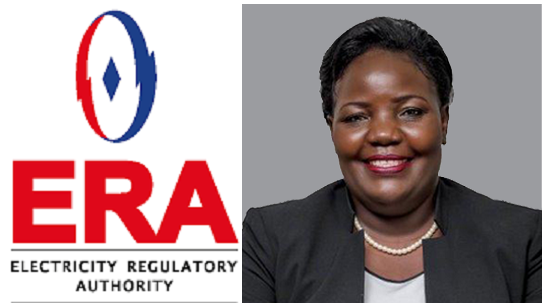
A silent war has erupted inside the corridors of the Electricity Regulatory Authority, and what was once celebrated as Africa’s model power regulator is now gripped by succession intrigue, boardroom capture claims, staff rebellion and damning audit queries. At the eye of the storm is Eng. Ziria Tibalwa Waako, whose second and final term ends in March 2027 — but who insiders insist is not ready to pack her bags.
According to multiple sources who spoke to RedPepper in hushed tones, the CEO is quietly lobbying for a third term despite the Electricity Act, CAP 157, being clear that the chief executive serves a five-year term, renewable once. Waako ascended to the helm substantively in March 2017 after first holding the office in acting capacity from November 2016 following the redesignation of Dr. Benon Mutambi to the Ministry of Internal Affairs. That means the clock is ticking loudly.
“Her second and last term ends next year March,” a senior insider confided in RedPepper. “But she is reportedly fearing retirement or moving on and now wants to stay around.”
And if that fails? Sources allege she has been discreetly lobbying to join one of the very electricity sector entities she currently regulates.
The irony has not been lost on staff.
This is the same CEO who bulldozed through an unpopular cooling off policy between 2019 and 2021 barring staff from seeking employment in the electricity supply industry after leaving ERA. The policy, according to staff, was discriminatory and arbitrary because its application and compensation were left to the discretion of a Board they describe as “under the thumb of the CEO.”
Ironically, in 2016 when a similar proposal was floated under previous management, staff objected — and they were led in that resistance by Waako herself in her former capacity as Director Technical Regulation.
“Back then she fought it because it would have blocked her own ambitions,” a long-serving officer said. “Now that she was CEO, she imposed it on everyone else.”
It is alleged that her sudden shift was triggered by a directive from H.E the President requiring her to attend interviews for the role of Managing Director at Uganda Electricity Transmission Company Ltd, a position that has since been filled. After attending those interviews, insiders claim, the CEO revived the long-abandoned cooling off policy and used it as justification to avoid being transferred from her ‘fat cow’ ERA.
“She quickly forced the policy among staff using the case of departure of a former Manager Financial Services who moved to Uganda Electricity Distribution Company Ltd as Chief Financial Officer,” one source said. “It was convenient timing.”
Adding to the controversy, former ERA Board Chairman Richard Santo Apiire, who supported the policy’s passage, later went on to serve as a board member of UETCL, creating what insiders describe as “leeway to influence regulatory decisions at ERA in favor of UETCL.” He was later fired over rot at UETCL.
Many staff were left puzzled and disappointed. They remembered how Waako had previously ganged up with them to fight the same policy in 2016. It is believed that at the time, she hoped to return to UETCL as CEO and viewed the cooling off restriction as a threat to her ambition.
Today, the tables have turned. A current ERA staff member offered a managerial or director role in a licensed entity with a larger package cannot take up that role and must continue to toil under what some describe as a toxic leadership environment. This includes other government parastatals in the electricity sector where staff would still effectively be serving the State.
“This is coming back to haunt her,” one officer said. “Will she reverse it before she leaves ERA in March 2027?”
But the power drama doesn’t stop there.
Inside ERA, directors are reportedly engaged in bitter succession wars to replace her. HR’s Safina Naggayi, Waako’s favourite and Secretary to the Authority Steven Mwandha and Dr. Geofrey Okoboi in economic regulation are said to be at the forefront. Others like Judith Nayiga in technical and Edward in financial regulation are fighting more quietly.
“These directors are now engaged in wars against each other at the expense of serving Ugandans,” an insider charged. “Everything is at a standstill.”
The 2025 Auditor General report only compounded the perception of decline. ERA earned UGX45.34 billion, representing 93% of its UGX48.79 billion budget, with a 7% shortfall attributed to foreign exchange losses, fewer permit applications and unrealized consultancies. Out of 31 targets under seven focus areas, only 10 were fully achieved, 13 were substantially achieved and eight were partially achieved. Outstanding receivables stood at UGX14,063,244,705, with UGX1,554,047,147 overdue for more than 91 days. Transmission energy losses rose from 3.7% in 2020 to 4.9% in 2024, largely due to low loads on newly commissioned high-capacity infrastructure.
“Targets are being missed while management is busy fighting succession battles,” a senior staff member said. “Is it time to crack the whip?”
RedPepper has landed on a damning dossier detailing what insiders describe as systematic dismantling of governance structures since 2017. ERA, established in 2000, once enjoyed stable leadership and achieved milestones including recognition as Africa’s No.1 Electricity Regulator and the construction of ERA House. It enjoyed goodwill from licensees, investors and development partners.
“It is on a sad note that all this is slowly being dismantled internally,” reads part of the dossier. “We are now forced to take matters external in painful contravention of staff policy.”
According to the document, the degeneration began with two major assignments in Waako’s first year: a salary review and car loan scheme.
In 2018, a ABS Consulting Group consultant-led salary review was conducted. However, insiders allege it was hijacked to suit the CEO’s strategy to capture authority management. Directors and managers participated; lower cadres were sidelined. The CEO’s salary reportedly rose to over UGX50 million per month. Directors’ pay doubled to over UGX40 million from an average of UGX18 million. Managers’ salaries jumped from UGX12 million to as high as UGX28 million. Officers saw increases capped at UGX200,000.
“It was a clear buy-off,” an officer alleged. “Reward the top so no one questions unilateral decisions.”
Next came car loans. Each director reportedly received a loan exceeding UGX250 million funded internally by the Authority. The CEO allegedly ordered for herself an SUV worth over UGX600 million reportedly in violation of public service standing orders. Insiders claim she intends to retain it upon expiry of her term in March 2027.
These loans were issued while staff reportedly lacked adequate field vehicles and sometimes relied on licensees’ cars for fieldwork. The CEO and directors then approved transport allowances of UGX6.7 million per month per director, effectively offsetting loan repayments. Managers received UGX2 million per month in transport allowances. Lower cadres received nothing comparable.
“The fuel allowance of UGX6.7 million is more than what is paid to a Legal, Technical, Economist or Finance officer at entry level,” a staff member lamented. “And many of these officers have master’s degrees.”
Meanwhile, officers reportedly lacked essential tools such as laptops, training and data for years, using personal resources to execute official assignments.
The splitting of the Director Legal and Authority Affairs role to create a Secretary to the Board position in June 2021 is another flashpoint. The position was filled by Steven Mwandha, formerly Manager Legal Services and described as a close confidant of the CEO.
“In June 2021, the CEO Carried out this questionable recruitment exercise of the new position of Secretary to the Board which was created to report directly to the CEO. This position was quickly filled by one Mr. Steven Mwandha who was hitherto the Manager Legal services under the Director Legal and Authority Affairs,” the reports alleges, and further adds: “As a background, at the time of the CEO’s entry into office, Mwandha was a legal consultant to the Authority. His consultancy services became redundant upon the confirmation of the Director of Legal and Authority Affairs. Being a subservient close confidant and tribe-mate of the CEO, the CEO quickly advertised the role of Manager Legal Services and rubber stamped the former Consultant through a sham interview process by the already hijacked Board. Years down the road Mr. Mwandha was at logger heads with his supervisor. However, in order to circumvent the Director and save the embarrassment on her part, the CEO quickly maneuvered to create the position of Board to remove her close friend from the line of professional fire and create a safe landing under her. The circumstance of this role separation, incorporation into the structure and, above all, the recruitment exercise that saw the current holder [a friend of the CEO] take the job is a good candidate for investigation on abuse of office.”
“This role is purely clerical as all legal interpretations and executions still lie within the Department of Legal services,” an insider alleges. “This makes the Secretary to the ERA Board arguably the most highly paid clerk and minute taker in Uganda public.”
Financial mismanagement claims also abound. The CEO is accused of internally distorting ERA’s financial position while hard-lining licensees on budgetary approvals. She has reportedly been announcing no funds to implement staff performance rewards after appraisals year after year. At the same time, she attempted to increase license fees across developers, generators, distributors and the transmission company — costs that would ultimately be passed to electricity consumers.
ERA’s new multi-billion shilling headquarters on Third Street Industrial Area has also drawn scrutiny. With a staff complement of about 65, critics question why the entire top floor is reserved for the CEO and Board members who are not permanent staff. It is unclear what plans exist for the old ERA House on Shimoni Road.
Board capture allegations are equally troubling. Of five Board members, approximately UGX1 billion per annum is set aside for board expenses. “With these benefits dangled, it becomes apparent why the Board is silent,” an insider claimed.
On sector performance, electricity connections have reportedly fallen from highs of 170,000 annually in 2017 with no backlog to under 50,000 per year now, with a backlog exceeding 250,000 connections.
Investor confidence is said to be at its lowest since 2005 as lenders and development partners are frustrated with regulatory decisions which have seen some power generators fail to service their loans and other reputable investors fail to close financing for power projects.
“In a meeting between ERA and investors that financed and constructed the Achwa 1 and 11 plants in Northern Uganda held on 28/10/2021, the investors were not shy to communicate their frustration and loss of confidence in ERA. They further highlighted to the CEO that the regulatory reputation that has been worked for since 2000 over the years by previous CEOs is fast and quickly being eroded by the current administration. This frustration came from the fact that over 80MW Achwa dam had no evacuation line and ERA was not facilitating a frame work on payments to enable the developer service their obligations. This frustration is shared by many more developers and licensee in the sector,” insiders allege.
“She has failed to advise government properly on electricity connections and sector realities,” an analyst said. “The focus is internal power, not national power.”
Inside ERA, staff disgruntlement has boiled over. After being told there were no funds for promotions and increments, officers formed a private WhatsApp group to share grievances. The CEO allegedly obtained transcripts, ordered the group shut and initiated disciplinary measures. Some staff were dismissed. Others had contract renewals reduced from five to three years.
“Staff were simply made to disappear,” one insider alleged. “Harassment continues for daring to speak.”
The manager HR, described by critics as a henchman, allegedly claimed to hold transcripts and vowed to eliminate key participants. Loan requests have reportedly been sabotaged. Disciplinary hearings are described as kangaroo processes.
Cliquism and favoritism are also cited. A small informal clique — including the Secretary to the Authority, the Manager Human Resources and the CEO’s private secretary — is accused of constituting an unofficial tribunal driving investigations and disciplinary actions. Favored staff allegedly receive fast-tracked promotions, acting allowances and access to management meetings. Others are sidelined.
Among managers, remuneration inconsistencies persist, with new recruits earning more than older managers through allowances outside the formal salary structure. Some managers reportedly supervise only one officer, contradicting the efficiency standards ERA imposes on licensees.
A regulator must be transparent, lawful and consistent. When internal irregularities mount, it casts doubt on the institution’s ability to regulate effectively. ERA faces a critical period: UMEME’s exit, UEDCL transition, sector mergers, backlog of connections, surplus energy, energy losses and infrastructure funding gaps.
Yet insiders say the CEO’s energy is consumed by turf wars and self-preservation.
The dossier calls for a full audit into irregular remuneration, board expenses, financial management, legality of the cooling off policy, recruitment and promotions since 2018, unilateral management decisions, staff terminations and harassment, and the Board’s role in these matters.
Ugandans are now asking: Is it time to crack the whip at ERA’s top leadership? Has the regulator itself lost regulation? Can a house divided safeguard a sector so critical to national development?
As one concerned staff member concluded, “ERA used to be a beacon. Today, it is a battlefield. The question is whether the appointing authority will intervene before the damage becomes irreversible.”
GOT A HOT STORY? EMAIL: redpeppertips@gmail.
SOURCE PROTECTION/CONFIDENTIALITY IS OUR NO.1 PRIORITY.