 pressug.com News 24 7

Related Articles



Behind closed boardroom doors, branding—not balance sheets—may have killed what would have been Kenya’s biggest banking deal in years.
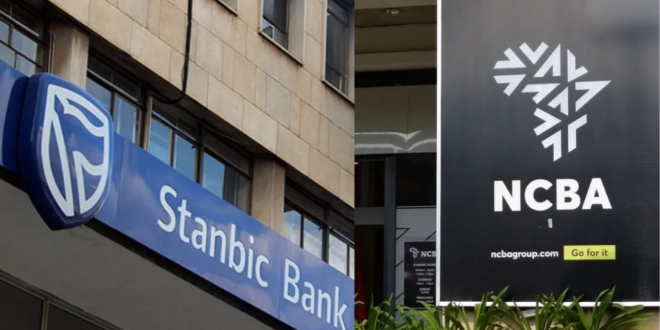
Insiders have revealed that Standard Bank’s insistence on rebranding NCBA under the Stanbic banner played a decisive role in the collapse of long-running merger and acquisition talks between the two lenders.
The failed deal would have created Kenya’s third-largest bank, with assets estimated at KSh1.1 trillion (US$8.5 billion), backed by Africa’s largest lender by assets, Standard Bank Group.
According to multiple sources familiar with the negotiations, the proposed transaction would have seen Stanbic Kenya—currently the country’s eighth-largest bank—absorb NCBA, Kenya’s fourth-largest lender, in a horizontal merger.
But NCBA was not willing to surrender its brand.
“NCBA was not keen on changing their brand,” an insider who requested anonymity told this publication. “Standard Bank wanted a rebrand. That became a sticking point.”
For NCBA, whose brand carries deep legacy value following the NIC–CBA merger, the prospect of disappearing into Stanbic was a deal-breaker.
Instead of Stanbic, NCBA opted for a majority acquisition by South Africa’s Nedbank, a deal that will be settled through cash, equity, and board representation, subject to regulatory approval.
Ironically, Standard Bank still holds a 5.57% stake in Nedbank, according to January 2026 disclosures—meaning it remains indirectly exposed to the deal it failed to clinch outright.
The Nedbank transaction surfaced just months after reports suggested Standard Bank–NCBA talks were at an advanced stage, following years of speculation that Standard Bank was hunting for a Kenyan acquisition to anchor its East African ambitions.
Standard Bank Group, which owns 75% of Stanbic Holdings Plc, has openly stated its desire to expand in Kenya.
Industry watchers say several senior appointments at Stanbic were part of this wider expansion strategy.
Notably, the recruitment of former KCB Group CEO Joshua Oigara as Stanbic Kenya’s Managing Director—and later his elevation to regional head in late 2025—was widely interpreted as positioning ahead of major acquisitions.
The move also came as Standard Bank Group prepares for leadership succession, with Group CEO Sim Tshabalala and CFO Arno Daehnke expected to retire by 2027.
Speaking after the deal announcement, NCBA Group Managing Director John Gachora said Nedbank offered strategic advantages Stanbic could not.
“Nedbank met the merits, and this deal gives NCBA access to a much deeper balance sheet and capital sources,” Gachora said, adding that Nedbank plans to use NCBA as the cornerstone of its East African expansion.
Crucially, NCBA cited zero operational overlap as a major attraction.
“The beauty of this transaction is that there will be no overlap,” Gachora explained. “There will be no painful integration because Nedbank has no presence in the countries NCBA operates in.”
Under the deal, no rebrand is planned. While some policies and staff integration will occur, NCBA will retain its identity. Nedbank will appoint at least two directors to the NCBA board, while NCBA shareholders will nominate one director to Nedbank’s board.
Neither NCBA, Standard Bank, nor Stanbic has publicly explained why the talks collapsed.
“We do attract a lot of interest and have approached potential partners,” senior NCBA executives said cautiously. “The rumour did not come from us, so we can’t comment.”
A Shifting Banking Battlefield
If approved, the NCBA–Nedbank deal places Nedbank at the heart of a new race by South African and Nigerian banks to crack the Nairobi market, increasingly through acquisitions rather than greenfield entries.
Last August, FirstRand Bank, Africa’s most valuable bank by market capitalisation, also disclosed plans to enter Kenya.
The deal comes amid rapid consolidation in Kenya’s banking sector, driven by higher capital requirements and continent-wide financial restructuring.
NCBA says it remains open to future mergers and acquisitions, including expansion into DRC, Ethiopia, and other frontier markets—but only after sealing the Nedbank transaction.
“If opportunities arise, we would consider them,” Gachora said. “But first, we must close this deal.”
NCBA believes the transaction will boost shareholder value, diversify political and economic risk, and provide liquidity—while keeping the one thing it refused to surrender: its name.