 pressug.com News 24 7

Related Articles

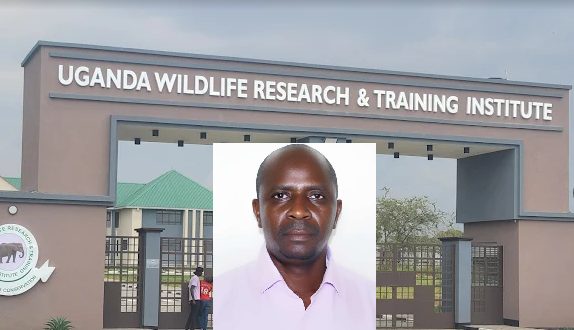
A storm is brewing at the Uganda Wildlife Research and Training College after the latest report by the Office of the Auditor General of Uganda unearthed a trail of troubling gaps in funding, stalled projects, questionable contracts and a shocking governance vacuum at the country’s premier wildlife research training institution.
College Principal, Robert Baluku, now finds himself presiding over an institution grappling with serious structural and operational challenges flagged in the Auditor General’s December 2025 review.
The college, which operates under the supervision of the Ministry of Tourism, Wildlife and Antiquities, was established to build human resource capacity for wildlife conservation through research and training. Its mission is critical in a country whose economy and biodiversity heavily depend on wildlife protection.
But the Auditor General’s findings suggest the institution’s ambitious plans are colliding with harsh financial and governance realities.
According to the report, the college’s strategic plan for the period between 2020/2021 and 2024/2025 had projected total funding of a staggering UGX 100.46 billion to run its programmes, develop infrastructure and strengthen wildlife research capacity.
However, only UGX 57.45 billion was actually realised, leaving a massive funding gap of UGX 43.01 billion.
The Auditor General warns that the shortfall has already crippled several planned activities.
“It was noted that out of the planned funding of UGX 100.46Bn for the strategic planning period of 2020/2021 to 2024/2025, the college only realized UGX 57.45Bn leading to a variance of UGX 43.01Bn,” the report states. “Accordingly, some of the planned activities were not implemented.”
While the institution appears efficient in spending the little money it receives, questions remain about the effectiveness of that spending.
During the financial year under review, the college received UGX 6.945 billion and spent UGX 6.82 billion, representing an impressive absorption rate of 98 percent.
But the Auditor General warns that high spending alone does not necessarily translate into results.
A deeper examination of programme outputs paints a far more worrying picture.
The audit assessed 32 non-payroll outputs worth UGX 2.607 billion and discovered that only a fraction of them were actually completed.
Out of the 32 planned outputs, only 10 outputs worth UGX 607 million were fully implemented.
One output worth UGX 30 million was only partially implemented, while 10 outputs worth UGX 1.97 billion were not implemented at all.
The revelation raises uncomfortable questions about whether taxpayers’ money allocated to wildlife research and training is delivering the expected impact.
As the report bluntly notes, the implementation gaps highlight weaknesses in planning, financing and execution.
The problems, however, go far beyond incomplete projects.
The transformation of the institution from the Uganda Wildlife Research and Training Institute into the Uganda Wildlife Research and Training College under the Technical and Vocational Education and Training Act, 2025 has also created a legal and administrative headache.
The law clearly states that all appointments, contracts, assets and liabilities of the former institute must automatically transfer to the new college structure.
Yet the audit found that this process has not been completed.
“Contrary to Section 124(b) of the Technical Vocational Education and Training Act No. 3, 2025, it was noted that the transfer of assets from the names of the former Institute to the names of the new College had not yet been effected,” the report states.
In simple terms, the institution is operating under a new legal name while some of its assets remain registered under the old entity — a situation that could create administrative confusion and legal complications.
Even more alarming is the governance vacuum uncovered by the auditors.
Under the TVET Act, the college is supposed to be overseen by a Governing Council appointed by the minister. The Council is required to establish committees to ensure the institution runs effectively and in line with its mandate.
But the audit discovered that the college has been operating without a Governing Council altogether.
“Contrary to Section 54(1) of the TVET Act, 2025 that obligates the Governing Council to appoint committees for the efficient functioning of the Governing Council, it was noted that the college was operating without a Council and accordingly no council committees,” the report states.
In essence, one of Uganda’s key wildlife research training institutions has been functioning without its top governing organ.
Observers say this governance vacuum could explain some of the operational challenges now emerging at the college.
But perhaps the most explosive finding in the Auditor General’s report concerns the signing of multi-year contracts worth UGX 13.73 billion.
According to the audit, these contracts were awarded without approval from Parliament, an action that violates Uganda’s public finance laws.
The Public Finance Management Act requires that any government entity entering into multi-year financial commitments must first obtain parliamentary authorization.
Yet the auditors found that this critical requirement was ignored.
“It was noted that the College awarded Multiyear contracts worth UGX 13.730Bn without approval of Parliament,” the report reveals.
The auditors point out that the move was done “in contravention of Section 22(1) of the Public Finance Management Act.”
This revelation raises major accountability questions about how the contracts were approved and who authorized them.
The college traces its origins back to 1991 and was formally established by the Government in 1996 as an autonomous institute to serve the Uganda Wildlife Authority, which remains its primary beneficiary.
Over the years, the institution has played a crucial role in producing wildlife rangers, conservation officers and researchers who help protect Uganda’s national parks and biodiversity.
The transformation into a fully-fledged training college under the TVET Act was intended to strengthen its role in conservation education and research.
Wildlife experts say institutions like UWRTC are vital because research and training bridge the gap between scientific knowledge and practical conservation.
Without trained professionals, they warn, Uganda’s fragile ecosystems could face increased threats from poaching, climate change and habitat destruction.
But with funding gaps, governance issues and stalled programmes now staring the institution in the face, critics say urgent reforms may be needed to ensure the college lives up to its mandate.
For now, the Auditor General has issued what is technically an “unqualified opinion” on the college’s financial statements, meaning the accounts generally present a fair picture.
Yet behind that clean audit opinion lies a troubling list of operational weaknesses that cannot easily be ignored.
As one government official familiar with the audit quietly remarked after reviewing the report, the problems go beyond paperwork.
“The institution was created to train the people who protect Uganda’s wildlife,” the official told Red Pepper. “But if governance and funding gaps continue like this, the very system meant to protect wildlife could itself be endangered.”
For the wildlife college, the message from the Auditor General could not be clearer.
Uganda’s conservation future depends not only on protecting animals and ecosystems — but also on fixing the institutions tasked with training those who guard them.
GOT A HOT STORY? EMAIL: redpeppertips@gmail.
SOURCE PROTECTION/CONFIDENTIALITY IS OUR NO.1 PRIORITY.