 pressug.com News 24 7

Related Articles



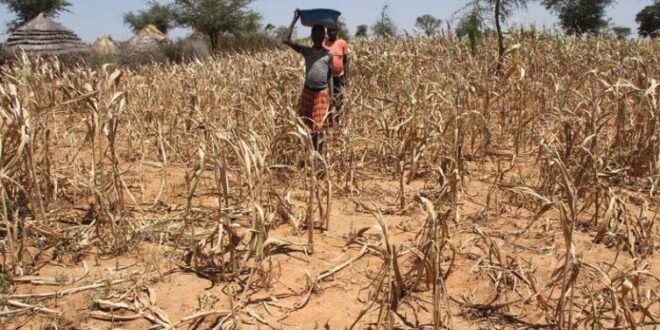
The President’s State of the Nation Address, his choosing his niece, Desire Muhooza, as Minister of Agriculture, plus your feedback on my piece calling on URA to tax big landholders got my brain wired. I am now building all kinds of castles in the sky for the nation. Something deep inside assures me Mama Kiboga will turn out to be a better agriculturalist than her father and uncle, the President. And I believe Kyankwanzi, being neighbours with Kiboga, will benefit greatly on neighbourly grounds.I strongly believe she will stamp out all parasites in the agricultural sector for the good of this and future generations.Once again, I will start by borrowing Innocent Tegusulwa’s adage that ‘we are not poor, but our heads are’. If our heads are not poor, why should a Ugandan not have enough food in their own country?Apart from coffee, what else does Uganda impactfully sell on the global market? As things are, Uganda will not become the leading manufacturer of automobiles, clothes, or even smartphones in the world in the next 100 years, but we can become one of the leading producers of food per acre farmed. Successful countries have not achieved greatness by merely copying what other countries are doing, but instead by offering solutions to their local challenges and then selling the surplus across their borders.When you look at the Ugandan market, we are so into foreign clothes and gadgets. We cannot even beat the competition competitively, but we jealously love our food, so we should focus on that for now. We already have a population of more than 40 million eager consumers.Our leaders, smart farming is the way to go. Your vassals in the Ministry of Agriculture seem to think farmers and peasants lack capital to buy seeds, tools, and pesticides to prepare gardens. From my vantage point here in the little-known village of Kigambanankwale, that is not 100% the case; it is not even half the truth. Anyone who cannot afford those basic farming requirements is not a crop farmer, but instead an emperekeeze of farmers!The Netherlands is much smaller than Uganda, yet it is among the top food producers in the world. Our leaders, you need to make food security a national priority. Good yields save homes, villages, and countries the money they would have spent importing food. The population is skyrocketing, but our country’s size is not expanding, so we have to use the available land smartly for maximum output. To do that, we must learn from countries that have already done it.This is the era when every square metre matters. That should not only apply to city buildings, but to every inch of our beautiful republic. Twenty thousand years ago, the Sumerians did it in the dry deserts of Iraq (Mesopotamia), thereby kick-starting agriculture as we know it today. It is our obligation as a nation to build upon what that great civilization left us.First, we must admit that, as a country, we are not fully utilizing our agricultural potential. We have some of the best farmland, but we still import food from wet and dry deserts. As you read this, someone somewhere in Uganda—the Pearl of Africa, which lies in the tropical belt—is eating or preparing rice from Pakistan, a desert country, or consuming fruits from Egypt, another desert nation to which we supply water through the Nile. Why? Because we lack proper leadership.Currently, we are taking things for granted. We have two reasons—fertile land, and good rains—so we think we are well off. Yet every season we cry for help from countries that only plant once a year. Is that not shameless?Food SecurityWhat would happen if our meat sources were attacked by disease and wiped out? We need to introduce new meats on the menu, such as bison from America and domesticated Asian buffaloes.SolutionFor any project to bear desired results, the planning phase is crucial. From my vantage point, one of our biggest challenges is access to information (read intelligence). In this day and age, we are not even using half the techniques the Sumerians used thousands of years ago.Can you imagine? We do not know what and how to plant, nor do we know which crops perform best in our villages. We can overcome all those challenges if we team up as a nation. It is important that we capitalize on our potential. Peasants carry a lot of traditional knowledge that we are not fully upgrading; all we need is to modernize their skills and understanding. Experts must study all the comparative disadvantages hindering growth.Various radio advertisements tell us that a well-prepared acre can produce up to 30 bags of maize. However, in my village of Kigambanankwale, harvesting 15 bags from an acre is considered a miracle, if not witchcraft. At most, a peasant harvests seven bags.Mind you, the majority of us peasants rent or lease the land on which we practice farming each season, and many have already taken loans from predatory money lenders by the time they harvest.A few days ago, I watched three documentaries: The Incredible Logistics Behind Corn Farming, John Deere Corn Production Technology, and The Disturbing Business of the Banana. Watching their approach to farming, I realized that Uganda, as a country, has a lot of catching up to do.The takeaway points were:One, American leadership provides data (intelligence) on which crop varieties grow best in each locality.Two, the meteorological department uses technology to accurately forecast weather conditions for the season ahead.With that intelligence, farmers purchase seeds best suited to the expected weather, whether drought or heavy rains.In Kigambanankwale, farming is more like gambling. We plant without intelligence, and in the end our harvests are poor.Our beloved stewards, have you ever thought about ordering government ecologists, agronomists, environmentalists, and veterinarians countrywide to set up demonstration mixed farms in every sub-county on government land?Butemba Town Council, under which my village falls, has lots of public land that was leased to people who do not even allow citizens to visit. Government can reclaim 100 acres from one of those farms and establish a study mixed farm to serve the jurisdiction and beyond.The majority of people learn by seeing. Today, those paid experts draw salaries to help us but mainly come to villages for burials and private businesses.Secondly, soil experts should carry out comprehensive analyses to determine which crops and seed varieties perform best in each village so that people stop farming blindly.Twenty thousand years ago, the Sumerians kept detailed records of yields and farming challenges. Why not us? This is the era of information, but we are not fully utilizing it.ICT graduates from our universities should develop a digital platform through which selected farmers can report challenges weekly.Government should also install a rain gauge in every village. We must know how much rain falls in each village, as well as how much crop, livestock, and poultry production occurs in every district, sub-county, parish, and village.Strategically, agriculture should become compulsory in schools. Maama Janet, how can we claim agriculture is the backbone of the country when it is merely optional?Defense is the backbone of Israel, and therefore every citizen serves in the army. Our army is agriculture; every youngster should serve in it.CommunismBreak up the unproductive farms on public land and lease parcels to peasants—perhaps 10 acres per qualifying peasant.To avoid corruption, leases should be given to people who have lived in the area for more than 10 years. Such individuals will have acquired local knowledge that is key to developing the assigned parcel.That will skyrocket the President’s Four-Acre Model and even propel it to a higher level. You will be surprised how communities will be transformed. It will also help solve wetland encroachment because people will have alternative land to farm.To fulfill the government’s target of inclusiveness, a percentage of the parcels should be reserved for women, youth, and persons with disabilities who belong to that community.After receiving the lease, each beneficiary would pay an annual tax of one million shillings, more or less depending on Parliament’s decision, through URA.Right now, in Kyankwanzi, a peasant pays about UGX 200,000 per acre per season to landlords.To avoid wasting precious time, the leasing agreement should include a short-notice eviction clause for beneficiaries who fail to pay the annual tax.Many of those public land farms have also been cleared of trees for charcoal burning. That can be controlled through land redistribution because every lease agreement would include a clause protecting a percentage of trees for environmental purposes.The brutal truth is that until we get forward-thinking leaders, the nation will not become what politicians promise during campaigns.The bitter truth is that if we are to move the motherland toward prosperity, self-sacrifice is paramount.Our dear leader and 26 like-minded comrades demonstrated that 40 years ago when they went to the bush to fight bad governance, the results of which are the freedoms we enjoy today.Currently, government-paid agriculturists are using their offices to conduct private business while drawing salaries at the end of the month. That can stop if government implements such a policy.Those experts would inspect government trees, among many other responsibilities, as they traverse villages.Government would place record books in each village in which visiting officials would record observations, recommendations, time of arrival and departure, and the number of homesteads visited.Better still, government can track their performance through GPS, which would show when they arrived in a village and how much time they spent there. That way, we would know whether those public servants are giving us value for money.On the farmers’ side, after harvesting, each farmer would inform the LC1 Production Secretary how much was harvested and why.Reports would be drafted by LC1 officials under the supervision of parish and sub-county authorities and then forwarded to district and national supervisors for publication on a national website and in major newspapers each season.That would help government, traders, and citizens identify hardworking and underperforming individuals, villages, and districts.Government funding would then be allocated depending on production. Public land leases would also depend on such factors. Why lease land to someone who does not fully utilize it?Such people can be considered saboteurs of the nation. Leases could be cancelled because of poor productivity.In all wars, the army that knows its strengths and weaknesses uses them accordingly against the enemy.Uganda has been at war with poverty, unemployment, and hunger since 1962. As a country, our weaknesses are poor land use, food insecurity, and unemployment, yet we possess fertile land and a vibrant workforce that we are not effectively utilizing.We are like someone walking to a shop to buy drinking water who falls into a freshwater well and then calls for help so he can continue to the shop to buy water.Upon close observation, Ugandans with money often view farming as a last resort—something they turn to only when everything else has failed. It is time to prove them wrong.I heard that when the UAE—which, by the way, recently donated food aid to one of our neighbours—realized it would eventually run out of oil, it looked for alternative sources of income.As things stand, Uganda’s best card is agriculture. If we embrace the smart side of it, production will increase, and our leaders’ job will simply be to find and stabilize markets, regulate prices, and standardize quality.The Ministries of Health and Agriculture should launch a nationwide sensitization campaign on healthy eating.Ugandans are easy to guide. Just tell men that eating certain foods boosts libido and watch what happens. We all know what women want to hear: that certain foods reduce ageing and improve appearance. They will eat them loyally.Those ministries should work with media houses and also produce booklets and charts explaining the three best meals to eat each day in the more than 50 languages spoken in Uganda and distribute them free of charge to households.Once again, I conclude by calling on government to register and issue NIN-linked bibanja records to protect peasants.With that said, our leaders, I pray that you put aside your political differences and consider my suggestions. Look beyond peasant farming and see the bigger opportunity.Yours, loyal cadre,Rukidi RwakasimbiKigambanankwaleContact: Atwookirrr@gmail.com | 0752653030About Post Author
Post navigation, https://redpepper.co.ug/a-peasants-opinion-govt-should-count-food-produced-by-each-village-to-fight-food-insecurity/148888/