 pressug.com News 24 7

Related Articles
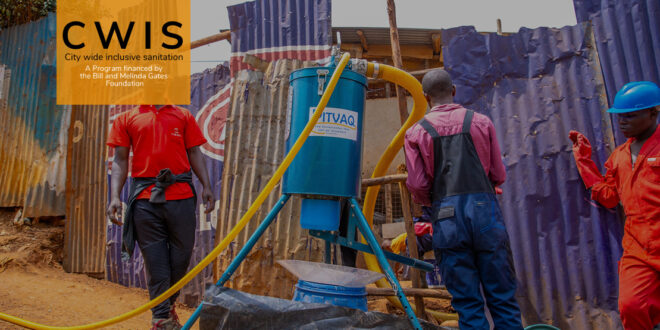
A project meant to improve sanitation for Kampala’s urban poor has instead been plunged into controversy after the Auditor General uncovered a trail of financial discrepancies, unaccounted-for funds, stalled construction works, unsafe working conditions and questionable project decisions under the City-Wide Inclusive Sanitation (CWIS) Programme.The findings, contained in the Auditor General’s report on the City-Wide Inclusive Sanitation (CWIS) Programme (Grant OPP1179828) for the year ended 30th November 2023, paint a worrying picture of weak financial management and implementation failures within a programme funded by the Bill and Melinda Gates Foundation.The Kampala Capital City Authority (KCCA) implemented the four-year CWIS Programme worth USD 4,430,827, which commenced in January 2019. The programme was designed to upscale faecal sludge management services in Kampala by increasing access to improved sanitation among underserved urban poor households, public institutions, refugee communities and the growing transient population.Its ambitious targets included increasing the volume of safely managed faecal sludge across the city, improving sanitation in informal settlements, strengthening regulation, promoting women’s participation in the sanitation sector and developing scalable sanitation technologies that could be replicated across Uganda.However, despite receiving an unqualified audit opinion, the Auditor General highlighted numerous weaknesses that raise serious questions about accountability and programme management.The audit first discovered discrepancies in the financial summaries themselves. Cash balances reported in the financial summary for 2023 did not match those reported in the corresponding 2024 financial summary, casting doubt on the reliability and consistency of the programme’s financial records.The report also revealed that by the end of November 2024, landlords who had benefited under the sanitation financing scheme were expected to have repaid UGX 201 million. Instead, only UGX 135 million had been recovered, leaving an outstanding balance of UGX 65 million.Even more troubling was the handling of the money that had already been recovered. The Auditor General found that although the Foundation had collected UGX 168 million from landlords, only UGX 40.5 million remained in the “Weyonje Toilets” collection account at the close of the financial year, leaving UGX 128 million unaccounted for.The report further states that after the Memorandum of Understanding expired, no money was transferred from the collection account to the CWIS programme account. To make matters worse, programme management failed to disclose the UGX 168 million as receivables in the financial statement notes, leaving auditors unable to establish the true financial position of the programme.Beyond financial concerns, the audit exposed glaring operational failures at sanitation facilities.Unlike cesspool emptiers who discharge waste directly into treatment plants, gulper emptiers were forced to manually handle hazardous waste through labour-intensive processes involving dilution, sorting, separate transportation of liquid and solid waste and sterilisation of work areas.Despite the dangerous nature of the work, waste handlers reportedly lacked critical protective gear including face shields, waterproof long-sleeved overalls and gas filter masks, exposing them to significant occupational health and safety risks.The Auditor General also found there was no waste management strategy for chlorinating, draining and transporting non-biodegradable waste to approved landfills or incinerators designated for faecal waste. As a result, untreated solid waste continued piling up at project sites, creating growing heaps of hazardous material.The report also faulted programme management over delayed infrastructure.Three toilet structures remained incomplete and non-operational, with plumbing, electrical installations and finishing works still outstanding. Shockingly, twelve months had already passed since the original construction contracts were terminated in April 2024, yet no replacement contractors had been procured to complete the abandoned facilities.The Auditor General further questioned management’s decision to construct toilet facilities at the Kyanja Agricultural Resource Center, noting that the area did not exhibit the high-need characteristics that would justify such intensive capital investment.Meanwhile, implementation delays continued to cripple the programme. By the end of November 2024, USD 0.44 million remained idle in the programme bank account at the Bank of Uganda, indicating that three key programme activities had not been implemented as planned.The audit also highlighted weaknesses in financial record-keeping. Since the CWIS Programme operates through a KCCA project bank account shared with several other KCCA projects, the supporting records, including cashbooks and bank reconciliation statements, lacked sufficient detail to enable auditors accurately trace CWIS-specific transactions or conclusively validate programme balances.The findings represent a significant setback for a programme whose core mission is to improve public health by expanding access to safe sanitation services for Kampala’s most vulnerable residents.Instead of showcasing a model that could be replicated across Uganda, the programme is now facing uncomfortable questions over financial accountability, stalled implementation, worker safety and project planning.The Auditor General’s findings are likely to pile pressure on KCCA management and officials responsible for implementing the CWIS Programme to explain how millions of shillings became unaccounted for, why essential facilities remain incomplete long after contracts were terminated, why hazardous waste continues to accumulate without a disposal strategy, and why vulnerable workers were left exposed without adequate protective equipment while implementing a project specifically designed to improve public health and sanitation in Uganda’s capital.GOT A HOT STORY? LET US KNOW!Got breaking news, explosive secrets, or hard evidence?Email us: redpeppertips@gmail.comWe accept tips, documents, videos, photos, and recordings—the more evidence you have, the better.CONFIDENTIALITY IS OUR TOP PRIORITY. SOURCES ARE ALWAYS PROTECTED!About Post Author
Post navigation, https://redpepper.co.ug/toilet-cash-stinks-investigation-exposes-shocking-mismanagement-in-kccas-sh16bn-sanitation-project/149670/