 pressug.com News 24 7

Related Articles



Kampala — Billions meant to lift Uganda’s Persons with Disabilities (PWDs) out of poverty are now under intense scrutiny after a Value for Money audit exposed glaring weaknesses in planning, verification, monitoring and system management at the Ministry of Gender, Labour and Social Development.
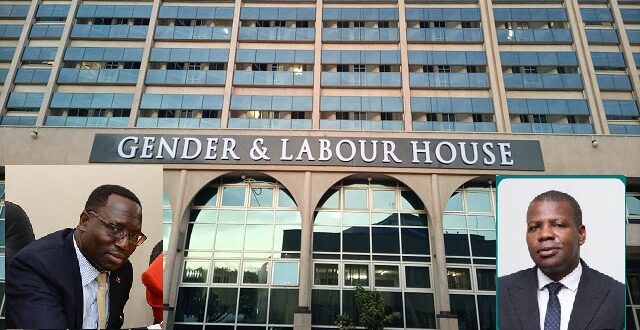
At the centre of the storm are the Ministry’s top technocrats — Permanent Secretary Aggrey David Kibenge and Commissioner for Disability and Elderly Affairs Prosper Muhumuza — as the Auditor General questions whether the National Special Grant for Persons with Disabilities (NSG-PWD) has truly delivered value for money between FY 2019/20 and FY 2023/24.
The stakes are high. Uganda’s disability prevalence has risen from 12.4% in 2014 to 13.6% in 2024. That translates into millions of vulnerable citizens facing exclusion, exploitation and income shocks. The NSG programme was introduced in FY 2019/2020 as a special government intervention to empower PWDs economically and socially.
On paper, progress is visible.
Legal and policy frameworks have been strengthened, including the Persons with Disabilities Act Cap. 115, the National Policy on PWDs (2023), and revised NSG Guidelines (2022). Between FY 2019/20 and FY 2023/24, UGX 38.5 billion was disbursed to 588 PWD groups. A total of 726 PWD learners graduated in trades such as tailoring, carpentry, welding, leatherwork and hairdressing. The programme budget increased progressively to UGX 15.9 billion in FY 2023/24, surpassing the Global Disability Summit commitment of a 30% increment from UGX 9.6 billion in FY 2021/22. The Disability Management Information System (DMIS) was rolled out to 181 Local Governments.
But behind these achievements lies a troubling reality.
As of 30th June 2025, there was no up-to-date national database of PWDs. The Ministry continued relying on outdated 2014 Census and 2016 UBOS survey data, despite the Persons with Disabilities Act requiring current, disaggregated data.
The result? Out of the 2.7 million PWDs reported in the 2024 Census, only 68,252 — just 2.5% — benefited from the programme.
A disability rights advocate told RedPepper sharply: “How do you plan for millions using decade-old data? That is planning in the dark.”
The audit found that allocation criteria for sampled Local Governments in FY 2023/24 were largely input-based and population-driven, without using disaggregated disability data by type, age or gender. Consequently, some Local Governments with higher PWD populations received fewer resources.
Even more worrying, only 588 out of 905 Local Governments — 65% — received PWD funds over the five-year period, leaving 317 LGs, or 35%, without support.
Implementation gaps were equally alarming.
Out of 61 sampled NSG activities, only 54.1% were fully implemented. A staggering 37.7% were partially implemented and 8.2% were not implemented at all. Activities affected included development of Standard Operating Procedures for PWD centres, stakeholder consultations and verification of institutional PWDs.
At project level, the situation was worse.
Out of 103 sampled group projects, only 27 groups — 26.2% — maintained their approved projects. Eight groups changed projects without approval. A massive 68 groups — 66% — split after receiving funds.
Goat rearing projects were among the most affected, accounting for 22% of splits. Produce buying and selling followed at 17.6%. Only enterprises such as savings and credit, poultry keeping and events management remained relatively stable.
“What kind of follow-up allows 66% of funded groups to disintegrate?” asked a local government official. “That is a monitoring failure.”
Then came the most explosive revelation: UGX 2.19 billion was disbursed to 808 PWD groups without verification. No verification reports were available for Quarter 3 and Quarter 4 of FY 2023/24.
In blunt terms, money was released without confirmed evidence that the beneficiary groups existed or qualified. The audit warns of the risk of funds being released to non-existent “ghost” groups.
One senior insider admitted, “When verification reports are missing, accountability collapses.”
Monitoring and evaluation systems were found severely wanting.
The Ministry did not prepare annual Monitoring and Evaluation work plans or budgets dedicated to the NSG Programme from FY 2019/20 to FY 2023/24. Although comprehensive tools were developed for routine data collection, M&E officers did not use them effectively.
No monitoring reports were produced for FY 2019/2020 despite UGX 420 million being released for operational activities, including grant monitoring. There was also no evidence that findings from later monitoring reports were discussed or acted upon.
Most critically, the Ministry failed to conduct a mid-term evaluation by FY 2022/2023 to assess progress on key outcomes such as PWD income improvement, economic participation and entrepreneurship skills development.
“How do you spend billions without a mid-term check?” an accountability expert asked. “That is like flying blind.”
The Disability Management Information System, intended to modernize programme tracking, also faltered.
Though planned for full deployment in 2019, it was only rolled out to 181 Local Governments by FY 2023/24 due to COVID-19 disruptions, procurement challenges and lack of prioritized user training. Key modules for group registration, applications, grievance handling, appraisal, disbursement and reporting were either underused or non-functional. Historical data from FY 2019/20 to FY 2022/23 was not migrated into the system.
Without full functionality, tracking beneficiaries and resolving complaints became difficult, undermining transparency.
So who is to blame?
As Accounting Officer, Permanent Secretary Aggrey David Kibenge bears overall responsibility for financial and operational oversight. Commissioner Prosper Muhumuza, who leads initiatives on social protection and disability inclusion, is directly responsible for implementation and coordination of disability programmes.
Supporters argue that limited funding, COVID-19 disruptions and the sheer scale of disability challenges have strained the system. They point to increased budgets, legal reforms and thousands of beneficiaries reached as proof of progress.
Critics are less forgiving.
“When 66% of funded groups split and UGX 2.19 billion goes out without verification, that is not just funding constraints. That is systemic weakness,” a governance analyst said.
The Auditor General has recommended a comprehensive nationwide survey with UBOS to obtain accurate, disaggregated PWD data; enforcement of DMIS submission deadlines; stronger technical support to Local Governments; reinforced monitoring and evaluation frameworks; and expedited integration of DMIS with IFMS and Bank of Uganda systems to ensure secure, automated disbursements.
The overall conclusion is sobering. Despite notable progress, weaknesses in programme design, execution and oversight have constrained the effectiveness of the grant. Limited funding, absence of an updated PWD database, underutilization of DMIS, weak monitoring systems, inadequate entrepreneurship support and lack of an effective grievance mechanism have limited the programme’s ability to deliver sustainable socio-economic transformation.
As disability prevalence rises and public scrutiny intensifies, the pressure is mounting.
Is it time to crack the whip at the top of the Gender Ministry? Or can Kibenge and Muhumuza tighten systems and restore confidence before further damage is done?
For Uganda’s millions of Persons with Disabilities, the answer is not political. It is personal. They are waiting for empowerment — not paperwork, not excuses, and certainly not ghost groups.
GOT A HOT STORY? EMAIL: redpeppertips@gmail.
SOURCE PROTECTION/CONFIDENTIALITY IS OUR NO.1 PRIORITY.