 pressug.com News 24 7

Related Articles



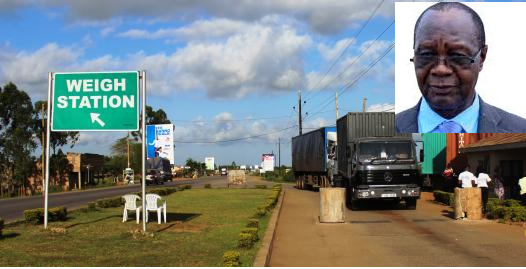
Kampala — It was supposed to be a silent guardian of Uganda’s highways. A steel gatekeeper standing firm against overloaded trucks chewing up billions in taxpayer-funded roads. Instead, the Ministry of Works’ weighbridge system has been exposed as weak, overstretched, under-calibrated and dangerously mismanaged — allowing axle-load bandits to roll on almost unchecked.
A blistering Value for Money audit by the Office of the Auditor General has lifted the lid on shocking gaps in the management of road weighbridges under the Ministry of Works and Transport. The verdict is damning. Despite the presence of eight fixed and six mobile weighbridge stations across the country, overloading remains rampant, roads are deteriorating faster than planned, and enforcement is alarmingly inconsistent.
At the heart of the storm is the Weigh Bridges Department under the Ministry of Works and Transport, whose core mandate is to protect national roads by enforcing axle-load limits. These weighbridges are meant to weigh trucks, impose penalties on overloaders, manage risk, inspect equipment and generate data for policy decisions. But the audit paints a picture of a system riddled with loopholes and operational fatigue.
Only five out of Uganda’s thirty-seven priority Class A and B road corridors are covered by operational fixed weighbridges. That means vast stretches of key highways are virtually unguarded, left at the mercy of overloaded cargo trucks whose excessive tonnage grinds asphalt into dust. Mobile units, just six in number, are overstretched across massive geographic areas. Some constructed stations remain idle and non-operational — white elephants standing as monuments to poor planning.
The big question is simple. Who decided where these weighbridges should be deployed? According to the audit, deployment was not guided by comprehensive risk assessments, traffic volumes or patterns of overloading. In other words, there was no solid science behind the positioning of these critical enforcement points. Roads that desperately need monitoring have none. Meanwhile, other stations sit underutilized.
Even more shocking is the failure to use the data already being collected. Every day, weighbridges generate volumes of axle-load and traffic information. That data should be a goldmine for planning, enforcement strategy and infrastructure investment. Instead, it gathers digital dust. The Ministry has not systematically analysed or integrated it into decision-making. Data from mobile weighbridges is not even integrated into the central system. Instead of using existing information, the Ministry has resorted to conducting parallel, costly traffic surveys — an expensive duplication that raises eyebrows.
Technological weaknesses further cripple the system. The audit found outdated and inconsistent weighing technologies in use, incomplete transition to modern multi-deck systems and prolonged equipment downtime. The most alarming revelation is that none of the eight fixed weighbridges complied with the mandatory quarterly calibration schedule. Not one. Calibration is the backbone of credibility. Without it, measurements are questionable, enforcement cases weaken, and public trust erodes.
If scales are not calibrated, how reliable are the penalties imposed? How defensible are enforcement actions in court? And how easy is it for clever operators to exploit inconsistencies?
Staffing constraints add fuel to the fire. Three of the eight fixed stations operate below approved staffing levels. Some lack designated controllers. Officers are working extended shifts, risking fatigue and errors. Without regionally accredited training aligned to East African Community standards, enforcement becomes inconsistent. Where supervision is weak and staff are overstretched, the risk of collusion creeps in.
The audit also uncovered inconsistencies between vehicle licensing practices and prescribed axle-load limits, particularly concerning Sino-trucks. Weak tracking of repeat offenders and manual enforcement processes reduce deterrence. In simple terms, some transporters may be gaming the system — overloading repeatedly with minimal consequences.
Then comes perhaps the most embarrassing statistic. Out of 156 planned stakeholder engagement sessions over three years, only five were conducted. Five. That means transporters, drivers and local communities have not been adequately sensitised about axle-load regulations. Compliance thrives on awareness. When engagement is neglected, voluntary compliance collapses.
The consequences are visible on Uganda’s highways. Potholes appear prematurely. Road surfaces crack under pressure. Maintenance budgets balloon. Traffic congestion worsens. Road safety risks increase. Ultimately, taxpayers foot the bill for repairs that could have been avoided if axle-load enforcement was robust.
The Ministry operates under a clear legal framework including the Roads Act, the EAC Vehicle Load Control Act and the Traffic and Road Safety Regulations. The structure exists. The laws are in place. But the audit suggests that implementation has fallen dangerously short.
So who carries the can?
As Accounting Officer, the Permanent Secretary of the Ministry of Works and Transport, Waiswa Bageya, sits at the apex of administrative responsibility. The buck, as they say, stops at his desk. While operational lapses may occur at departmental levels, systemic failures in deployment strategy, calibration compliance, automation, staffing and stakeholder engagement point to deeper managerial weaknesses.
Was there insufficient supervision? Were project managers asleep? Did coordinators fail to escalate red flags? Why were non-functional stations not fast-tracked into operation? Why was data integration neglected in an era where digital systems are supposed to drive efficiency?
The Auditor General’s conclusion is blunt. The Ministry has not effectively managed the national weighbridge system to adequately protect road assets or support safe and efficient transport. Large sections of the road network remain inadequately monitored. Axle-load violations persist. Premature road deterioration continues to impose avoidable costs on Government.
The recommendations are clear: develop a risk-based national deployment strategy, operationalise dormant stations, integrate data systems, enforce calibration schedules with UNBS, close staffing gaps, strengthen training and accelerate automation through CCTV, ANPR and weigh-in-motion technologies.
“The time for polite memos may be over. Is it now time to crack the whip on project managers and coordinators who failed to implement risk-based planning? Should heads roll for non-compliance with calibration standards? Can the Ministry afford to let enforcement fatigue continue while roads crumble?” asks a road user.
“Uganda’s highways are arteries of trade and economic growth. If weighbridges fail, the entire transport ecosystem bleeds.”
GOT A HOT STORY? EMAIL: redpeppertips@gmail.
SOURCE PROTECTION/CONFIDENTIALITY IS OUR NO.1 PRIORITY.