 pressug.com News 24 7


Related Articles


New report shows LGBTQ Ugandans fear police reprisals when making complaints
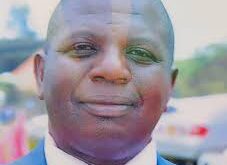
Uganda Police spokesperson Rusoke Kituuma (Photo courtesy of Business Times Uganda)
A new study by the Human Rights Awareness and Promotion Forum (HRAPF) has revealed that Uganda‘s Anti-Homosexuality Act has had a far-reaching negative impact on the ability of LGBTQ+ persons to access justice. Rather than enhancing public order or community safety, the report states that the law has instead created an environment of fear, institutionalised discrimination, and widespread impunity for perpetrators of violence and other human rights violations on the basis of SOGIE, and that both formal and informal justice systems have become increasingly inaccessible for LGBTQ+ persons.
The report, Legalising Impunity: The implications of the Anti-Homosexuality Act on access to justice for LGBTQ+ persons in Uganda, covers the two years from May 2023 when the law came into force to May 2025, and highlights that the AHA has also weakened the foundational principles of fairness, equality, and due process at the core of Uganda’s justice architecture.
The immediate impact of the law was perpetuating the belief that the law allowed persecution of LGBTQ+ persons, and forbade protecting or defending them.
As a result, many LGBTQ+ persons endure rights abuses silently, avoid state mechanisms altogether, and remain highly vulnerable to exploitation and violence.
Whereas the LGBTQ+ community had issues with the Uganda Police previously, the study revealed increased mistrust of the police as an avenue for justice after the enactment of AHA.
“The AHA has created an environment where LGBTQ+ individuals often perceive the police as a source of threat rather than of protection,” the report authors stated.
Before the AHA, LGBTQ+ groups had established an informal working relationship with the police leadership which included training police officers on human rights, and rapid response. The AHA largely eroded these.
According to the report, the AHA has also worsened impunity among police officers, prompting an increase in arbitrary arrests, harassment, anal examinations and extortion.
“The police are also more hostile to lawyers representing LGBTQ+ persons, including subjecting them to verbal abuse and threats of arrest,” the report states.
The report also pins the police for failure to record complaints of abuse and harassment made by LGBTQ+ persons, preferring instead to arrest them for homosexuality-related offences. These complainants are usually denied police bond so that they can be sent to prison.
The cumulative effect of these practices is the erosion of confidence in the police as an avenue of access to justice.
“Access to remedies through the courts has become increasingly constrained as LGBTQ+ persons face significant barriers in filing cases, particularly those involving discrimination or violence due to fear of further persecution,” the report reveals.
The report also cites the complex procedures, and the usual absence of witnesses who can be said to be credible as well as the rigid requirements for things like court bail which many LGBTQ+ persons cannot meet, and the fear of exposure during proceeding among barriers to justice as court processes are often public and this can lead to stigmatisation.
A HRAPF lawyer recounts a number of instances in the courtroom where judges have shown blatant bias against LGBTQ+ persons after the AHA was enacted.
“I represented an LGBTQ+ client before a magistrate who boldly told me that LGBTQ+ persons deserved to die. In fact, he said that if any of his children were gay, then he would disown them. He then questioned me why I represent ‘such clients,’” the report quotes the lawyer.
Although the nullification of section 14 of the AHA freed lawyers and advocates to provide legal services to LGBTQ+ persons without fear of reporting obligations, the report says that many still fear being accused of ‘promotion of homosexuality’ merely for offering legal assistance.
The study report also highlights some positive developments like increased intervention from the Uganda Human Rights Commission (UHRC) and slightly renewed interest from the Equal Opportunities Commission.
See Also
According to the report, UHRC raised concerns with the law in its 2024 report to Parliament and also carried out consultations and outreaches to LGBTQ+ persons. Nevertheless, the report concludes that there is limited direct engagement between the community and the Commission, and very few see it as an avenue that an LGBTQ+ person with a complaint can go to.
“Indeed, the Commission’s tribunal has not reported resolving any cases, making it a largely unavailable avenue for access to justice for LGBTQ+ persons at the moment,” the report says.
With regard to the Equal Opportunities Commission (EOC), the report reveals that the passing of the AHA caused the EOC to slightly renew interest in LGBTQ+ issues. The EOC for example engaged in training of its staff on LGBTQ+ marginalisation.
However, the report says that the engagement is still limited, exemplified by the lack of decided cases by the EOC on LGBTQ+ issues or specific reports on the issue.
The AHA criminalises engaging in consensual sexual activity with a person of the same sex in section 2, with up to life imprisonment. Section 3 aggravates the offence of homosexuality and makes it punishable by death where there is defilement of a child or incest, or where the accused person is a ‘serial offender’ or a person in authority over the victim, or where the victim of the offence is a person with a physical or mental disability or is of advanced age, or in circumstances amounting to rape.
Section 11 of the AHA creates the offence of ‘promotion of homosexuality.’ This offence is defined broadly to cover all acts that seek to ‘normalise or encourage homosexuality, or the observance of prohibited conduct,’ a blanket provision that effectively criminalises advocacy for LGBTQ+ rights.
It is worth noting, however, that the Constitutional Court nullified provisions of the AHA that criminalised renting out premises ‘for purposes of homosexuality,’ as well as the reporting obligation originally contained in sections 9 and 14 of the Act, respectively.
The report authors came up with strong recommendations to the Parliament of Uganda, the President of Uganda, the Uganda Police and the judiciary as follows:
The Parliament of Uganda should repeal the Anti-Homosexuality Act and desist from passing laws which inhibit access to justice for marginalized persons such as LGBTQ+ persons.
The President and the Executive should initiate an amendment of the Anti-Homosexuality Act with the aim of addressing its human rights implications, enforcement challenges, and compatibility with constitutional and international obligations regarding access to justice.
The President should also issue executive directives to justice institutions including the police and local councils clarifying that no citizen should be denied access to justice based on sexual orientation.
The Uganda Police Force should adopt clear internal guidelines prohibiting arrests based on stereotypes, appearance, or unverified allegations relating to sexuality.
Police leadership should also strengthen accountability mechanisms by investigating and disciplining officers involved in extortion, blackmail, or unlawful arrests targeting LGBTQ+ persons.
The judiciary should enforce strict evidentiary standards to prevent reliance on conjecture, stereotypes, or unlawfully obtained evidence in cases related to the AHA by avoiding reliance on unlawful evidentiary practices such as forced confessions, phone searches without warrants, and invasive examinations.
The Judicial officers should ensure respect of constitutional and international human rights standards, especially regarding fair trial, privacy, dignity, and equality, regardless of the sexual orientation or gender identity of the accused person.
, https://76crimes.com/2026/05/05/ugandas-aha-barriers-to-justice/