 pressug.com News 24 7

Related Articles
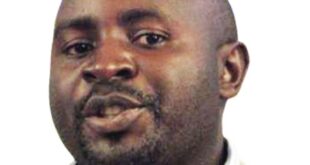

Christopher Okello Onyum in court
On May 4, 2026, I put down my 55-page decision in Okello v Uganda, Criminal Case No. 0132 of 2026.
This is one of those cases that perhaps will re-echo this country’s commitment to fostering the rule of law, a trial that commenced shortly after April 2, 2026 and was concluded on April 30, 2026.
April 2, 2026 will forever be etched in the memory of the Ggaba Community Centre. What is rarely mentioned in the media is that this particular school serves the most vulnerable.
It admits two categories of children: those who cannot afford to pay even a single cent, and those who can manage a highly subsidised fee. The maximum amount charged is only Shs 190,000 and three of the toddlers that Christopher Okello Onyum murdered on that fateful day fell within that paying category.
There were suggestions that perhaps Okello was mentally ill. However, Okello had no known prior psychiatric illness brought to the attention of the court. His brother testified, and briefly mentioned, that Okello had been admitted to Butabika Hospital around 2017, yet no medical records were produced to substantiate this claim.
The State led evidence that, at the time, Okello had murdered his young brother, Freeman, claiming to “save him from the troubles of this world.”
To evade culpability, he was admitted to Butabika, from where he later boarded a plane to the United States, effectively escaping prosecution. In correspondence to the court and the Office of the Director of Public Prosecutions, the American Embassy confirmed that Okello was an American citizen and that they had no prior records of any psychiatric illness.
It is telling that, despite both his father and mother residing in Kampala, he did not, at any point, call them to testify regarding this alleged psychiatric condition. On the day of his arrest on April 2, Okello was found with diclofenac tablets.
Under examination, the defence could not point to any illness he was treating at the time. I must say, the Chief Justice appointed the right person for the task.
Her Lordship Justice Alice Komuhangi Khaukha, fully alive to the burden and standard of proof – where the defence of insanity is raised that it lies upon the defence to establish it on a balance of probabilities – devoted nearly 15 pages to weighing the limited evidence presented to determine whether the accused was mentally sound.
At page 28, she poses a critical question: Supposing it was indeed true that the accused person has ever been in Butabiika? To the gentle reader, having a disease of the mind or diminished responsibility is not a blanket defence.
One must demonstrate that, at the time of the commission of the offence, the accused was not in control of his actions. In this case, the learned justice meticulously evaluated events both before and on April 2.
She traced conduct back to November 5, 2025, when Okello opened three bank accounts – two in United States dollars and another in Uganda shillings. She analysed the events of 1st and 2nd April.
Remarkably, Okello, with chilling precision, cut all four children on the right-hand side of the neck, executing the act within seven minutes from the time he paid to have his imaginary child admitted.
The learned Justice rightly applied the M’Naghten rules in assessing insanity. Central to this is whether the accused formed the requisite intent. One must ask: if Okello was mentally ill, why did he carry three knives to a kindergarten to admit a non-existent child?
Why, when confronted by a caretaker after attacking the first child, he chased her down, threatened her and caused no harm to her, and returned to seize another defenseless child?
Why did he consistently target the same spot – the right side of the neck with such precision? Upon sighting responders, why did he discard the knife over the fence and dial 999 for police rescue?
Can an illness be so exacting, so deliberate, and so methodical? Even where it was not expressly raised, the learned judge went further to consider diminished responsibility.
She evaluated the evidence in search of even a scintilla to suggest that the accused was not fully responsible. Ordinarily, one would ask: who could bring themselves to murder four children?
It is almost inconceivable unless one is driven by calculated intent or an ideology devoid of humanity. Okello’s Google search history included phrases such as “ISIS beheading.”
Such material is readily available online, and it often identifies the neck particularly the right side as a critical point for causing rapid death due to the concentration of major blood vessels, the airway, and the spinal cord.
This perhaps explains his chosen method. One must then ask: what form of mental illness directs such repeated precision? Logically and scientifically, that proposition is difficult to sustain.
I am not a doctor, but as a lawyer, I would welcome credible scientific evidence to that effect. This case must serve not only as a deterrent but also as a call to justice stakeholders to reconsider the increasing reliance on the defence of insanity as a shield against accountability.
The Office of the Director of Public Prosecutions must reflect on how such cases are handled. Indeed, had Chief State Attorney Jonathan Muwaganya been faint-hearted, this matter might never have proceeded to trial.
To the ordinary observer, one might assume that anyone who begins their day by slaughtering children must be mentally unwell. However, the law demands more than assumption; it demands proof.
I have also read concerns raised by the Uganda Law Society regarding the neutrality of the court. Yet, where better should one be tried than in the very place where the alleged offence was committed?
What remains undisputed is Okello’s involvement in the murders. He was firmly placed at the scene of the crime, and the learned judge carefully and correctly weighed that evidence. Okello now continues to live on borrowed time.
The writer is an advocate of the court
joshua@trustlawadvocates.com
Related
, https://observer.ug/viewpoint/a-trial-that-tested-the-bounds-of-justice-reflections-on-okello-v-uganda/