 pressug.com News 24 7

Related Articles



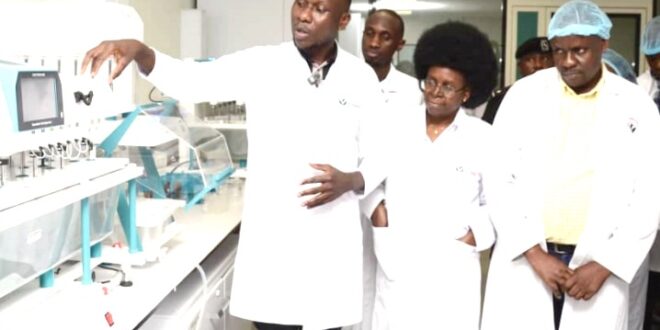
At the Dei BioPharma campus in Matugga, rows of laboratories and production units are being built with one goal, to shift Uganda from importing medicines to manufacturing them.
It’s a bold gamble in a global industry dominated by a handful of powerful countries, and one that carries implications far beyond health. For government officials who toured the facility ahead of Labour Day, the project represents more than industrial expansion.
It is being framed as a test of whether Uganda can move up the value chain, from exporting raw materials and labour to producing high-value, knowledge-driven goods that define modern economies.
During the recent high-level tour of the facility, senior government officials framed the project as a turning point in Uganda’s long push to move from a consumer economy to a producer one. The message was blunt: a country that imports what it consumes cannot claim full sovereignty.
“A nation that relies on imports at all times cannot say it is a sovereign state,” said Youth and Children Affairs Minister Balaam Barugahara.
“We must invest in long-term national strength rather than short-term gains.”
Standing beside him, Science and Technology Minister Dr Monica Musenero pointed to the scale of what is under construction. The multi-trillion-shilling facility is designed to manufacture high-value pharmaceutical products, medicines that are often too expensive or inaccessible across much of Africa.
But the project’s ambitions go further. It is expected to generate up to 40,000 jobs, many of them for young Ugandans trained in science and technology. For a country where youth unemployment remains a persistent concern, that promise carries political and economic weight.
“When young people are busy and productive, they do not have time for street demonstrations,” Barugahara said.
What makes the Matugga project unusual is not just its scale, but its structure. It is part of a wider, integrated system, one that connects agriculture, manufacturing and research into a single value chain.
At its core is a simple idea: instead of importing raw materials and finished medicines, Uganda could produce both. That logic is already taking shape in Kamuli district, where a $50 million cassava starch plant, also part of the Dei BioPharma ecosystem, is producing pharmaceutical-grade ingredients used in drug manufacturing.
These ingredients, known as excipients and active pharmaceutical ingredients, are typically imported, making medicines more expensive.
“We are among the first companies in Africa to manufacture our own pharmaceutical ingredients,” said Dr Matthias Magoola, the project’s founder and lead scientist.
“The facility aims to make quality medicines affordable for Ugandans and Africans, creating jobs and driving industrial growth.”
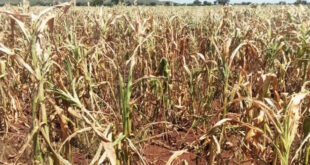
The implications ripple outward. By creating a market for cassava, matooke, maize and potatoes, the project is linking rural farmers directly to industrial supply chains.
The Kamuli facility alone is expected to require 500 metric tonnes of cassava daily, drawing from regions across northern and eastern Uganda. Magoola says this could transform rural incomes.
A cassava farmer, he argues, could earn roughly three times more than a sugarcane farmer on the same land, thanks to shorter growing cycles and stronger demand. More than 3,000 farmers have already been registered in the supply system, supported with high-yield crop varieties developed by Ugandan scientists.
Yet the real financial bet lies in pharmaceuticals. Globally, advanced biological drugs, including treatments for diabetes, cancer and rare diseases, are among the most lucrative segments of the health industry.
Magoola pointed to the example of GLP-1 drugs such as Ozempic and Wegovy, which contribute an estimated $1 trillion to the U.S. economy every four years. Uganda, he argues, now has a chance to enter that market.
“Current sickle cell treatments cost between $2.2 million and $3.1 million in the West,” he said.
“We are going to manufacture these drugs here to bring about affordability.” That ambition is backed by significant investment. The broader Dei BioPharma project has attracted around Shs 2.7 trillion, combining funding from U.S. partners, local banks and government support.
The National Drug Authority is already reviewing 50 drug applications from the facility, with 30 approved for manufacturing. If successful, the plant could become one of the largest pharmaceutical production hubs in Africa, producing vaccines, anti-malarial treatments and specialised medicines that are currently imported.
Still, the road ahead is complex. Pharmaceutical manufacturing is one of the most tightly regulated industries in the world. Meeting international standards, including those set by the U.S. Food and Drug Administration and the World Health Organization, requires precision, consistency and sustained investment.
The facility, Magoola insists, is built to meet those standards. For government officials, the project is also part of a much larger national vision. Uganda aims to grow its economy from about $66 billion to $500 billion within the next decade, a goal that depends heavily on industrialisation, value addition and export growth.
Related
, https://observer.ug/news/minister-dei-to-power-uganda-jobs-drugs-independence/