 pressug.com News 24 7

Related Articles
Viewers: 50,001
By Spy Uganda
How does a revolution lose its soul so quickly?
How does a promise born from sacrifice, imprisonment, and popular resistance fracture almost overnight into the familiar tragedy that has haunted post-colonial Africa for decades?
Across Senegal, a deep sense of anxiety has been building for months. Observers of African sovereignty watched carefully as tensions emerged within the highest levels of the state, hoping that the political alliance between President Bassirou Diomaye Faye and Prime Minister Ousmane Sonko would survive the immense pressures that inevitably confront any African government attempting structural change.
But those hopes now appear shattered.
The reported dismissal of Sonko and the dissolution of government structures represent far more than an internal political disagreement. For millions of young Africans who viewed Senegal as a new symbol of democratic resistance against neo-colonial influence, this moment feels like a betrayal of historic proportions.
The rise of the PASTEF movement was built on a singular idea: that Diomaye Faye and Ousmane Sonko were inseparable political brothers united by a revolutionary vision. When Sonko was barred from contesting the presidency following legal battles many supporters viewed as politically motivated, he transferred his enormous popular support to Faye. The Senegalese people accepted Faye largely because they believed he represented continuity with Sonko’s uncompromising agenda.
They were not merely political allies. They were former tax inspectors who challenged elite corruption, political prisoners who endured state repression together, and symbols of a generation demanding economic dignity.
Faye did not rise alone. He was carried into office by the political force of Sonko’s popularity and by the sacrifices of thousands of young Senegalese who endured arrests, violence, and intimidation in pursuit of change.
That is why this rupture feels so devastating.
To remove the very figure who engineered the political revolution raises uncomfortable questions about the direction of Senegal’s new leadership. Supporters of Sonko argue that the split reflects a broader struggle between two competing visions of governance: one rooted in accommodation with international financial institutions, and another grounded in aggressive economic sovereignty.
At the center of this debate lies the issue of Senegal’s natural resources.
Sonko built his political identity around the promise of renegotiating oil, gas, fishing, and mining agreements that many citizens believe disproportionately benefit foreign interests while leaving ordinary Senegalese trapped in poverty. He positioned himself as a fierce opponent of economic dependency and repeatedly warned against what he described as the “financial colonization” of African states through debt structures and externally imposed austerity measures.
To his supporters, this is precisely why he became dangerous.
The theory circulating widely among pan-African activists is that external pressure from Western powers and international financial institutions intensified as Senegal attempted to redefine its economic relationships. Whether one fully accepts that interpretation or not, history provides numerous examples of foreign interference in African political transitions whenever strategic resources or geopolitical influence were at stake.
The parallels being drawn to Patrice Lumumba are therefore unsurprising.
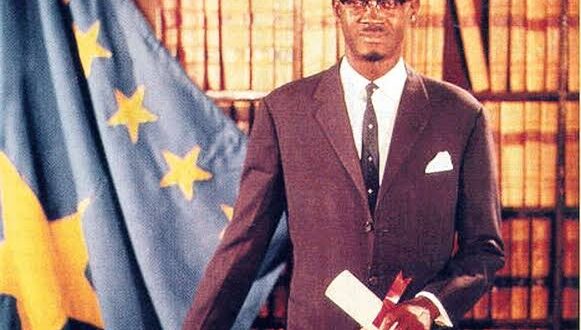
Lumumba, Congo’s first democratically elected prime minister, was overthrown and assassinated after insisting that Congolese resources belong first and foremost to the Congolese people rather than foreign mining interests. Decades later, his name remains synonymous with the destruction of African sovereignty by external powers operating through local collaborators.
For many young Africans, Sonko symbolizes a modern version of that same resistance.
The comparison is not necessarily about identical circumstances, but about a recurring historical pattern: whenever African leaders attempt to reclaim economic control, they often encounter internal sabotage, foreign hostility, or destabilization campaigns.
Kwame Nkrumah in Ghana faced it.
Thomas Sankara in Burkina Faso faced it.
Milton Obote in Uganda faced it.
Murtala Muhammed in Nigeria faced it.
Again and again, leaders who spoke the language of economic independence found themselves isolated, overthrown, or eliminated.
This pattern has left deep psychological scars across the continent.
Today, many Africans no longer believe neo-colonialism operates primarily through military occupation. Instead, they see it functioning through debt dependency, financial leverage, multinational corporations, and political influence exercised through international institutions.
The modern coup, in this view, is financial before it is military.
What makes the Senegal situation particularly explosive is the emotional connection between Sonko and the youth. For many young Senegalese, Sonko is not simply a politician. He represents dignity, defiance, and the possibility of an Africa that negotiates with the world from a position of strength rather than submission.
That explains the anger now visible in Dakar’s streets and universities.
Supporters view Sonko’s removal not as routine politics but as an attempt to neutralize the revolutionary core of the movement. Chants, demonstrations, and mass mobilizations reflect a generation increasingly unwilling to accept political compromises that appear to preserve old systems under new faces.
Ironically, the split may ultimately strengthen Sonko politically.
Freed from the burdens of governance and economic crisis management, he now re-emerges as a pure opposition figure untouched by unpopular compromises. Any future austerity measures, subsidy cuts, or IMF-aligned reforms will now belong entirely to Faye’s administration.
Sonko, meanwhile, retains the image of ideological consistency.
That reality could dramatically reshape Senegal’s political future heading toward 2029.
But beyond Senegal itself lies a much larger continental warning.
Africa today is experiencing a political awakening driven by frustrated youth populations demanding sovereignty over resources, dignity in international relations, and liberation from systems they believe perpetuate dependency. From Mali and Burkina Faso to Guinea and Gabon, a new generation is openly questioning the legitimacy of old political and economic arrangements.
The unrest in Senegal is therefore not isolated.
It is part of a broader African reckoning.
The central question confronting the continent remains painfully unresolved: Can African leaders truly pursue independent economic paths without triggering destabilization from internal and external forces determined to preserve the status quo?
History suggests the answer is complicated.
But history also teaches something else: the desire for freedom never disappears permanently.
From Lumumba to Sankara, from Nkrumah to Sonko, Africa continues to produce leaders who challenge systems of domination despite the enormous risks involved. Some are defeated. Some are silenced. Some are transformed into symbols larger than themselves.
Yet the struggle survives them all.
And perhaps that is what frightens entrenched powers most — not one man, but the awakening of an entire generation that no longer wishes to kneel.
, https://www.spyuganda.com/from-patrice-lumumba-to-sonko-the-relentless-playbook-of-foreign-imperialism-in-africa/