 pressug.com News 24 7

Related Articles


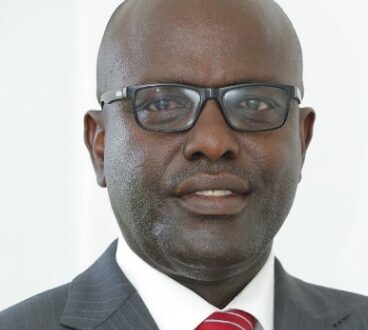
Representative photo
Once upon a time, there was an indefatigable army officer called Maj. Eric Kamugunda a.k.a. Runeisa, famed among others for ending cattle theft in the cattle corridor of Ankole and parts of southern Buganda.
Kamugunda is now a prominent military veteran and a farmer in the Masindi and Ngoma regions. Transitioning from his military background, he established himself as a prominent landlord, leveraging his earlier career to build substantial agricultural and real estate investments. But that is not the big story for today.
Shortly after President Yoweri Museveni captured power in 1986, Museveni found mayhem in the lifestyle in the cattle corridor of Ankole and parts of southern Buganda. Two things defined these cattle-keeping communities.
One, they were engaged in massive cattle theft, and this one had gone on for a very long time, with the then government providing no lasting solution. Secondly, these communities were engaged in heavy drinking of local distilled waragi that would make men literally live in bars, without doing any productive economic activity.
As a result, there were hundreds of cases of domestic violence of men battering their wives after drinking waragi. There were constant fights among adult men, due to heavy drinking, and these were largely fatal.
President Museveni not only diagnosed that such vices were countering socioeconomic transformation, but he also realised that they were callous habits among these people that needed to end there and then.
To end this turmoil, President Museveni deployed Kamugunda. He probably knew his tough work methods, which immediately made the business of stealing cows a very risky enterprise.
Among other things, Kamugunda would administer severe corporal punishment and publicly humiliate thieves, hence getting the famous name Runeisa (he who administers corporal punishment until you pee your pants).
On top of thorough corporal punishment, the thieves would be made to pay their victims three times the value of what they stole. This would be as quickly as possible, as long as it has been proven beyond reasonable doubt that the culprit indeed stole. His working headquarters were in Sanga in Kiruhuura district.
This, of course, sounds so uncouth a method in this era of human rights crusading; but tough situations require tough solutions for societies to return to sanity. People can’t work day and night to uplift themselves from poverty, only to lose their wealth to thieves. Unfortunately, these thieves are known to the communities.
The unfortunate thing is that the business of stealing people’s cows is no longer the dangerous business Kamugunda had made it to be. Somebody steals your cows, which is your only source of income, and compromises police and courts, in the event that you attempt to seek justice from these two institutions.
The president has preached economic transformation through engaging in agriculture, and people heeded his call, but they are now being failed by thieves that are known. Even the 18 policemen and policewomen that the president guided to be deployed at every sub-county might not help much because of their ethical challenges.
Quite often, they get compromised by these thieving gangsters, and poor hardworking farmers are left to live in despair. To effectively end this vice, Kamugunda tackled cattle theft in Nyabushozi and the surrounding areas by deploying a mix of strict community policing, intense intelligence-led operations, and close collaboration with the Local Defence Units.
His strategy focused on eliminating organised syndicates and cutting off the supply chain for stolen livestock. Following President Yoweri Museveni’s directive, Kamugunda shifted security forces away from reactionary measures towards proactive intelligence gathering.
This allowed forces to identify theft rings, before a raid occurred. He enforced mandatory, verified proof of ownership and movement permits for any cattle being transported. This disrupted criminal syndicates that used trucks to ferry stolen animals to markets in neighbouring districts.
Working alongside district security committees, his operations targeted unregulated or illegal livestock markets to prevent the sale of stolen animals. He fostered a strong working relationship with local council leaders and UPDF detachments to immediately pursue thieves and track down stolen herds.
As a result, Kamugunda became a legend, hence the name Runeisa. He was an individual who dismantled the then sprawling cattle thieves and reckless drunkards and uprooted all criminal syndicates, to achieve a legendary status.
He achieved all this by directly challenging, exposing and brutally crippling organized cattle thieves. His methods relied on unmasking the inner workings of syndicates, securing critical alliances with the local leadership and breaking the mafia’s historical codes of silence.
Worldwide, at times it becomes inevitable to use an ‘iron fist’ to combat crime. Combating crime gangs, through ‘iron fist’ state-driven hardline policing drastically reduces criminality; although it frequently generates human rights violations.
Conveniently, it should be applied with immediate effect to tackle the problems Kamugunda solved in the Kiruhuura area, and we can then return to the so-called civil policing. The rampant cattle thefts across the country must end, even if it means recalling Maj. Kamugunda out of retirement.
The writer works with Uganda Media Centre
Related
, https://observer.ug/viewpoint/rampant-cattle-theft-remembering-maj-kamugundas-hard-fists/