 pressug.com News 24 7

Related Articles

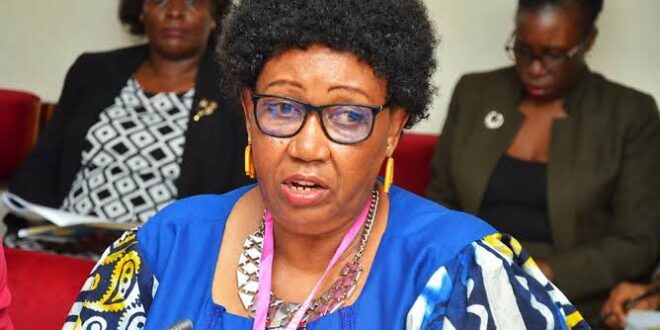
Kampala, Uganda- The resignation of Mariam Wangadya as Chairperson of the Uganda Human Rights Commission has sparked renewed debate about the relationship between political authority, institutional independence, and public service in Uganda. While the specific circumstances surrounding her departure continue to attract public discussion, the episode has once again drawn attention to a broader governance question that extends beyond one individual: what does political loyalty mean in systems where power is highly centralized? Across Africa, scholars of governance have long observed that institutions often reflect the political environments in which they operate. Leadership transitions within constitutional bodies, security agencies, and public institutions frequently become moments through which deeper questions about accountability, independence, and democratic resilience are examined. Uganda’s experience offers an important case study.
One recurring feature of long-serving political administrations is the perception that appointments to influential public offices are shaped not only by professional competence but also by political confidence. Officials entrusted with positions in the security sector, constitutional commissions, or strategic government institutions often find themselves balancing two sometimes competing obligations: fidelity to constitutional mandates and expectations of political loyalty. This dynamic is neither unique to Uganda nor exclusive to Africa. Comparative political studies have documented similar patterns in states where executive authority has remained dominant over extended periods. The challenge emerges when institutions created to provide oversight are increasingly viewed through political rather than constitutional lenses.
The Uganda Human Rights Commission occupies a particularly significant position within Uganda’s constitutional framework. Its credibility depends largely on public confidence that it can investigate allegations of abuse impartially, regardless of the political identity of those involved. Whenever leadership changes become subjects of political interpretation, questions naturally arise about institutional independence rather than simply individual careers. These questions matter because constitutional institutions derive their legitimacy not merely from legal provisions but from public trust. In democratic governance, the perceived autonomy of oversight bodies is often as important as their formal powers.
Public debate has frequently drawn parallels between Wangadya’s departure and previous experiences involving senior public officials who once occupied influential positions within Uganda’s political and security establishment. Such comparisons reflect a wider narrative that public office, particularly within politically sensitive institutions, can become contingent upon evolving political calculations rather than institutional continuity.
Whether or not every individual case fits this interpretation, the perception itself has become part of Uganda’s political discourse. For analysts, this raises broader governance questions rather than simply personal ones. How resilient are institutions when leadership becomes closely associated with political authority? Can constitutional bodies effectively perform oversight while maintaining confidence across political divides? These questions extend beyond Uganda and resonate across several African democracies navigating the relationship between executive power and institutional independence.
The discussion also returns attention to the central purpose of institutions such as the Uganda Human Rights Commission: protecting the rights and freedoms guaranteed under the Constitution. Over the years, both domestic civil society organizations and international human rights bodies have documented concerns relating to restrictions on civic space, the management of public demonstrations, treatment of political opponents, media freedoms, and accountability for alleged abuses by security agencies. Government officials have consistently maintained that security measures are implemented within the law and are necessary to preserve national stability and public order. The coexistence of these competing narratives illustrates why independent institutions remain essential in democratic societies. Their role is not to validate political positions but to establish facts, promote accountability, and strengthen public confidence in the rule of law.
Across Africa, governance reform increasingly emphasizes institutional resilience over individual leadership. The African Union’s Agenda 2063 and the African Charter on Democracy, Elections and Governance both underscore the importance of accountable institutions, constitutionalism, and respect for human rights as foundations for sustainable development. These continental frameworks recognize that economic transformation and political stability are mutually reinforcing. Countries that cultivate independent public institutions are generally better positioned to attract investment, strengthen public confidence, and manage political transitions peacefully. For Uganda as for many African states the long-term question is therefore not simply who occupies public office, but how institutions continue to function irrespective of changes in leadership.
Public office is, by its nature, temporary, the constitutional responsibilities attached to it, however, endure. For public servants across Africa, the enduring measure of leadership is seldom the length of time spent in office but the integrity with which constitutional responsibilities are discharged. Political systems inevitably evolve, administrations change, and institutional leadership transitions occur. What remains is the public record of decisions made, the confidence institutions inspire, and the extent to which governance strengthens rather than weakens democratic accountability.
The debate surrounding Mariam Wangadya’s resignation is therefore larger than one office or one individual. It is part of a continuing African conversation about the balance between political authority and institutional independence, the protection of human rights, and the responsibilities that accompany public service. As Uganda continues its governance journey, these questions will remain central not only to political discourse but also to the country’s democratic development and its place within a continent increasingly focused on accountable leadership, constitutional governance, and citizen-centred institutions.
Post navigation
, https://dailythinkersug.com/reflections-on-ugandas-governance-and-the-cost-of-political-loyalty/